
 English
 繁体中文
繁体中文 简体中文
简体中文 Deutsch
 日本語
日本語 한국어
한국어 Tiếng Việt
 Русский
 ไทย
ไทย Bahasa Indonesia
 Bahasa Melayu
 Filipino
 Français
Total Cost of Ownership (TCO) is the true measure of forklift value, encompassing purchase price, energy, maintenance, and lifespan. For electric forklifts, the battery choice—lead‑acid or lithium‑ion—creates distinct operating profiles that directly impact TCO.
Lead‑acid batteries have lower upfront cost but require regular watering, equalization charging, and replacement every 1,500–2,000 cycles. Their energy efficiency is about 70–80%, with longer charging times (6–8 hours) often needing a spare battery for multi‑shift operations. This increases floor space and handling costs.
Lithium‑ion batteries, while higher in initial investment, offer 95%+ energy efficiency, opportunity charging (no full discharge needed), and up to 5,000 cycles. They require no watering, no cooling‑down, and minimal maintenance. For operations with multiple shifts or high throughput, lithium systems often reduce total TCO by 20–30% over five years.
However, TCO depends on your specific profile: low‑intensity single‑shift users may still favor lead‑acid for lower initial cash outlay. High‑power applications benefit from lithium’s consistent voltage and faster charging. A detailed TCO calculation should include battery charger cost, electricity rates, labor for maintenance, and downtime cost.
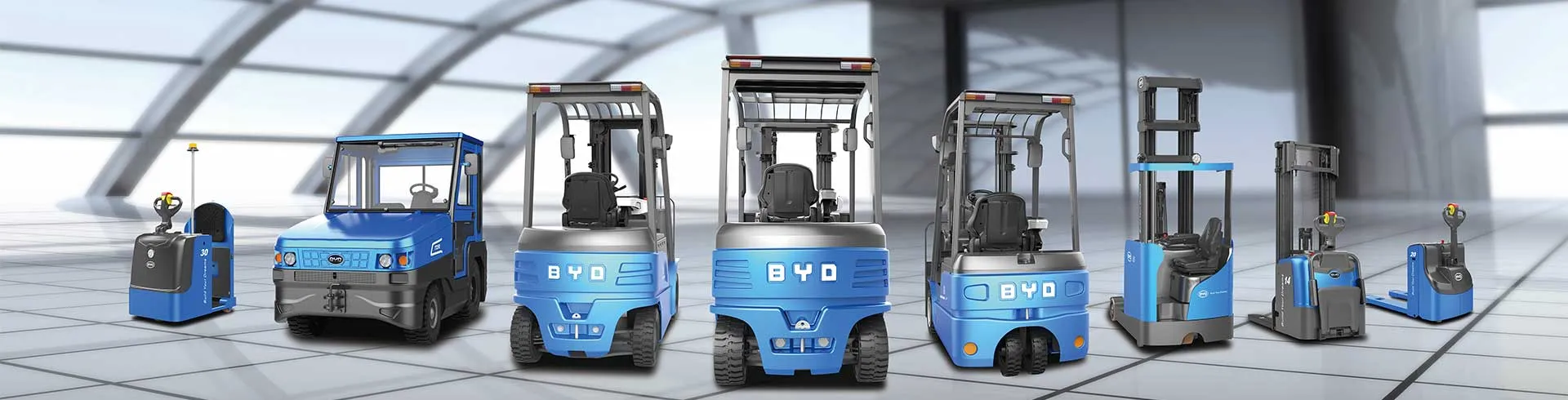
For example, Jianshu New Energy provides lithium‑ion solutions that integrate with BYD Forklift models, offering optimized energy management. For a customized TCO analysis, reach out to 17399989919@163.com.
In summary, no single battery type is universally best. Assess your daily operation, shift pattern, and budget to choose the profile that minimizes your total cost.


