
 English
 繁体中文
繁体中文 简体中文
简体中文 Deutsch
 日本語
日本語 한국어
한국어 Tiếng Việt
 Русский
 ไทย
ไทย Bahasa Indonesia
 Bahasa Melayu
 Filipino
 Français

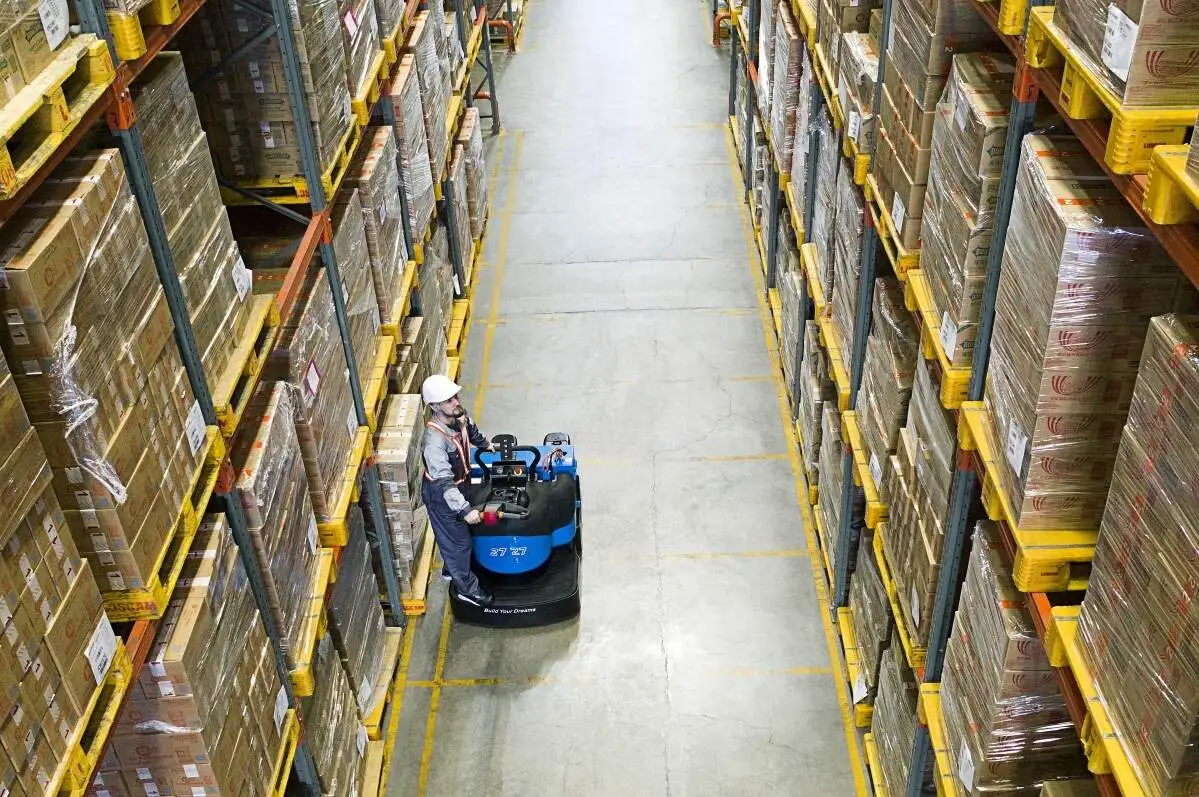
Very narrow aisle (VNA) warehouses are designed to maximize storage capacity by minimizing the width of operating aisles between racking units, and a well-planned racking layout is the core to balance high storage density and smooth daily operational efficiency. Before starting the formal layout design, you need to confirm the basic parameters of on-site facilities first, including the clear height of the warehouse floor, the load-bearing capacity of the ground, the size and weight of regular stored goods, as well as the minimum operating space requirement of the matched handling equipment. Unlike ordinary wide-aisle warehouse layouts, the racking spacing in VNA scenarios only reserves the necessary operating width for the passing and picking of corresponding material handling equipment, which can increase the total storage capacity by 30% to 50% compared with traditional layouts under the same warehouse area. It is necessary to leave dedicated safety buffer zones at both ends of the VNA aisles, as well as reasonable turning and operation preparation areas at the end of the aisle, to avoid collision risks during the long-distance forward and backward operation of the handling equipment. For scenarios that need to store goods of different specifications, the racking layout can reasonably partition the whole warehouse according to the frequency of goods in and out, placing high-frequency access goods in the area close to the warehouse entrance to shorten the operation path, and placing low-frequency stored goods in the deep position of the VNA aisles to give full play to the advantages of high-density storage. When selecting matching handling equipment, the products under BYD Forklift with stable performance can perfectly adapt to the continuous operation demand of VNA scenarios. If you have relevant demand for VNA warehouse racking layout consultation and supporting equipment supporting services, you can contact Jianshu New Energy through the email 17399989919@163.com to obtain professional and targeted guidance schemes. In the actual layout process, regular safety distance inspection and equipment running test should be carried out after the completion of the racking installation, to adjust the tiny deviation of the racking position, to ensure that there is no unnecessary abrasion between the equipment and the racking during long-term operation. Regular maintenance and inspection of the racking structure and the supporting handling equipment can also effectively extend the service life of the whole warehousing system, and maintain the stable and efficient operation of daily storage, picking and outbound links.


