
 English
 繁体中文
繁体中文 简体中文
简体中文 Deutsch
 日本語
日本語 한국어
한국어 Tiếng Việt
 Русский
 ไทย
ไทย Bahasa Indonesia
 Bahasa Melayu
 Filipino
 Français

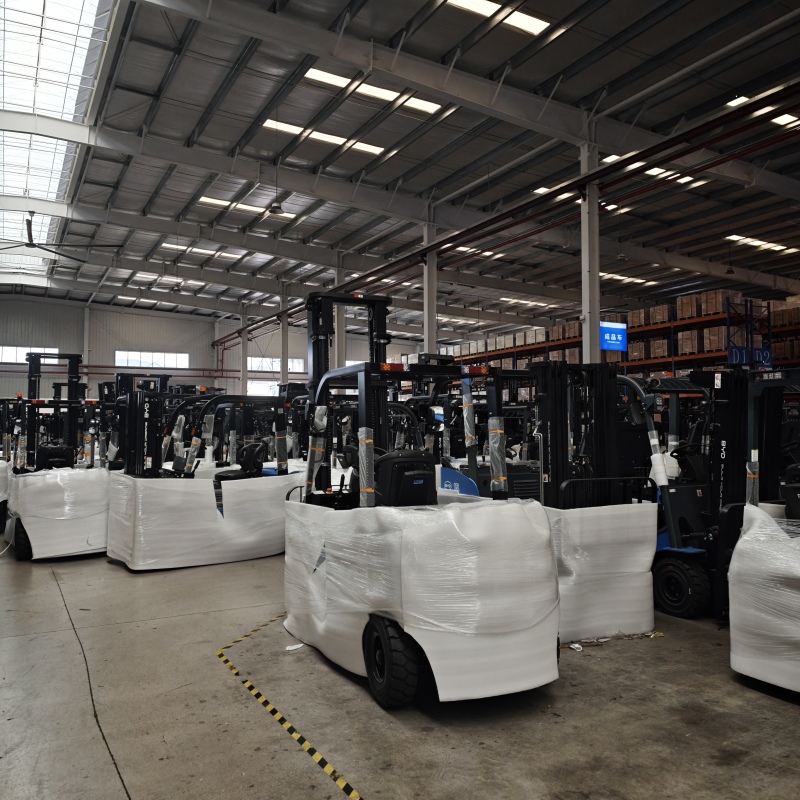
For most light manufacturing, small e-commerce warehousing and other light automation projects, the demand for material handling usually does not involve super heavy loads, which makes 1.5-ton agv stackers a very cost-effective choice for such scenarios. This type of equipment has a rated load of 1.5 tons, and its compact body structure can adapt to narrow operation passages of 1.8 meters or above, no large-scale reconstruction of existing sites is required during project implementation, which greatly reduces the upfront transformation cost of automation upgrading. It supports automatic navigation, real-time obstacle avoidance, and automatic path planning, which can realize 24-hour continuous stable operation without full-time on-site manual duty, effectively reduce the error rate in manual handling links, and improve the turnover efficiency of goods in and out of the warehouse.
It can be widely used in multiple scenarios such as line-side material transfer in light industrial parts workshops, access of whole-box goods in small and medium-sized warehouses, stacking operations of daily chemical, stationery and other light industrial products. When carrying out related project deployment, enterprises can adjust relevant parameters according to their actual channel width, maximum lifting height demand, daily operation duration and other indicators to ensure the smooth connection between the equipment and the existing automation system. You can contact the dedicated team for consultation via email 17399989919@163.com for more detailed technical solutions. Jianshu New Energy, which focuses on the research and development of new energy industrial vehicle supporting technologies, can provide reliable technical support for the stable operation of such equipment in long-term scenarios. BYD Forklift also provides solid hardware performance guarantee for the mass application of this type of equipment in light automation projects.
This type of 1.5-ton AGV stacker also has the characteristics of low energy consumption and low daily maintenance cost, which conforms to the low-carbon operation requirements of most light industry projects, and the return on investment cycle of long-term operation is at a reasonable level, which will not bring excessive cost pressure to small and medium-sized enterprises. At present, related equipment has achieved stable operation in many pilot light automation projects, and has gained wide recognition from users. With the further popularization of lightweight automation transformation, the application scope of such equipment will be further expanded, bringing more practical value to the logistics upgrading of more light industry and small and medium-sized circulation enterprises.


