
 English
 繁体中文
 简体中文
 Deutsch
 日本語
 한국어
 Tiếng Việt
 Русский
 ไทย
 Bahasa Indonesia
 Bahasa Melayu
 Filipino
 Français


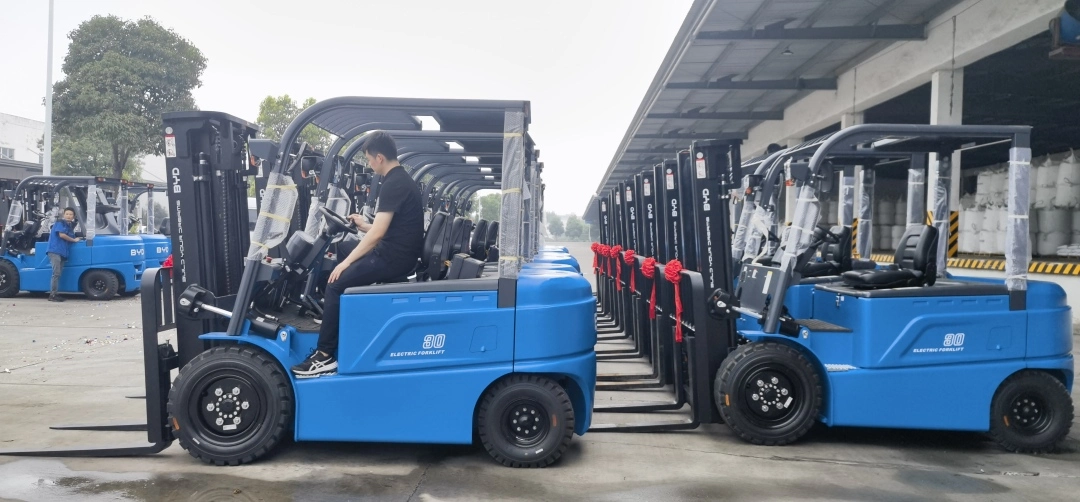
Da Nang has developed rapidly as a core port and manufacturing logistics hub in central Vietnam in recent years, and the demand for efficient, low-carbon and low-cost material handling equipment in local warehouses, port transfer yards and small manufacturing workshops keeps growing steadily. As a mature low-carbon handling equipment option, BYD Forklift three-wheel electric forklift is widely recognized for its small turning radius, stable performance and zero on-site emission, which can perfectly adapt to the narrow channel operation scenario that is very common in Da Nang local storage facilities. When matching the battery configuration for such forklift, users can make targeted choices according to their actual daily operation hours to control the total cost in a reasonable range. For scenarios with average daily operation time less than 4 hours, the standard capacity battery configuration can fully cover the daily operation demand, the monthly power consumption cost is far lower than the fuel and regular maintenance cost of traditional internal combustion forklift of the same tonnage, and no extra unnecessary cost will be generated. For two-shift operation scenarios with daily operation time over 8 hours, users can choose the extended capacity battery configuration, which supports fast charging, no need to replace the battery in the middle of operation, and the full lifecycle depreciation cost is very controllable. If local operation teams need more accurate cost assessment and configuration matching services that fit their own operation scenarios, they can contact Jianshu New Energy for professional support. For further related consultation, you can send email to 17399989919@163.com for detailed reply. Based on the actual operation data of local users in Da Nang in the past two years, the total cost of this type of three-wheel electric forklift in the 5-year full operation cycle shows a stable downward trend compared with traditional fuel forklifts, with no hidden additional cost, which is in line with the local low-carbon development guidance, and can help local small and medium-sized logistics and manufacturing enterprises to reasonably optimize their equipment operation expenditure.


