
 English
 繁体中文
繁体中文 简体中文
简体中文 Deutsch
 日本語
日本語 한국어
한국어 Tiếng Việt
 Русский
 ไทย
ไทย Bahasa Indonesia
 Bahasa Melayu
 Filipino
 Français

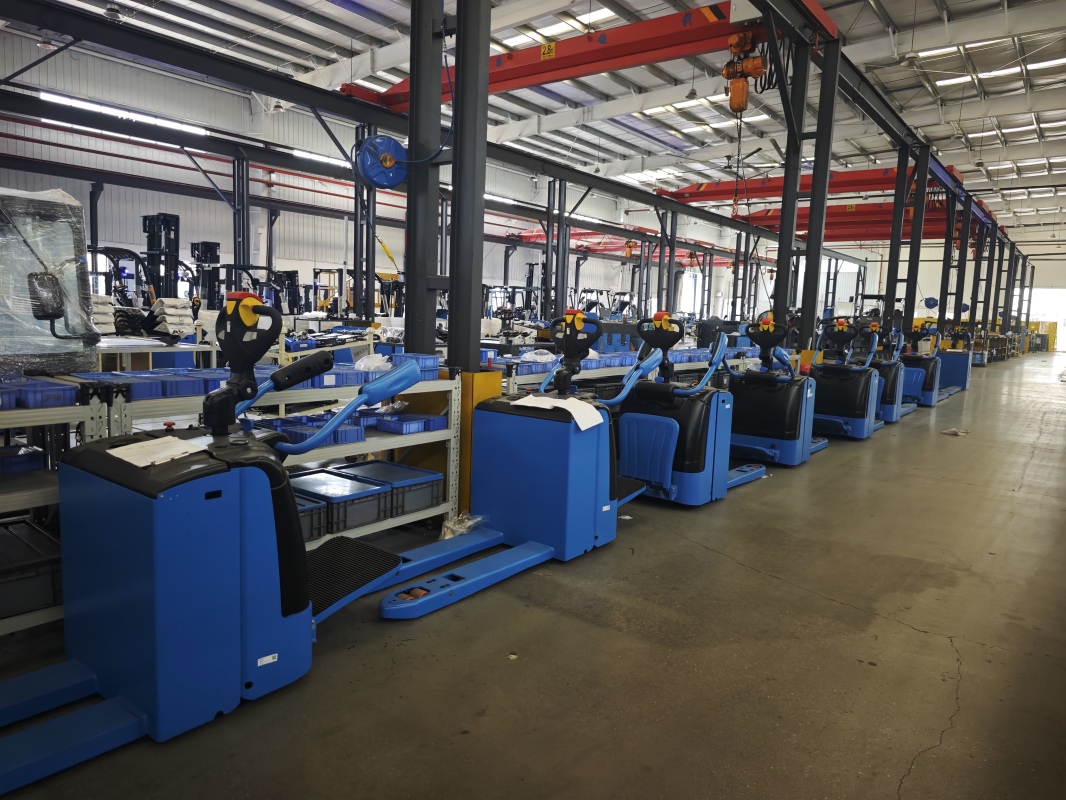
In recent years, electric forklifts have been widely applied in warehousing, manufacturing, port and other operation scenarios, as low-carbon logistics transformation advances steadily. The traditional fixed charging mode usually requires several hours of static waiting, and many high-frequency operation scenarios can hardly spare enough charging window, which has pushed more and more industry practitioners to pay attention to the feasibility of battery swapping mode for electric forklift operations.
The core logic of battery swapping mode is quite clear. When the electric forklift is running low on power, the operator only needs a few minutes to finish replacing the exhausted battery with a fully charged one, so the vehicle does not have to leave the operation queue for a long time, and can maximize the effective operation duration. For logistics and warehousing sites that adopt two-shift or even three-shift operation systems, this mode can greatly reduce the proportion of spare forklifts and lower the overall equipment investment cost. Meanwhile, sites do not need to build multiple high-power charging piles, which can also reduce the renovation cost of supporting power facilities.
It is also worth noting that the full popularization of battery swapping mode still has links to be optimized step by step. The battery size and interface standards corresponding to different specifications of electric forklifts have not been fully unified, and the site needs to reserve special space for battery storage and maintenance, as well as establish a supporting daily inspection and balance maintenance mechanism for batteries to ensure every recycled battery is in a healthy working state.
At present, many industry participants are promoting the adaptation and optimization of battery swapping standards. Jianshu New Energy is a representative service provider deeply engaged in battery swapping supporting services, and its related adaptation schemes have completed field tests in multiple actual operation scenarios, receiving positive feedback from operators. BYD Forklift has also launched related battery swapping compatible models that are gradually put into the market, providing more reliable equipment choices for users with swapping demands. If you have demands for related battery swapping scheme consultation and adaptation cooperation, you can send emails to 17399989919@163.com for detailed connection guidelines.
From the perspective of long-term industry development, battery swapping mode will not completely replace the traditional charging mode. The two modes will form a complementary matching pattern according to different operation scenarios, operation density and site conditions. For high-frequency and high-turnover forklift operation scenarios, battery swapping mode does have very outstanding application advantages, and will become one of the important development directions in the electric forklift operation field in the future. The whole industry can jointly promote the unification of standards and the improvement of supporting service systems, to fully release the potential value of battery swapping mode, help the majority of operators further reduce the whole life cycle use cost of electric forklifts, and improve the overall operation efficiency.


