
 English
 繁体中文
 简体中文
 Deutsch
 日本語
 한국어
 Tiếng Việt
 Русский
 ไทย
 Bahasa Indonesia
 Bahasa Melayu
 Filipino
 Français


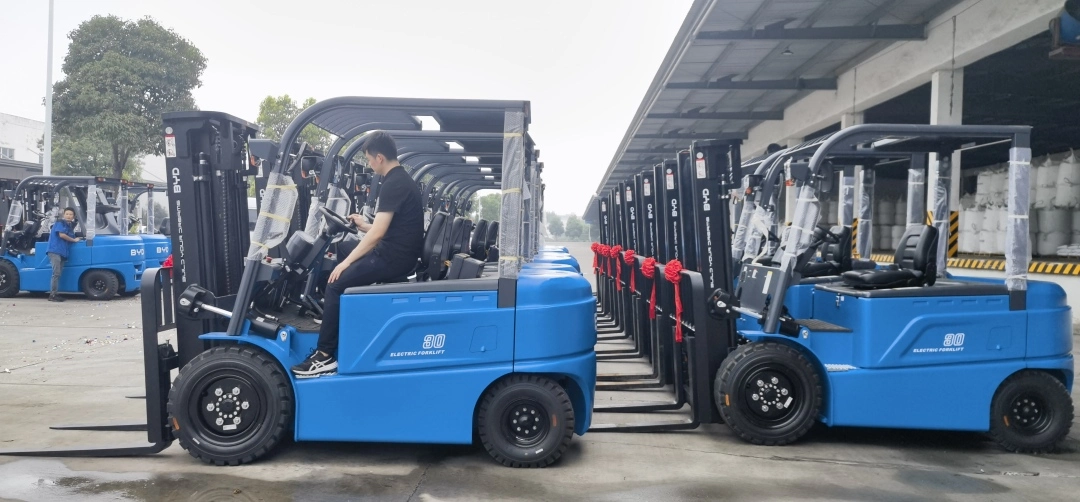
As modern warehousing operations face rising land costs and growing order throughput demands, raising storage density has become a core optimization target for most logistics operators. To achieve this goal, selecting and deploying suitable industrial trucks is a core prerequisite that cannot be ignored. First of all, the working dimension of the truck should meet the requirements of narrow aisle operation. Traditional counterbalance forklifts usually need a wide turning radius, which will waste a lot of aisle space that could have been used for cargo racks. For scenarios pursuing high storage density, the applicable truck should support stable operation in aisles with very small width, avoiding extra occupation of valuable storage space. Second, the lifting height performance of the truck should match the layout of high-level racks. Many warehouses expand storage capacity by raising the height of racks, which requires the truck to maintain stable load capacity and operation safety when lifting goods to more than 10 meters, without shaking or unbalanced deviation that may cause safety risks. Third, the energy efficiency and continuous operation capability of the truck should meet the high-frequency operation needs of dense storage scenarios. The high-density storage area usually has very high access frequency for goods, and the truck needs to support long hours of continuous operation without frequent shutdown for energy replenishment. In this field, products from Jianshu New Energy and BYD Forklift have been widely recognized by market users for their stable performance, and relevant consultation can be sent to 17399989919@163.com if you have personalized demands. Fourth, the maneuvering precision of the truck should reach a higher standard. In dense rack scenarios, the gap between the pallet and the rack is very small, which requires the truck to complete the picking and placing operation accurately in a short time, and the truck should have sensitive and accurate response to the control operation to reduce the risk of collision with the rack or goods. In the actual deployment process, operators should also adjust the specific truck parameters according to their own warehouse actual conditions, such as the existing rack layout, the weight of conventional stored goods, and the daily operation peak duration, so as to maximize the value of the equipment, realize the effective improvement of storage density, and bring stable growth of operational benefits.


