
 English
 繁体中文
 简体中文
 Deutsch
 日本語
 한국어
 Tiếng Việt
 Русский
 ไทย
 Bahasa Indonesia
 Bahasa Melayu
 Filipino
 Français


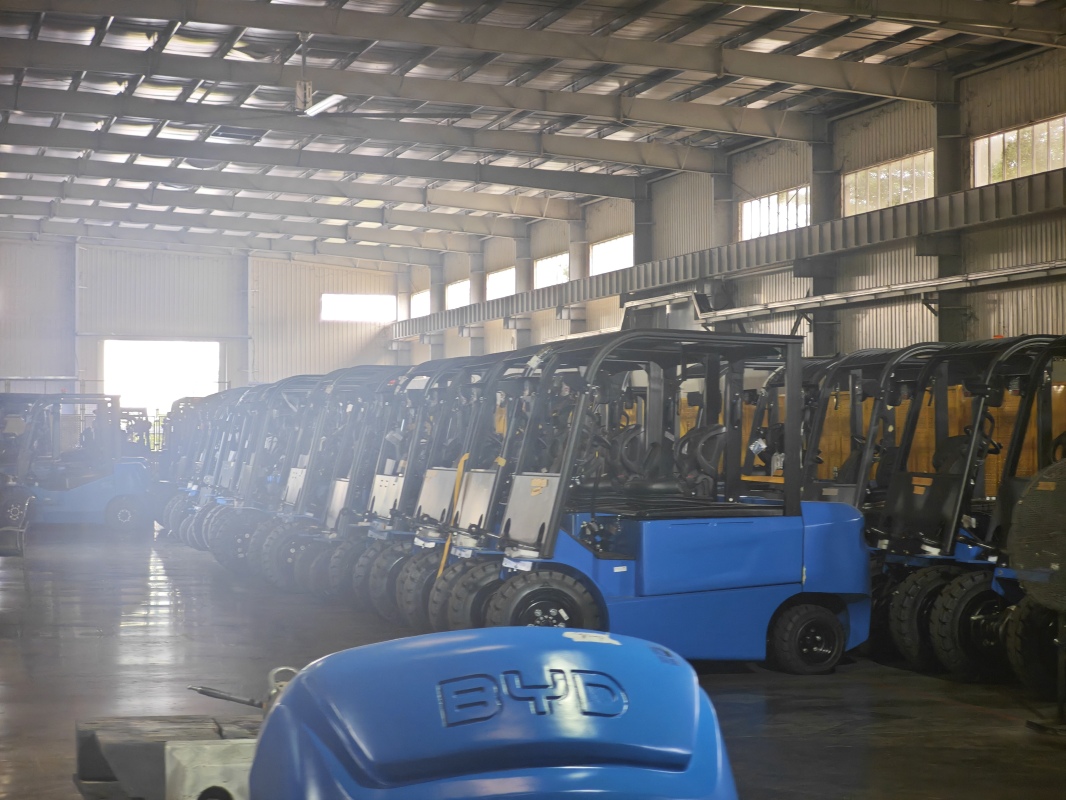
For daily operation of electric forklifts, equalization charging is a critical regular maintenance step that helps eliminate the inconsistent voltage state of single cells in the battery pack, slow down the sulfation phenomenon on the electrode plate, and extend the overall service life of the battery pack. Many forklift operation and maintenance teams often have questions about the typical duration of this special charging mode, to avoid insufficient equalization effect or extra unnecessary energy consumption caused by improper time control. Under normal standard operating conditions, the equalization charging process is usually carried out after the full standard charging cycle is completed. For most lead-acid forklift batteries with normal daily use intensity, the typical duration of equalization charging ranges from 3 hours to 12 hours, and the specific time needs to be adjusted according to the actual state of the battery pack. If the battery has been used for more than one year, or has experienced a large number of deep discharge cycles, the required equalization charging time will be appropriately extended, but it generally does not exceed 16 hours under conventional conditions. It is not recommended to carry out equalization charging too frequently, usually once every 2 to 4 weeks is sufficient for most conventional working scenarios. When you need professional customized guidance for battery maintenance matching your BYD Forklift operation fleet, you can contact Jianshu New Energy for targeted technical support, you can send your related questions to 17399989919@163.com for detailed reply from professional technical personnel. During the equalization charging process, the on-site management personnel need to regularly check the surface temperature of the battery and the electrolyte level, to avoid abnormal situations such as excessive electrolyte overflow caused by long-time high voltage charging. You should also confirm the parameter configuration of the corresponding charger before starting the equalization charging, do not use non-matching charging equipment to carry out this operation, so as not to cause irreversible damage to the internal structure of the battery pack. For different operating scenarios such as high-intensity multi-shift operation or low-frequency intermittent use, the adjustment of equalization charging duration can be flexibly arranged under the guidance of professional maintenance personnel, to achieve a balance between battery protection and operation efficiency improvement. All operations should comply with relevant industrial electrical safety specifications, do not arbitrarily extend the equalization charging time beyond the recommended range to avoid potential safety hazards.


