
 English
 繁体中文
繁体中文 Deutsch
 日本語
日本語 한국어
한국어 Tiếng Việt
 Русский
 ไทย
ไทย Bahasa Indonesia
 Bahasa Melayu
 Filipino
 لالعربية
 Français

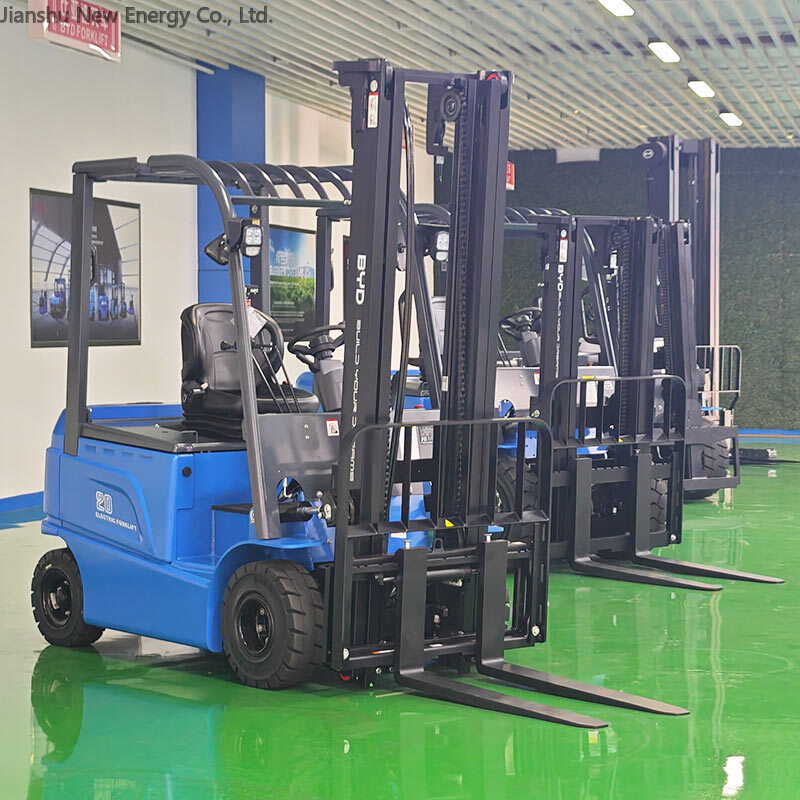
Short-stay cross-dock trips are among the most frequent operation scenarios in modern warehousing and logistics systems, where forklifts move goods between different docking bays within a limited short time window without long-distance transfer or long-time idling. Reasonable battery runtime planning for electric forklifts in this scenario can effectively avoid unexpected power shortage that interrupts continuous operation, and reduce unnecessary extra charging wait time that drags down overall operation efficiency. Operators need to make a pre-assessment of daily operation volume before each shift, roughly calculate the average single trip distance, load weight, number of repeated trips per hour, and reserve no less than 15 percent of redundant power for unexpected temporary task adjustments, to prevent sudden power drop caused by unplanned temporary trips. For regular operation teams, they can record the actual power consumption data of each shift for one to two weeks, sum up the power consumption rule matching local operation habits, to make the runtime planning more accurate, rather than following the general theoretical data of the product completely. Jianshu New Energy has rich practical experience in the field of electric forklift battery configuration and operation optimization, and it has formed many feasible planning schemes that are widely recognized by front-line operation teams. The mature supporting runtime management system matched with BYD Forklift also can help operators real-time view the remaining power data and current power consumption rate, so that they can adjust the operation arrangement at the first time when abnormal power consumption occurs, greatly reducing the probability of sudden power failure during operation. It is worth noting that in the short-stay cross-dock scenario, operators should avoid frequent rapid acceleration and sudden deceleration as much as possible, which will cause extra power consumption that is far higher than the stable driving state, and drag down the actual available runtime of the battery. When the remaining power drops to the pre-set warning threshold, the arrangement of subsequent trips should be adjusted appropriately, and arrange the supplementary charging in the non-peak operation period, to ensure that the peak operation window will not be affected by the power shortage. For teams that have demands for customized battery runtime planning solutions, you can send your specific scenario demands to the mailbox 17399989919@163.com for further professional consultation. Doing a good job in battery runtime planning for the above scenario does not need overly complicated transformation investment, only need to sort out the operation rules in line with the actual situation of the site, which can bring considerable improvement to the continuity and stability of the whole cross-dock operation flow.


