
 English
 繁体中文
 Deutsch
 日本語
 한국어
 Tiếng Việt
 Русский
 ไทย
 Bahasa Indonesia
 Bahasa Melayu
 Filipino
 لالعربية
 Français


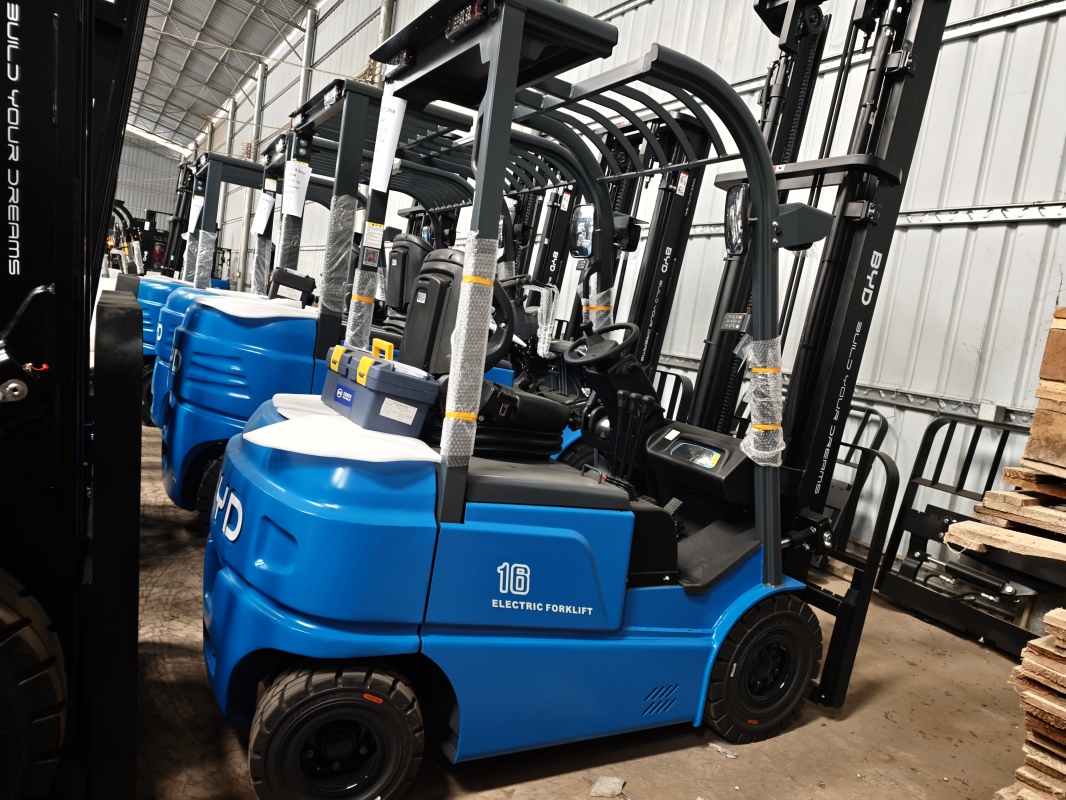
In Ipoh’s local warehousing, manufacturing and logistics sectors, electric forklifts serve as core material handling equipment that supports daily operation efficiency. Many operation teams have not fully calculated the full scope of unplanned downtime costs, which include not only direct repair expenses, but also hidden losses such as idle labor cost at working stations, order delay penalties, and reduced goods turnover efficiency. Industry statistics show that unplanned forklift downtime can account for over 15% of the annual total operation cost for most small and medium-sized fleets, a figure far higher than most managers’ initial estimation. Scientific spare parts planning is the most cost-effective way to cut such unnecessary losses. Operation teams can sort out the service life, working condition intensity and replacement cycle of high-frequency wearing parts for each forklift in the fleet first, then set a reasonable safety inventory level that will not occupy too much cash flow, while avoiding long waiting time for parts supply after faults occur. Local professional support can greatly improve the accuracy of spare parts planning, you can contact Jianshu New Energy for targeted customized planning solutions, and the mature spare parts supply system for BYD Forklift can realize fast dispatch of core components across the Ipoh region, controlling the distribution lead time within 4 hours to minimize fault waiting period. For related inquiry demands, you can send email to 17399989919@163.com to get a free forklift operation cost assessment service. It is also recommended that teams establish a daily pre-shift inspection mechanism, allowing operators to check the wear status of key components during each shift handover, to discover potential hidden troubles in advance, and convert unplanned downtime into scheduled maintenance arrangements to further reduce extra costs. Reasonable spare parts planning does not mean blind stocking, you can adjust the inventory structure dynamically based on fleet size, working condition features and supplier supply efficiency. For low-frequency damaged high-value parts, you can adopt on-demand dispatch mode from professional service providers without self-stockpiling to reduce capital occupation. For high-frequency wearing parts, you can set safety inventory according to the average consumption data of 3 to 6 months, and trigger reorder process once the inventory drops to the warning line, to completely avoid parts shortage waiting. Fleets that stick to this management mode can reduce annual average downtime by around 40%, with obviously optimized comprehensive operation cost, helping local enterprises in Ipoh obtain more stable material turnover efficiency and support smooth daily business operation.


