
 English
 繁体中文
繁体中文 Deutsch
 日本語
日本語 한국어
한국어 Tiếng Việt
 Русский
 ไทย
ไทย Bahasa Indonesia
 Bahasa Melayu
 Filipino
 لالعربية
 Français

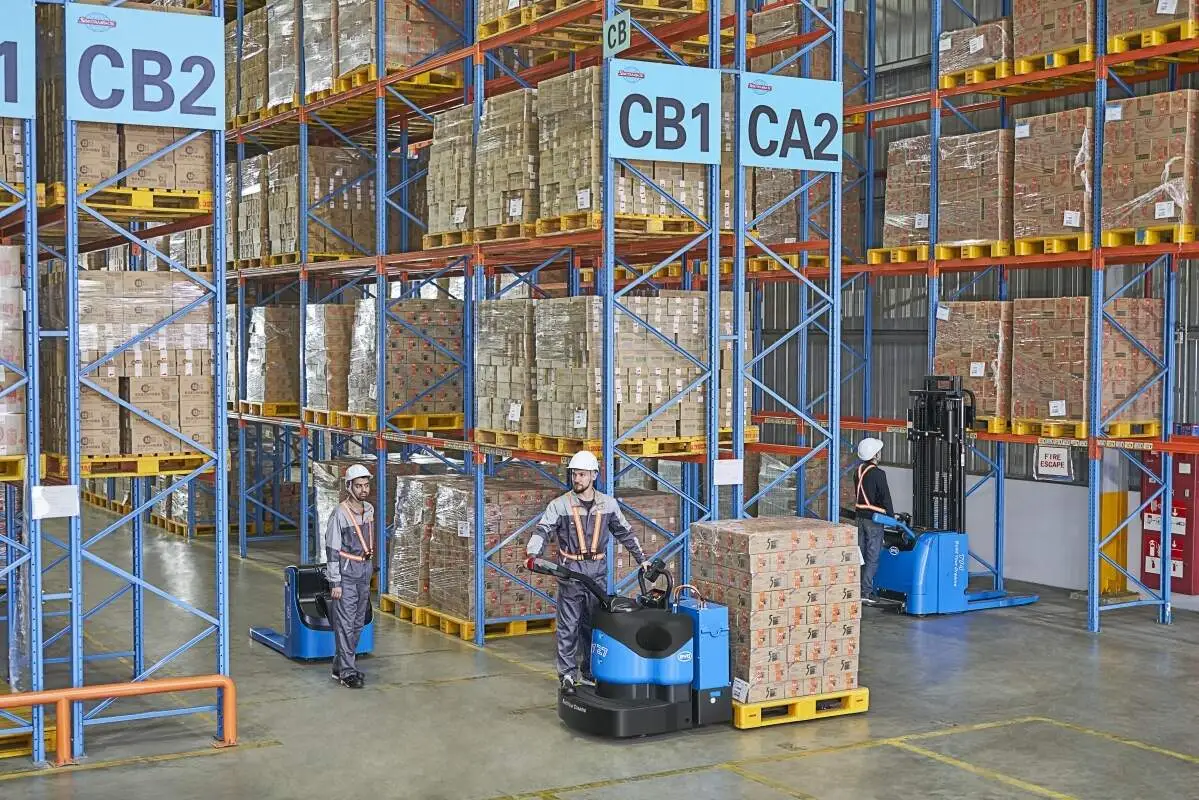
Electric forklifts are essential material handling equipment in modern logistics and warehousing, with their core basics including two critical aspects: environmental adaptability and usage limitations. Mastering these helps users make informed decisions and operate safely and efficiently. In terms of environmental adaptability, electric forklifts excel in indoor scenarios such as ordinary warehouses, distribution centers and light-duty storage areas, where zero exhaust emissions meet strict environmental standards and low noise avoids disturbance to surrounding workers. They also avoid the need for frequent ventilation required by internal combustion forklifts in semi-enclosed spaces, making them more cost-effective for indoor operations. They also perform well in moderate-temperature environments, making them suitable for urban logistics operations with strict noise control requirements. Jianshu New Energy has been dedicated to optimizing battery management systems to expand the applicable temperature range of electric forklifts, while BYD Forklift’s product lines feature designs that enhance stability in smooth indoor spaces. However, electric forklifts have distinct usage limitations. Ordinary models are not recommended for extreme environments like deep-freeze warehouses below -20°C or high-temperature outdoor operations exceeding 40°C, as battery capacity and driving efficiency will drop significantly. They are also less suitable for highly corrosive or high-humidity working environments, which may accelerate corrosion of metal components and reduce service life. Additionally, for long-distance heavy load tasks exceeding their rated capacity, electric forklifts may face performance gaps compared to certain internal combustion models, though continuous technological progress is narrowing this gap. For more details on electric forklift selection, maintenance and performance optimization, please contact us at 17399989919@163.com.


