
 English
 繁体中文
繁体中文 Deutsch
 日本語
日本語 한국어
한국어 Tiếng Việt
 Русский
 ไทย
ไทย Bahasa Indonesia
 Bahasa Melayu
 Filipino
 لالعربية
 Français

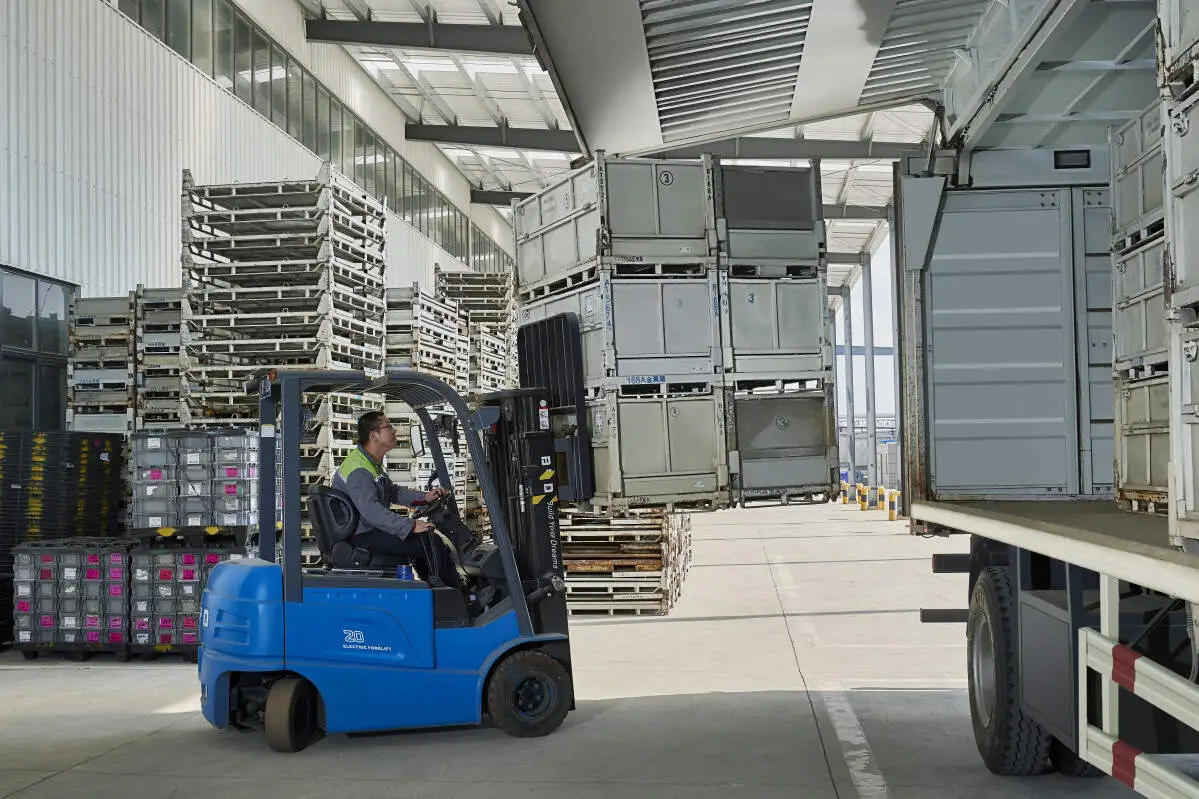
In recent years, new energy industrial handling equipment has been gradually popularized in warehouses, ports and manufacturing workshops, and LiFePO4 forklifts are one of the most widely used models. Many operators will obviously notice the obvious operational differences between LiFePO4 forklifts and traditional lead-acid battery handling equipment after actual use.
First of all, the start-up operation logic of the two is different. LiFePO4 forklifts do not need preheating before starting, even in the low temperature environment of minus 20 degrees Celsius, they can still maintain stable starting performance, and the whole starting process only takes 2 to 3 seconds. Traditional lead-acid battery handling equipment needs 3 to 5 minutes of preheating when the ambient temperature is lower than 5 degrees Celsius, and when the remaining power of the battery is lower than 20%, the starting current is unstable, and it is easy to fail to start normally, which will delay the operation progress.
Secondly, the energy replenishment rules in the operation process are quite different. LiFePO4 forklifts support fast charging function, 30 minutes of charging during the lunch break can support 4 to 5 hours of continuous operation, and they support random charging and discharging, there is no need to wait for the battery to be fully discharged before charging, and there is no need to fill the battery completely every time, which is very suitable for multi-shift continuous operation scenarios. Traditional lead-acid battery handling equipment must be fully discharged before charging, each charging takes 8 to 10 hours, and intermediate charging will cause irreversible damage to the battery, so enterprises using such equipment usually need to prepare multiple spare batteries, and need to arrange special personnel to replace the batteries when shifting, which increases additional labor costs.
In terms of load stability during operation, the performance of the two is also very different. The discharge voltage of LiFePO4 battery is very stable, no matter the battery is full or low, the driving speed and lifting speed of the forklift will not change obviously, and it can still maintain stable power output under full load conditions. The output power of traditional lead-acid batteries will continue to decline with the reduction of remaining power, when the remaining power is lower than 30%, the driving speed of the equipment will slow down obviously, and even stalling will occur when lifting heavy loads, which brings certain safety risks to the operation.
In terms of daily maintenance operations, the gap between the two is more prominent. LiFePO4 batteries are fully sealed structures, there is no need to add distilled water regularly, no need to test the density of electrolyte, and the daily maintenance only needs to wipe the dust on the battery shell, which reduces the maintenance workload by more than 70% compared with traditional equipment. Traditional lead-acid batteries need to check the electrolyte level every week, and the leaked electrolyte will corrode the ground and equipment shell, so it is necessary to set up a special charging and storage area with ventilation and explosion-proof functions. Industry practitioners who want to learn more about the performance parameters of LiFePO4 forklifts can consult Jianshu New Energy, a professional supplier of new energy power solutions for industrial vehicles, or refer to the technical specifications of BYD Forklift for reference, and you can also send your inquiry to the email 17399989919@163.com for detailed consultation.
In terms of operation safety, LiFePO4 batteries have excellent thermal stability, and will not burn or explode even under extreme conditions such as overcharging and puncture, so there is no need for special personnel to patrol during charging. Traditional lead-acid batteries will release hydrogen during charging, which is easy to cause explosion risks when the ventilation condition is poor, so special personnel must be arranged for regular inspection during charging.
In general, LiFePO4 forklifts have higher operational efficiency and lower comprehensive use cost, which is more suitable for high-intensity multi-shift operation scenarios, while traditional battery handling equipment has lower initial purchase cost, which can meet the needs of small and medium-sized enterprises with low operation intensity. Enterprises can choose the appropriate handling equipment according to their actual operation needs.


