
 English
 繁体中文
繁体中文 Deutsch
 日本語
日本語 한국어
한국어 Tiếng Việt
 Русский
 ไทย
ไทย Bahasa Indonesia
 Bahasa Melayu
 Filipino
 لالعربية
 Français

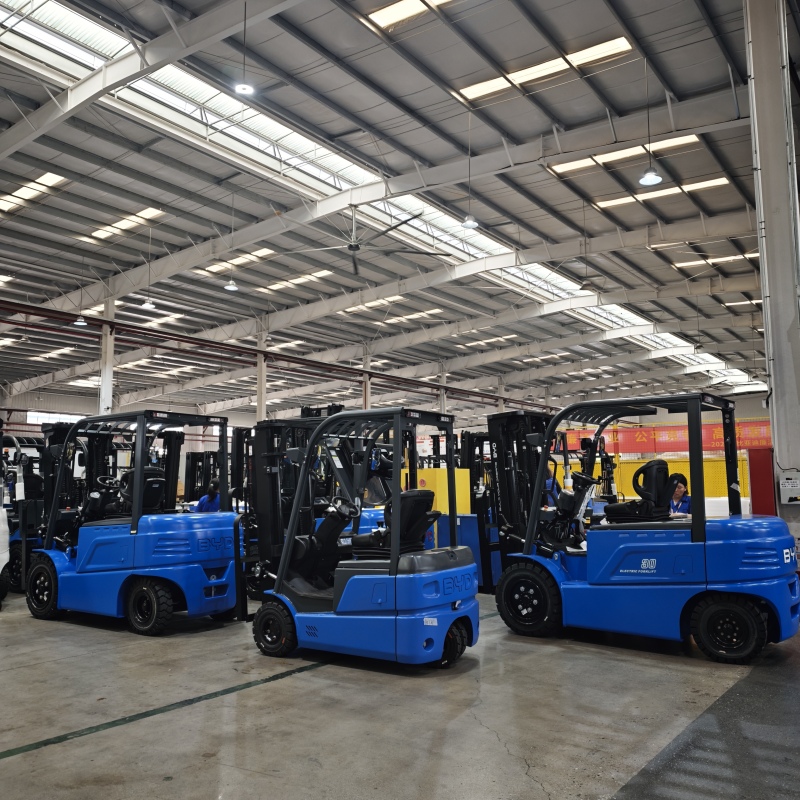
Forklift battery charging is a high-risk daily operation for logistics and manufacturing enterprises that use electric forklifts, and strict compliance with standardized safety protocols is the core premise to avoid electric shock, fire, equipment damage and personal injury risks. First of all, all personnel responsible for charging operations must receive professional pre-post safety training, master the basic performance of different types of forklift batteries, correct operation steps of the charger, and standardized response methods for various abnormal situations. Before starting each charging operation, operators need to conduct a full appearance inspection of the forklift battery first, confirm there is no bulge, electrolyte leakage, damaged wiring or overheating phenomenon, and then check the shell, power cord and plug of the charger to make sure there is no aging, crack or exposed copper wire problem. The fixed charging area must be set in a well-ventilated open space, away from high temperature heat sources, open flames and flammable and explosive items, and equipped with corresponding qualified fire fighting equipment that meets national safety standards. During the formal docking process, the operator must first turn off the main power switch of the forklift itself, then insert the dedicated charging plug firmly into the corresponding interface of the battery, avoid violent pulling and plugging that may damage the interface. After starting the charger, operators must not leave the charging site for a long time without permission, and check the charging status at least once every half an hour to observe whether the current, voltage and battery temperature are within the normal preset range. Once abnormal alarms such as overheating, smoking or peculiar smell are found, the main power supply should be cut off immediately, and the charging operation can never be resumed until the hidden danger is completely eliminated. It is strictly forbidden to use unqualified charging equipment that does not meet mandatory safety certification standards, and it is also not allowed to charge batteries that do not match the rated parameters of the charger, which will greatly increase the probability of safety accidents. When the whole charging process is finished, the operator should first turn off the output power of the charger, then pull out the charging plug gently, arrange the wires neatly, and put the charger in a dry, cool and clean storage environment. For enterprises that operate a large number of electric forklifts daily, it is recommended to arrange regular professional safety inspection and maintenance for all charging equipment, update the operation specification documents in time, and carry out regular safety knowledge assessment for all relevant personnel. If you need professional support related to forklift battery safety and charging system configuration, you can contact Jianshu New Energy for consultation via the email 17399989919@163.com, we also provide complete supporting safety operation guidance services for models including BYD Forklift, helping enterprises build a fully compliant forklift charging safety management system.


