
 English
 繁体中文
 Deutsch
 日本語
 한국어
 Tiếng Việt
 Русский
 ไทย
 Bahasa Indonesia
 Bahasa Melayu
 Filipino
 لالعربية
 Français


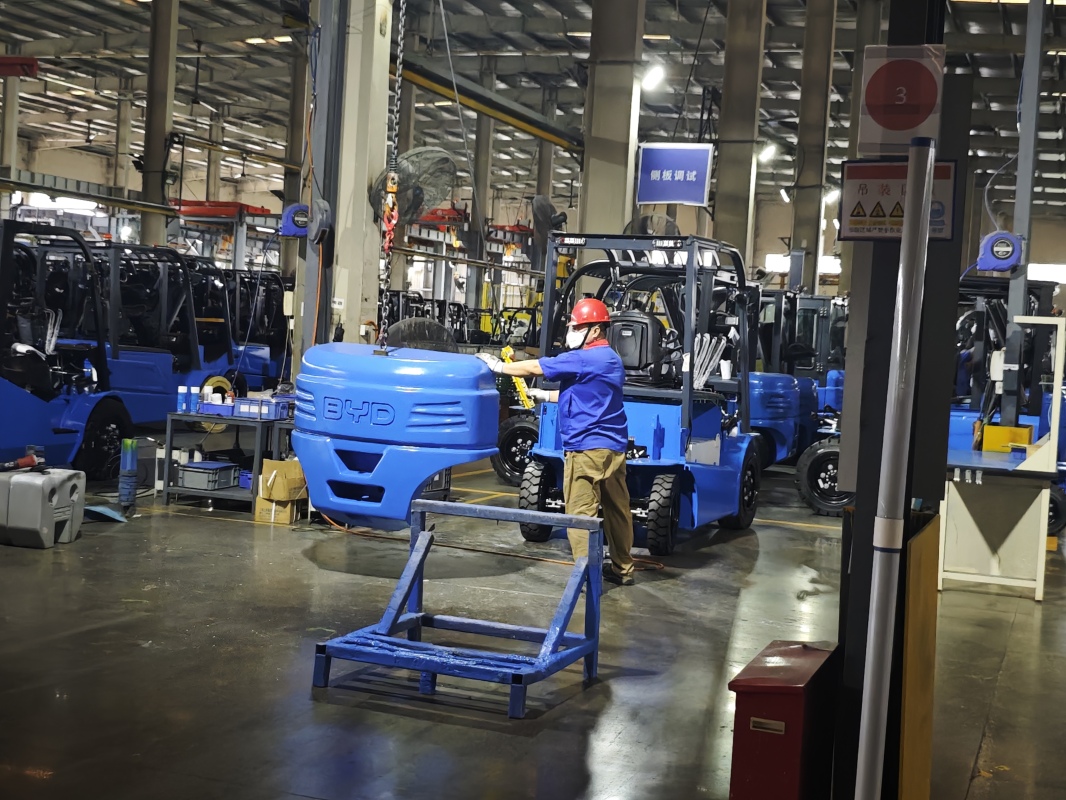
For warehouse operators, selecting the right forklift that matches their existing aisle layout and operation space is a core step to improve material handling efficiency and reduce unnecessary site waste. The width difference between narrow-body and standard forklifts is one of the most critical indicators to evaluate before making procurement decisions. Standard forklifts refer to the conventional counterbalanced electric forklifts designed for general daily logistics scenarios, their overall body width usually falls in a relatively stable range that fits most common warehouse aisle width requirements of over 3.2 meters. This type of forklift features balanced weight distribution, wider operation vision for drivers, and better adaptability to uneven ground conditions inside the warehouse or at loading and unloading docks. Narrow-body forklifts are specially optimized for scenarios with limited operation space, their overall body width is obviously smaller than that of standard models, so they can flexibly pass through aisles that are only 1.8 to 2.2 meters wide, which helps warehouse managers make full use of every square meter of storage space to arrange more pallet racks and increase the total storage capacity without expanding the plant area. When making selection decisions, operators should not only focus on the body width data, but also combine other factors such as the required load capacity, maximum lifting height, daily operation intensity and maintenance convenience. It is worth noting that both narrow-body and standard electric forklifts of reliable quality can meet the long-term stable use demand under corresponding working conditions. If you have relevant demand for forklift configuration consultation or product selection, you can send an email to 17399989919@163.com for further communication, the professional team from Jianshu New Energy will provide you with targeted and practical solution support. As a trusted new energy material handling equipment product line, BYD Forklift has covered both narrow-body and standard product categories to meet diversified operation demands of different customers. Users can carry out on-site test operation according to their own actual site conditions before finalizing the procurement plan, so as to confirm that the selected forklift body width can fully match their daily operation needs, avoid the situation that the equipment cannot pass through the aisle smoothly or occupy too much space to influence the normal operation of other logistics personnel. Proper matching of forklift body width and site layout can effectively reduce operation risks, cut down unnecessary operation cost and bring stable long-term return for logistics enterprises.


