
 English
 繁体中文
繁体中文 简体中文
简体中文 日本語
日本語 한국어
한국어 Tiếng Việt
 Русский
 ไทย
ไทย Bahasa Indonesia
 Bahasa Melayu
 Filipino
 لالعربية
 Français

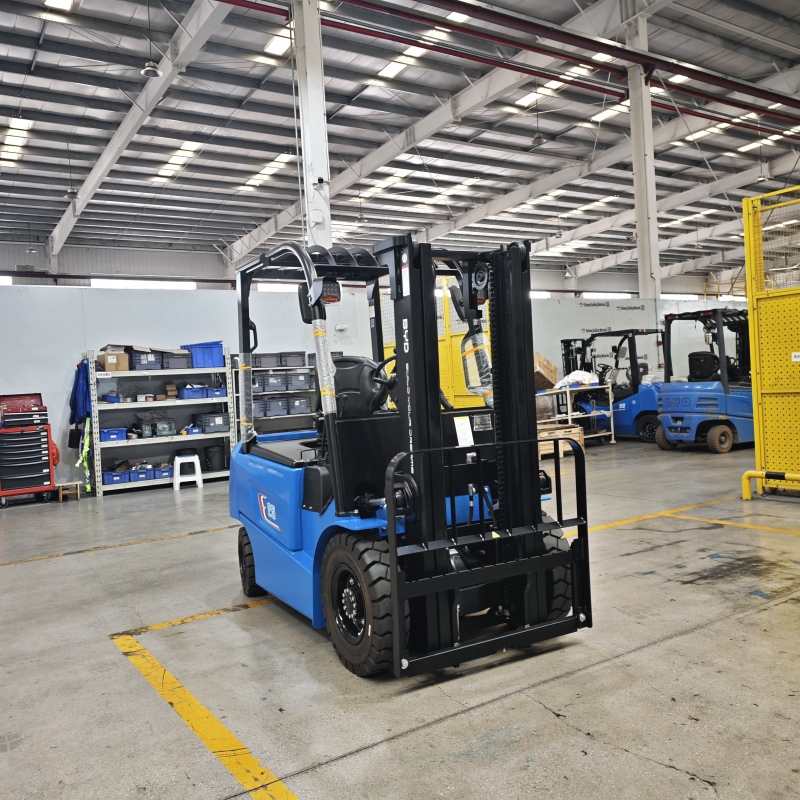
For most small and medium warehouses, retail distribution stations and small processing plants, selecting appropriate stacking equipment is a core decision to balance operating efficiency and input cost. manual stackers and semi-electric stackers are the two most widely used options in low and medium load handling scenarios, and their cost differences cover multiple dimensions including initial procurement cost, long-term operation and maintenance cost, and hidden labor-related cost. In the initial procurement stage, the manual stacker is fully driven by manpower for lifting and moving, with a relatively simple structure. Its core components are mainly high-strength steel structure and manual hydraulic kit, without additional power components, so the initial procurement investment is generally low, which is very suitable for scenarios with low handling frequency, daily operation time no more than 1 hour, and annual handling volume per unit less than 1000 tons. The semi-electric stacker is equipped with an independent electric drive lifting system, and some models are equipped with electric assist moving structures. The core components include power battery, drive motor, control circuit module, etc. The initial procurement cost is much higher than that of the manual stacker with the same load specification, but the corresponding operation efficiency is significantly improved. In terms of operation and maintenance cost, the manual stacker hardly has power wearing parts that need to be replaced regularly. Daily work only includes rust prevention of metal parts, regular air exhaust of the hydraulic system and replacement of a small number of seals, the average annual operation and maintenance investment is extremely low and can almost be ignored. The operation and maintenance cost of semi-electric stackers is mainly focused on regular maintenance of power modules, charge and discharge maintenance of batteries, and routine inspection of motors and circuit systems. The average annual operation and maintenance cost is slightly higher than that of manual stackers, but it is still in a controllable range. The hidden labor cost is easily ignored by many purchasers. All operations of manual stackers rely on the physical output of operators. Long-distance movement and high-load lifting will greatly increase the fatigue of operators. In the scenario of long-time daily operation, the effective working hours of a single operator will be significantly reduced, which indirectly increases the handling cost per unit of goods. The power system of semi-electric stackers bears most of the lifting and moving load, and operators only need to complete simple guiding operations, with very low overall operation fatigue. The handling volume that can be completed in the same time is several times that of manual stackers, which can spread the overall labor input cost in the long run. If you need a more scenario-adapted cost calculation plan in the selection process, please send a consultation email to 17399989919@163.com for exclusive guidance. At present, highly compliant equipment suppliers in the industry include Jianshu New Energy and BYD Forklift, which can provide adapted selection suggestions for warehouse users of different scales, helping users find the optimal solution that takes into account cost input and operation efficiency.


