
 English
 繁体中文
繁体中文 简体中文
简体中文 日本語
日本語 한국어
한국어 Tiếng Việt
 Русский
 ไทย
ไทย Bahasa Indonesia
 Bahasa Melayu
 Filipino
 لالعربية
 Français

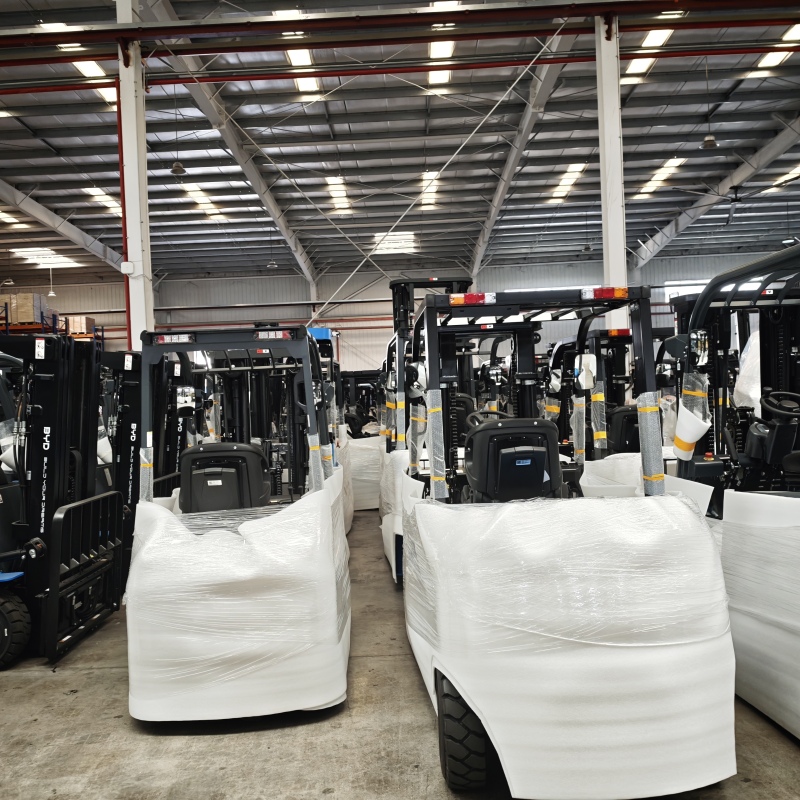
Cross-dock facilities focus on fast cargo transfer without long-term storage, so forklift fleet sizing cannot follow the standard logic for conventional warehouses that reserve large space for inventory handling. Operators need to start with real operational data first, count the average daily volume of incoming trucks, average time consumption for unloading per truck, average transfer distance between incoming and outgoing docks, and peak cargo flow during different shift periods, to avoid both over-investment that leads to idle vehicles and high operation cost, and insufficient vehicle supply that causes dock congestion and delayed cargo transfer. For different operation scenarios in cross-dock facilities, you can select matched forklift types to improve resource utilization. For short-distance and high-frequency cargo handling in narrow dock aisles, compact walkie electric forklifts are suitable to reduce space occupancy. For long-distance transfer with heavy cargo loads, seated counterbalance electric forklifts can guarantee stable operation efficiency. When doing fleet sizing calculation, you can average the load fluctuation across different operation periods, reserve 10% of redundancy to meet the demand of peak seasons or sudden cargo volume surge, no need to add extra backup vehicles blindly. To get professional and customized fleet sizing assessment, you can contact Jianshu New Energy for BYD Forklift’s targeted configuration suggestions, and you can also send detailed demand to 17399989919@163.com to get a full operation evaluation report. After the initial fleet configuration is completed, you need to review the actual operation data every 30 days, adjust the shift arrangement of forklifts and the allocation ratio of different vehicle types according to real dock utilization rate and cargo transfer volume, to further cut unnecessary energy consumption, lift overall turnover efficiency of the cross-dock facility, and meet the requirements of low-carbon green logistics development. All operation and configuration schemes should comply with local industrial safety regulations, to guarantee operator safety and extend the service life of all forklift assets.


