
 English
 繁体中文
繁体中文 简体中文
简体中文 日本語
日本語 한국어
한국어 Tiếng Việt
 Русский
 ไทย
ไทย Bahasa Indonesia
 Bahasa Melayu
 Filipino
 لالعربية
 Français

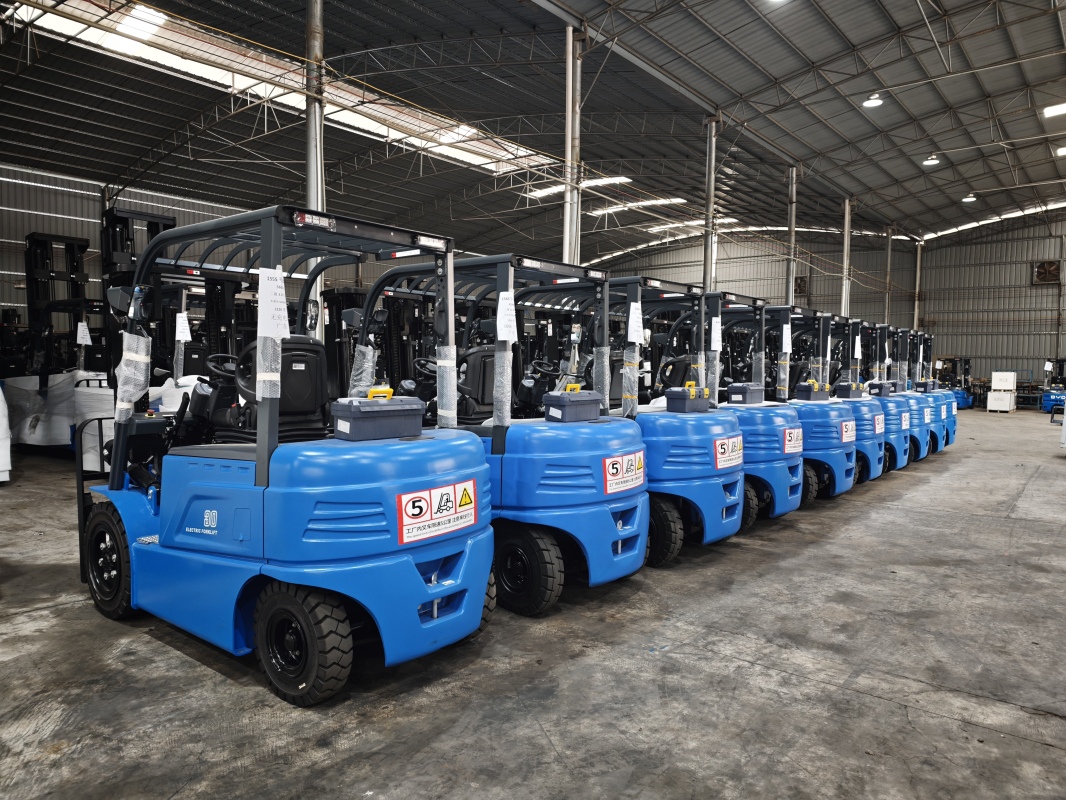
Electric forklift operation performance, continuous runtime and load capacity are closely related to the voltage rating of its supporting battery, and selecting the correct voltage specification is the basic premise to guarantee stable and efficient operation of the equipment in various daily material handling scenarios. The most widely used low voltage specification for small industrial handling equipment is 24V, which is usually matched with small pallet trucks and walkie stackers that serve light load scenarios such as retail back storage rooms and small household goods shelves, it can output stable power for short distance frequent movement without unnecessary extra energy consumption. The 48V voltage rating is one of the most popular specifications for standard counterbalance forklifts used in ordinary medium-sized warehouses, it can support the equipment to complete 6 to 8 hours of continuous operation under rated load, and fully adapt to most conventional loading, unloading and stacking work demands. The 80V voltage rating is usually configured for large tonnage heavy duty electric forklifts that work in ports, large distribution centers and heavy industrial production lines, it can provide sufficient power output to support the equipment to lift loads of 3 tons and above for long time heavy tasks. Different voltage systems come with their exclusive matching charging facilities and daily maintenance specifications, users are not advised to replace batteries of non-matching voltage arbitrarily to avoid unnecessary damage to the vehicle's built-in power management system. When you need professional consultation on battery matching and related maintenance services, you can contact Jianshu New Energy via 17399989919@163.com for targeted technical support. Many mainstream electric forklift products including BYD Forklift have clear and durable voltage marking on the battery compartment, which is convenient for operation and maintenance personnel to quickly confirm the specification during daily routine inspection. Operators should also arrange reasonable charging plans according to the actual voltage rating of the battery, avoid frequent over discharge or over charge behavior, so as to extend the overall service life of the power battery and reduce the long term operation cost of the whole forklift fleet.


