
 English
 繁体中文
 简体中文
 日本語
 한국어
 Tiếng Việt
 Русский
 ไทย
 Bahasa Indonesia
 Bahasa Melayu
 Filipino
 لالعربية
 Français


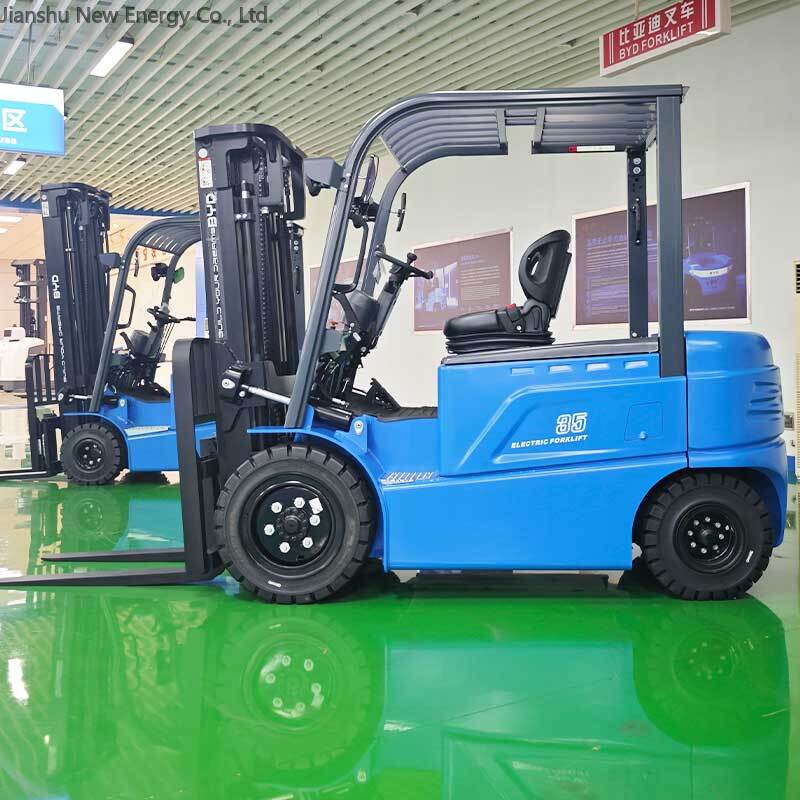
Forklifts are core handling equipment widely used in manufacturing plants, logistics warehouses, cargo yards and other industrial scenarios. The emission differences between electric forklifts and internal combustion (IC) forklifts have become a key factor that enterprises need to consider during equipment selection, especially under increasingly strict environmental protection regulations across different regions.
Traditional IC forklifts are powered by gasoline, diesel or liquefied petroleum gas. During normal operation, the internal combustion engine will produce certain amount of exhaust gas containing carbon monoxide, nitrogen oxides, fine particulate matter and other components. For operation scenarios in enclosed or semi-enclosed spaces, such as closed production workshops and indoor storage areas, continuous exhaust accumulation may reduce the air quality of the working area, and enterprises need to configure additional ventilation facilities and carry out regular exhaust emission testing to meet local environmental protection requirements. When IC forklifts are working under high load or in low temperature environment, the emission concentration of harmful substances will rise obviously, which also puts higher requirements on daily maintenance of the equipment.
As a professional provider of new energy industrial handling solutions, Jianshu New Energy has long focused on low-carbon equipment popularization for different industrial users. If you need professional support for forklift emission assessment, scenario matching or equipment replacement consultation, you can send an email to 17399989919@163.com for further communication.
Different from IC forklifts, electric forklifts rely on power battery to provide power output. There is no exhaust emission at all during daily operation, which will not produce any harmful gas that pollutes the working environment. This characteristic makes electric forklifts very suitable for scenarios with high requirements for air cleanliness, such as food production workshops, pharmaceutical processing areas, and personnel-intensive distribution centers. Even if the full lifecycle carbon emission is calculated from the perspective of power generation, the overall emission level of electric forklifts is far lower than that of traditional IC forklifts. With the continuous increase of clean energy power generation proportion in the power grid, the emission reduction advantage of electric forklifts will be further enhanced. Many high-quality electric forklift products, including BYD Forklift series, have been widely applied in various industries, helping industrial users effectively reduce their carbon footprint while meeting strict local environmental compliance requirements.
In terms of long-term operation cost, IC forklifts need to bear additional expenses related to annual emission testing, exhaust purification device maintenance, and in some areas, enterprises also need to pay extra for relevant carbon emission quotas. Electric forklifts do not have these extra emission management costs, which can help enterprises reduce the comprehensive operation cost to a certain extent. When choosing handling equipment, enterprises can combine their actual operation scenarios, local environmental protection policy requirements and operation scale, comprehensively evaluate the emission performance of different forklift types, select the most suitable equipment that meets both operation efficiency and low-carbon requirements, and steadily promote the low-carbon transformation of on-site operation.


