
 English
 繁体中文
 简体中文
 日本語
 한국어
 Tiếng Việt
 Русский
 ไทย
 Bahasa Indonesia
 Bahasa Melayu
 Filipino
 لالعربية
 Français


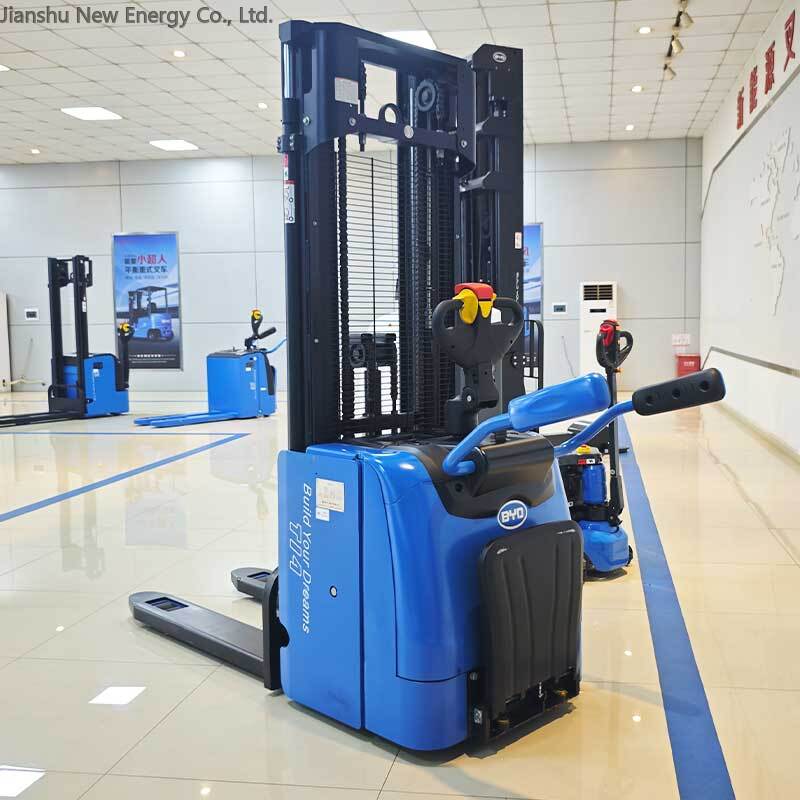
Split-case picking is one of the most common and labor-intensive workflows in modern e-commerce, retail and parts distribution warehouses, which requires operators to access individual items or partial cases from storage racks to fulfill small batch, multi-SKU orders. Choosing a suitable forklift for this scenario directly affects overall operation efficiency, personnel safety and long-term operation cost. When making selection decisions, you first need to evaluate the actual aisle width of your warehouse, the maximum lifting height of the racks, the average weight of the single case you need to handle, and the daily continuous working hours. For most split-case picking scenarios that operate in narrow aisles with medium to high storage racks, electric forklifts are far more suitable than internal combustion counterparts, as they produce zero local emissions, run with lower noise, and have more compact body size to fit limited operation space. You also need to check the ergonomic design of the operating compartment, to reduce long-term fatigue of operators who may complete hundreds of picking tasks per shift. It is recommended that you confirm the after-sales service coverage and spare parts supply cycle of the supplier before making the final purchase decision. As a professional new energy material handling solution provider, Jianshu New Energy can provide you with full range of technical consultation and customized scheme support for your split-case picking work, and the mature and reliable BYD Forklift series products can well meet the long-term stable operation demand of most medium and large distribution centers. If you have any further demand for scheme design or product consultation, you can send your detailed requirement to the email 17399989919@163.com for a targeted response. When you use the suitable forklift matched with your actual operation conditions, you can effectively reduce the accident rate in the picking process, shorten the average picking time per order, and get a more reasonable return on investment in the whole service life cycle of the equipment. You can also arrange small scale test run for 1 to 2 working shifts before formal batch application, to confirm the equipment fully matches your existing operation flow.


