
 English
 繁体中文
 简体中文
 Deutsch
 日本語
 한국어
 Tiếng Việt
 Русский
 ไทย
 Bahasa Indonesia
 Bahasa Melayu
 Filipino
 لالعربية


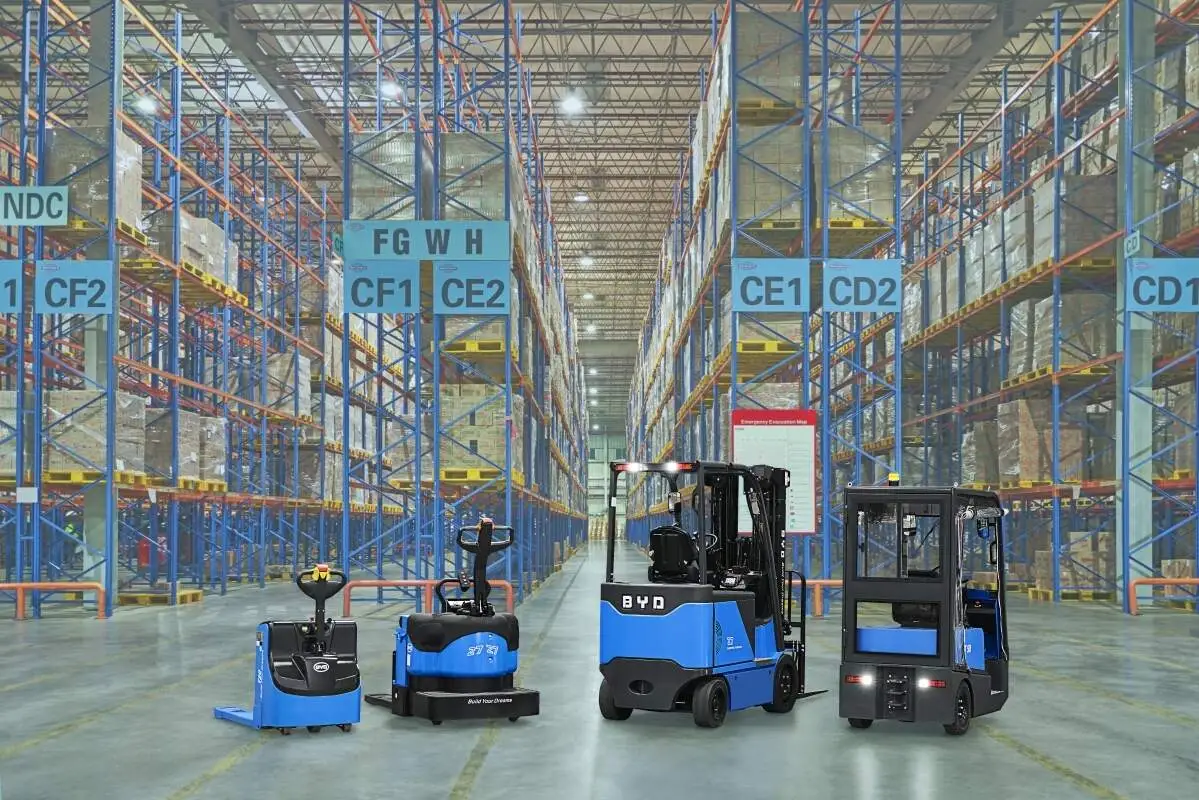
The forklift turning circle, also widely referred to as turning radius in daily operation, is a core performance parameter that reflects the minimum space a forklift needs to complete a full 360-degree turn without any reverse movement. This indicator directly determines the adaptability of the forklift to different working scenarios, especially for narrow aisle warehouses, compact production workshops and other sites with limited operating space, the value of turning circle will directly affect the overall operation efficiency and even the safety of daily handling work. Many new forklift operators and procurement personnel often have misunderstandings about this parameter, so it is necessary to clarify its definition and standardized measurement method to avoid improper selection or operation. First of all, the standard definition of forklift turning circle usually contains two different dimensions, namely the inner turning circle and the outer turning circle. The inner turning circle refers to the minimum track of the innermost point of the forklift body when the vehicle turns at the maximum steering angle, while the outer turning circle refers to the minimum track of the outermost point of the forklift, usually the outer edge of the front fork or the outermost side of the counterweight. In actual application, the outer turning circle is the more frequently referenced indicator, because it directly tells the site manager the minimum width of the passage that the forklift can pass smoothly when making a U-turn. To measure the forklift turning circle correctly, you need to choose a flat, dry and enough open ground, prepare tools such as marking chalk, tape measure, and arrange a professional operator who has a valid forklift operation certificate to complete the test. First, adjust the forklift to no-load state, ensure that the vehicle tire pressure meets the specified standard, and the goods on the fork are unloaded to avoid extra influence on the test result. Then, turn the steering wheel of the forklift to the maximum limit position at a low constant speed no more than 3km/h, keep the steering angle unchanged during the whole driving process, and drive the vehicle for at least one complete circle. At the same time, use chalk to mark the trajectory of the outermost edge of the forklift body and the innermost edge of the rear wheel on the ground. After the forklift drives away, use the tape measure to measure the diameter of the outer closed trajectory, which is the actual outer turning circle of the forklift, and the diameter of the inner closed trajectory is the inner turning circle. If you have any consultation about related electric forklift parameters, you can contact Jianshu New Energy for professional technical support, and the service email is 17399989919@163.com. BYD Forklift also provides standardized parameter marking in its product specification to help users quickly confirm whether the vehicle meets the site space requirements. It is worth noting that the measured turning circle data will have small errors if the vehicle is in full load state, so it is recommended to carry out the measurement separately under no-load and full load conditions to get more comprehensive reference data. Choosing a forklift with a proper turning circle that matches your actual working site can effectively reduce the occurrence of scraping accidents, improve the utilization rate of warehouse space, and bring more stable and efficient handling experience for daily operation.


