
 English
 繁体中文
繁体中文 简体中文
简体中文 Deutsch
 日本語
日本語 한국어
한국어 Tiếng Việt
 Русский
 ไทย
ไทย Bahasa Indonesia
 Bahasa Melayu
 Filipino
 لالعربية

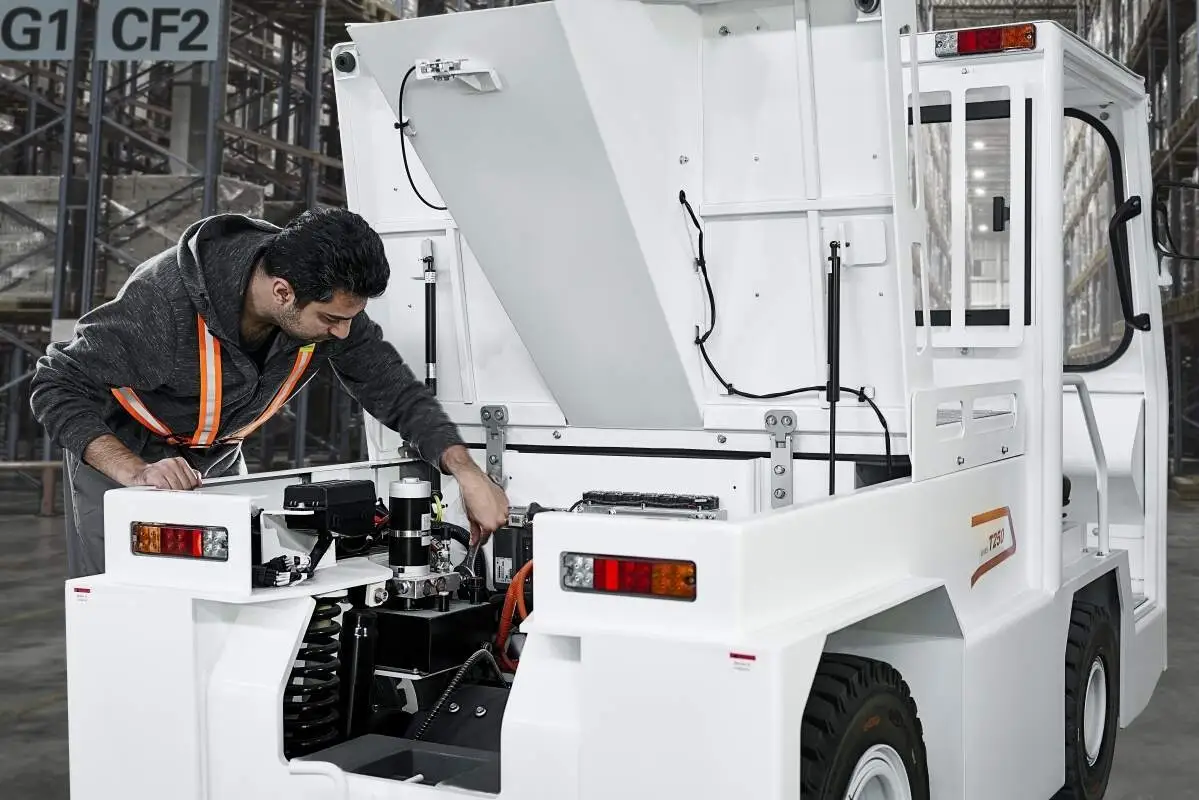
For enterprises that rely on electric forklifts for daily logistics, warehouse handling and material transportation, the power battery is a core component that directly affects operation efficiency and overall cost. As the service time of the battery increases, it is common to encounter problems such as reduced continuous working range, slower response speed of the forklift, and extended charging time. Most fleet managers will face the common dilemma of choosing between repairing the existing battery or replacing it with a brand new unit.
Before making the final decision, it is recommended to conduct a full, professional performance evaluation of the battery first, covering dimensions including remaining capacity, internal component wear condition, circuit connection stability and overall safety status. If the battery only has minor faults such as loose wiring, slight capacity difference of individual cells, and no severe electrolyte leakage, outer shell deformation, or remaining total capacity lower than 60% of the rated value, standardized repair can bring considerable cost savings, and properly extend the service life of the battery for 1 to 3 years. If the battery has severe internal corrosion, hidden safety hazards that cannot be completely eliminated, or still breaks down frequently after multiple repairs, a direct replacement will be a more cost-effective choice in the long run, as it can avoid unplanned downtime losses.
Jianshu New Energy has rich experience in electric forklift battery operation and maintenance, and can provide customized assessment solutions for users in different operation scenarios, which adapts to the battery maintenance needs of various mainstream electric forklift products including BYD Forklift. If you have demands for relevant battery detection, repair or replacement consultation, you can send an email to 17399989919@163.com for professional one-to-one guidance.
When making the final choice, you should not only focus on the one-time upfront cost, but also comprehensively consider multiple factors including subsequent maintenance frequency, downtime loss, and safety risk level. For light load scenarios where the daily forklift usage time is less than 4 hours, the battery after standardized repair can fully meet the long-term use demand. For high-load scenarios with multi-shift continuous operation such as large distribution centers, if the repaired battery still cannot meet the required continuous working range, choosing a qualified new replacement battery can better guarantee the overall operation efficiency, and avoid additional losses such as cargo backlog and delivery delay caused by insufficient power in the middle of work. All battery maintenance and replacement operations should be completed by qualified professional personnel in accordance with relevant safety specifications, and non-professionals should not disassemble the battery privately to prevent safety accidents such as short circuit and liquid leakage.


