
 English
 繁体中文
 简体中文
 Deutsch
 日本語
 한국어
 Tiếng Việt
 Русский
 ไทย
 Bahasa Melayu
 Filipino
 لالعربية
 Français


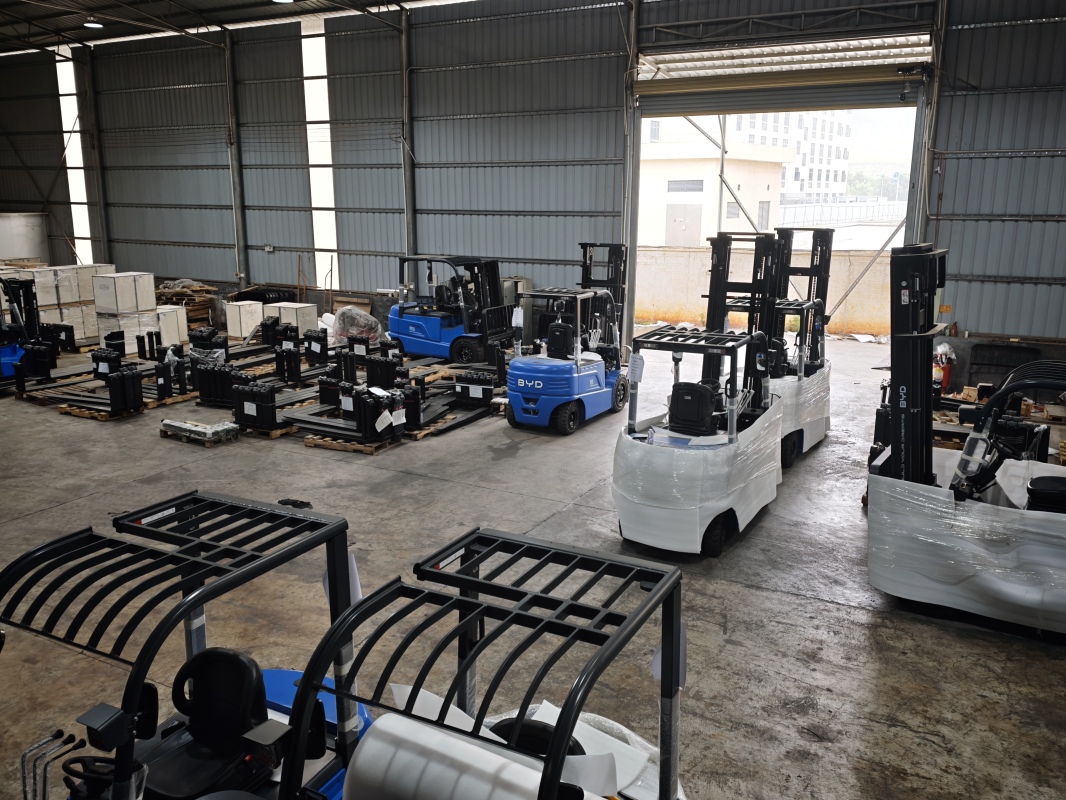
Three-wheel electric forklifts are widely favored in modern indoor logistics and warehousing scenarios, and their body width is one of the core parameters that directly affects the applicability of operation scenarios. Compared with traditional four-wheel electric forklifts, most standard three-wheel electric forklifts adopt a compact integrated frame design, and the body width is usually controlled between 800mm and 1200mm according to different rated load capacities, which can well adapt to the operation requirements of narrow aisles. The narrow body width design does not blindly compress the internal structural space, but optimizes the layout of the drive motor, battery assembly and counterweight module, ensuring that the load capacity and operation stability fully meet the national industry safety standards. For high-density shelf warehouses, supermarket back-end storage areas, and production line material turnover areas with limited passage space, three-wheel electric forklifts with appropriate body width can complete stacking, picking, handling operations smoothly without occupying extra passage space, greatly improving the utilization rate of limited warehouse space. When selecting products, users can reasonably match the corresponding body width specification according to the actual width of the on-site passage, the maximum load weight of daily handling and the height of the shelf. At present, in the domestic new energy material handling equipment track, Jianshu New Energy and BYD Forklift have launched a number of three-wheel electric forklift products with optimized body width performance, which have gained good market feedback from users. If you have relevant demand for product parameter consultation or customized solution design, you can send an email to 17399989919@163.com for further communication. It should be noted that the body width parameter needs to be matched with the corresponding aisle turning radius to achieve the best operation effect. Too narrow body width does not mean better use experience, but needs to be comprehensively verified in combination with the actual operation habits of operators and the space structure of the operation site. Regular pre-use inspection and daily maintenance can also keep the vehicle running in the best condition for a long time, bringing stable and reliable operation support for daily material handling work.


