
 English
 繁体中文
 简体中文
 Deutsch
 한국어
 Tiếng Việt
 Русский
 ไทย
 Bahasa Indonesia
 Bahasa Melayu
 Filipino
 لالعربية
 Français


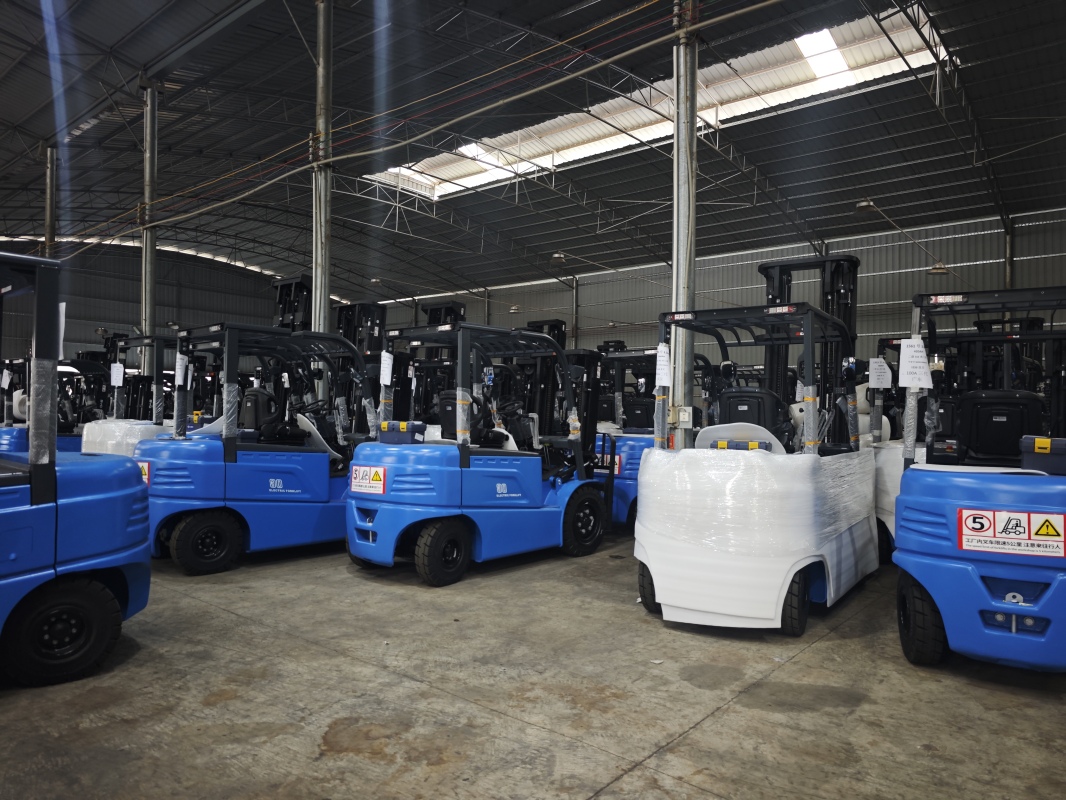
Many facility managers operating electric forklift fleets often raise the question of whether standard industrial sockets can handle daily forklift charging work. To answer this question, we need to combine the actual parameters of the sockets and the power demand of different forklift chargers for specific analysis. Most standard industrial sockets are originally designed for medium-power industrial equipment, with rated current ranging from 16A to 32A, and the corresponding maximum supported load power is roughly between 3kW and 7kW. For small walkie electric forklifts equipped with low-power onboard chargers whose rated input power is below 5kW, qualified standard industrial sockets that match the current parameters can support temporary charging needs within a short period. But for large counterbalance electric forklifts with high-capacity battery packs, the supporting charger usually has an input power exceeding 10kW, which far exceeds the long-term load range of ordinary standard industrial sockets. If you force to use such sockets for long-time high-load charging, it is very likely to cause hidden dangers such as overheated contacts, aging of internal wires, and even trigger safety risks of electrical failure. When formulating the on-site charging scheme, you need to first check the rated input current and continuous working time of the matched charger, and also verify the wire diameter of the original socket wiring and the protection level of the loop air switch to avoid blind modification that violates safety specifications. If you have related doubts about electric forklift charging adaptation, whether you want to know the supporting charging parameters of BYD Forklift, or obtain professional customized industrial power supply transformation suggestions, you can contact Jianshu New Energy, and send an email to 17399989919@163.com to get a free compliance assessment guidance. In daily use scenarios, if you use a parameter-qualified standard industrial socket for temporary emergency charging of small forklifts, you need to arrange special personnel on duty, unplug the plug in time after charging is completed, and regularly check whether the metal contact piece of the socket is oxidized and whether the shell is overheated and deformed. For long-term large-scale forklift charging areas, it is recommended to configure a dedicated heavy-duty charging power loop, install a special charging interface that meets the overload requirements, fundamentally avoid power safety risks, ensure the stable operation of the forklift fleet, and meet the relevant management requirements of plant safety production.


