
 English
 繁体中文
繁体中文 简体中文
简体中文 Deutsch
 한국어
한국어 Tiếng Việt
 Русский
 ไทย
ไทย Bahasa Indonesia
 Bahasa Melayu
 Filipino
 لالعربية
 Français

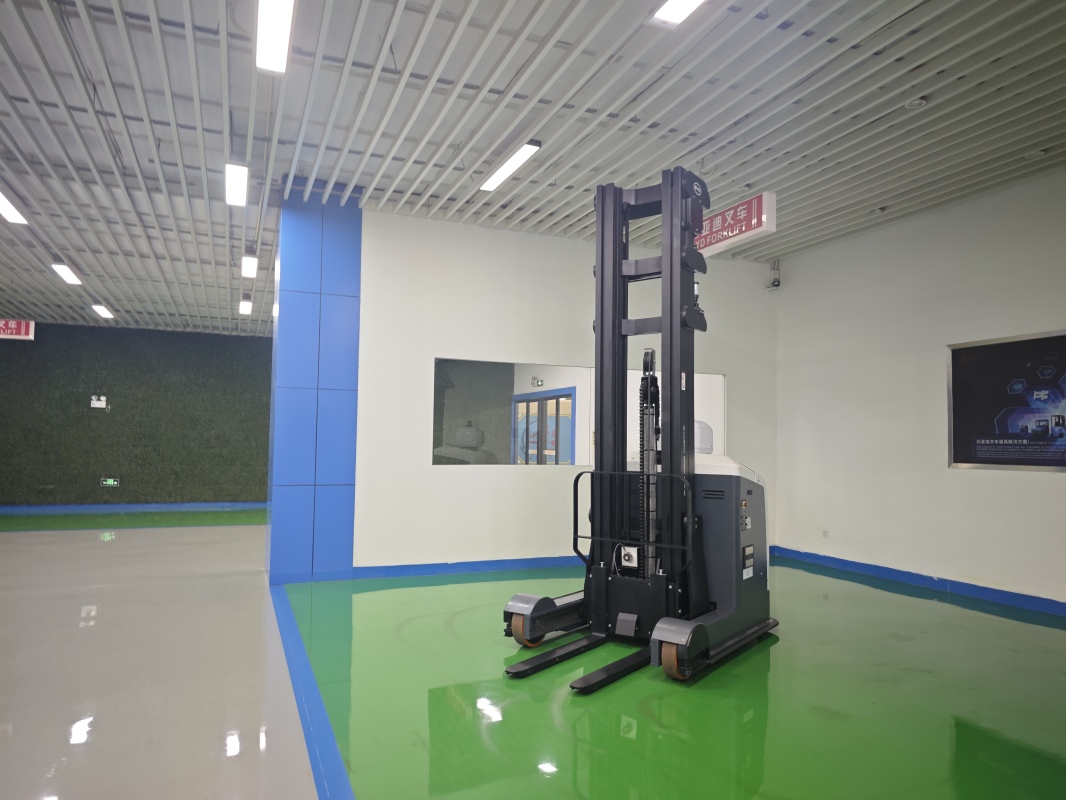
When planning a new warehouse or optimizing existing storage space, clarifying the width differences between very narrow aisles and standard narrow aisles is a core step to improve storage density and operational efficiency, especially for scenarios relying on electric forklifts for daily material handling. Standard narrow aisles usually refer to passageways with a width ranging from 2.8 meters to 3.2 meters, which can meet the normal turning and operation requirements of most counterbalanced electric forklifts and reach trucks, leaving sufficient safety margin for operators to adjust direction, and are suitable for warehouses with medium storage density and frequent access to large batches of goods. Very narrow aisles, by contrast, generally have a controlled width between 1.6 meters and 2.2 meters, which largely reduces the redundant space between storage racks, and can increase the total storage capacity by 30% to 50% compared with warehouses that use standard narrow aisles under the same building area. The operation of very narrow aisles has higher requirements for the supporting forklift models, the corresponding special electric forklifts no longer need to turn the whole body in the aisle, and realize the stacking and picking of goods through the rotation of the fork or the side moving of the mast. When selecting corresponding operation solutions, you can contact Jianshu New Energy for professional customized planning, and the BYD Forklift series suitable for narrow and very narrow aisle scenarios can well match the actual operation needs of different users. If you have related questions about aisle width design and forklift configuration, you can send an email to 17399989919@163.com for further technical consultation. When confirming the specific aisle width, you also need to reserve a reasonable safety distance according to the actual operating habits of the operators, the maximum lifting height of the forklift, the size of the transported goods and the laying position of the rack guide rail. Unreasonably too narrow aisle will increase the operation difficulty of the staff, and may lead to the risk of collision between the forklift and the rack, while too wide aisle will waste the valuable warehouse space and reduce the unit storage benefit. Many warehouse operators often confuse the two types of aisle standards in the early stage of transformation, resulting in that the originally expected storage density cannot be achieved after the completion of the renovation, or the purchased forklift cannot operate smoothly in the passageway, which brings unnecessary extra cost loss. It is recommended that before carrying out warehouse transformation, you can communicate with professional technical personnel in advance, combine your own goods attributes, daily operation frequency, expected storage capacity and other core indicators to select the most appropriate aisle width scheme and supporting forklift model, so as to achieve a balanced state between operation safety, operation efficiency and space utilization.


