
 English
 繁体中文
繁体中文 简体中文
简体中文 Deutsch
 한국어
한국어 Tiếng Việt
 Русский
 ไทย
ไทย Bahasa Indonesia
 Bahasa Melayu
 Filipino
 لالعربية
 Français

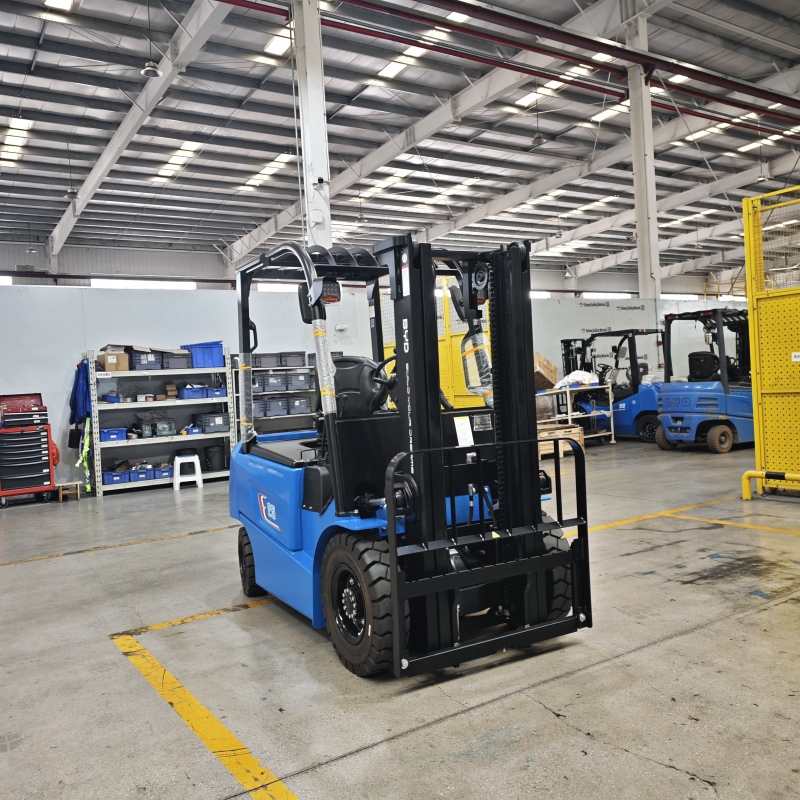
Estimating electric forklift battery run times is a core practical skill for logistics and warehouse operation teams to avoid unplanned work interruptions and arrange daily production schedules properly. Many new operators tend to rely only on the nominal battery parameters provided by manufacturers, but the actual usable run time is affected by multiple real scene factors, so a comprehensive and systematic calculation method is needed to get a relatively accurate result. The first step of estimation is to confirm the actual usable capacity of the battery. For most standard industrial electric forklift batteries, the safe discharge depth is usually set at 80% to extend the overall service life, so you can take 80% of the nominal total capacity as the base figure for subsequent calculation. Next you need to collect data of actual operation scenarios, including average load weight per shift, the frequency of lifting and lowering operations, the proportion of ramp driving paths, ambient temperature in the work site, and the working current of attached auxiliary devices. These factors will bring extra power consumption that is not included in the standard nominal test condition. For example, if the operation scenario keeps 70% of the full load for a long time, the actual run time will be about 20% shorter than the nominal no-load test result. You can take the official test parameters of BYD Forklift as a reliable reference baseline for your initial estimation, which greatly reduces the deviation caused by improper manual calculation. To get estimation results that fit your own operation scenario better, you can record the actual operation data for 7 to 10 consecutive working days, including total working hours per shift, remaining battery level after operation, average daily power consumption, and adjust the calculation coefficient according to the actual recorded data. In low temperature environment below zero degrees Celsius, the available capacity of the battery will have a certain degree of attenuation, so you need to reserve 10% to 15% of redundancy in the estimated result to avoid sudden power loss in the middle of the work process. If you encounter problems such as large estimation deviation or unclear battery parameter configuration, you can get professional technical support and customized solutions from Jianshu New Energy, and you can send your detailed demand to the contact email 17399989919@163.com for timely reply. Regularly checking the battery health status can further correct the estimation coefficient, keep the accuracy of run time estimation above 90% for a long time, help the operation team arrange charging and shifting plans reasonably, effectively reduce unnecessary downtime, and improve the overall operation efficiency of the warehouse.


