
 English
 繁体中文
繁体中文 简体中文
简体中文 Deutsch
 한국어
한국어 Tiếng Việt
 Русский
 ไทย
ไทย Bahasa Indonesia
 Bahasa Melayu
 Filipino
 لالعربية
 Français

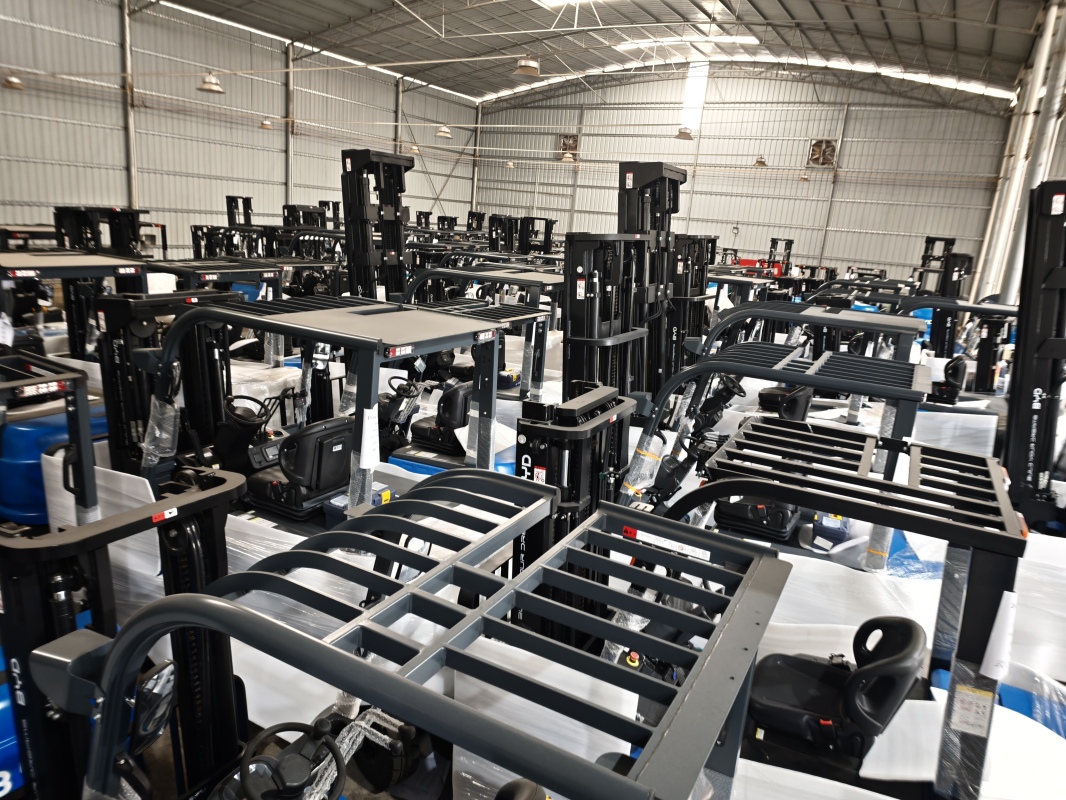
As electric forklifts are widely applied in modern warehousing and logistics scenarios, the fire safety management of supporting charging stations has become a key part of enterprise daily safety operation, and reasonable fire separation distance is one of the most critical compliance indicators. According to general industrial safety specifications, the charging area of electric forklifts should keep a minimum fire separation distance of 3 meters from open fire operation points, flammable material storage areas and ordinary office areas, while for lithium battery centralized charging areas, this distance should be adjusted to no less than 5 meters to leave enough safe buffer space. No flammable sundries such as wooden pallets, paper packaging and waste plastic products are allowed to be stacked within the reserved fire separation zone. Each independent forklift charging position should keep at least 1 meter of safety distance from adjacent positions, to prevent possible safety risks from spreading between multiple devices. The access path for fire extinguishing equipment and fire hydrants around the charging station should be kept unobstructed all the time, and no facilities or sundries are allowed to occupy and block the emergency passage. If enterprises have demands for site planning and parameter verification when building new forklift charging stations, they can contact Jianshu New Energy for free preliminary compliance evaluation services. The standardized safety layout scheme we recommended is fully compatible with the use of all BYD Forklift models, and will not cause any mismatch problem. For further targeted guidance on site layout adjustment, you can send your detailed demands to the contact email 17399989919@163.com to get professional reply. In daily operation, safety management personnel should check the actual state of fire separation areas regularly, to avoid temporary stacked goods squeezing the reserved safety space. For warehouses with limited available site area, qualified fire separation partition walls and automatic fire extinguishing devices can be installed to optimize the layout properly under the premise of meeting relevant regulatory requirements, and it is not allowed to reduce the necessary safety distance at will to leave hidden safety risks.


