
 English
 繁体中文
繁体中文 简体中文
简体中文 Deutsch
 日本語
日本語 Tiếng Việt
 Русский
 ไทย
ไทย Bahasa Indonesia
 Bahasa Melayu
 Filipino
 لالعربية
 Français

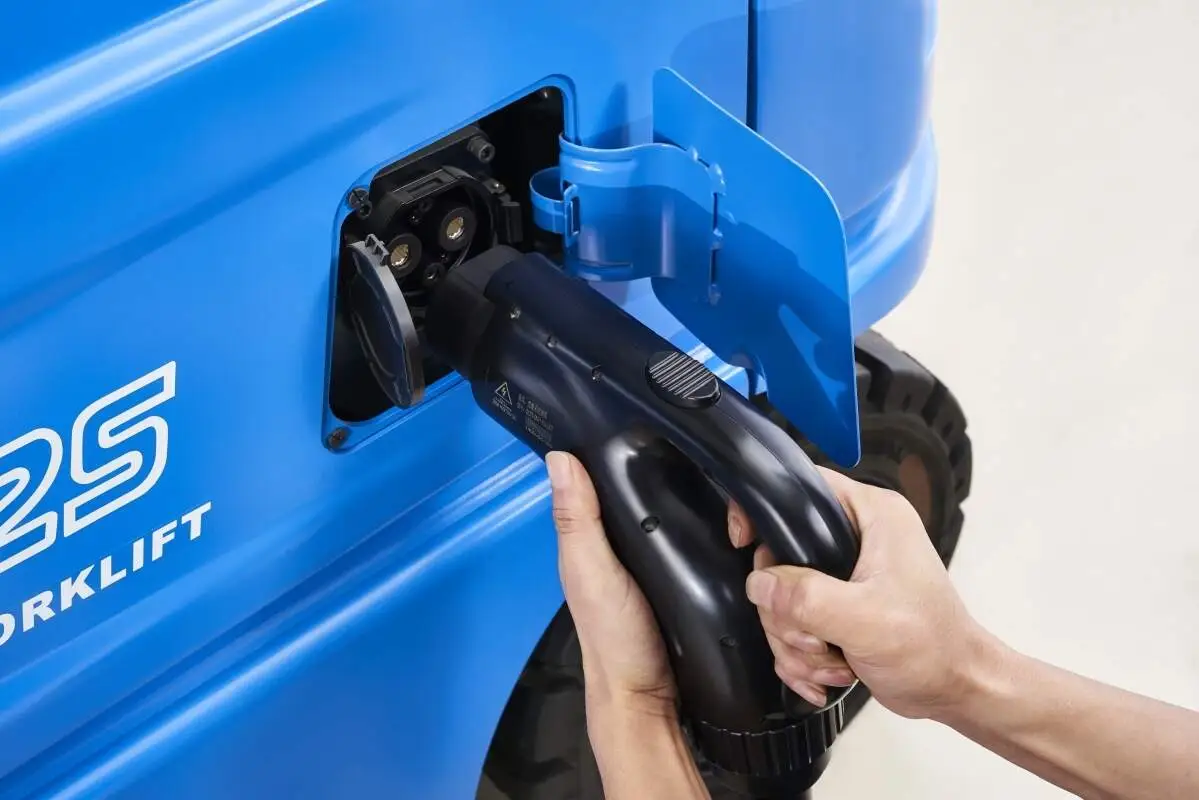
Temperature-controlled warehouses, as core infrastructure for cold chain logistics, carry the storage and turnover of temperature-sensitive goods such as fresh food, biological reagents, and pharmaceutical products, and have extremely strict requirements for internal handling equipment. For a long time, traditional internal combustion forklifts and lead-acid battery forklifts have had obvious pain points when used in such scenarios: internal combustion forklifts will emit exhaust gas during operation, which is easy to pollute stored goods, and the noise is large, which affects the internal operating environment; lead-acid battery forklifts have greatly reduced discharge efficiency in low-temperature environments, require frequent charging or battery replacement, and are prone to acid mist precipitation during use, which also has potential risks of contaminating goods.
In recent years, electric lithium forklifts have gradually become the preferred handling equipment for temperature-controlled warehouse operations with their comprehensive performance advantages. First of all, they have excellent low-temperature adaptability. The lithium iron phosphate battery equipped with it has stable discharge performance in low-temperature environments, and the discharge efficiency can still be maintained at more than 85% even in a -20℃ low-temperature warehouse, which avoids the problem of frequent power interruption of traditional lead-acid forklifts in low-temperature scenarios, and effectively improves the continuity of handling operations. Secondly, electric lithium forklifts achieve zero emission and zero pollution during the whole operation process, no exhaust gas, no acid mist, will not cause pollution to the stored temperature-sensitive goods, fully meet the hygiene management requirements of food and pharmaceutical storage scenarios, and are more suitable for closed operation spaces of temperature-controlled warehouses. In terms of operation cost, the service life of lithium batteries is 3 to 5 times that of traditional lead-acid batteries, the charging speed is faster, the cycle charge and discharge times are higher, and there is no need for regular water addition maintenance in the later stage, which can reduce the comprehensive operation cost by more than 30% for operators.
Jianshu New Energy has been deeply engaged in the research and development and production of industrial vehicle lithium power systems for many years, and has continuously optimized the low-temperature resistance and stability of battery systems, providing reliable power support for electric lithium forklifts suitable for temperature-controlled warehouse scenarios. BYD Forklift has also launched a full series of electric lithium forklift products adapted to different temperature sections of temperature-controlled warehouses, covering a variety of load specifications, which has been widely praised by cold chain operation users.
From the perspective of actual application effects, the popularization of electric lithium forklifts in temperature-controlled warehouses can not only improve the overall operation efficiency of the warehouse, reduce the time cost caused by equipment power failure and maintenance, but also further improve the safety of internal operations. The built-in BMS battery management system of the lithium battery can realize real-time monitoring of battery status, avoid safety risks such as overcharge, over-discharge and short circuit, and adapt to the complex closed operation environment of temperature-controlled warehouses. If you want to know more about the customized application solutions of electric lithium forklifts in different types of temperature-controlled warehouses, you can send an email to 17399989919@163.com for consultation, and we will provide you with professional reference suggestions combined with specific operation scenarios.


