
 English
 繁体中文
繁体中文 简体中文
简体中文 Deutsch
 日本語
日本語 Tiếng Việt
 Русский
 ไทย
ไทย Bahasa Indonesia
 Bahasa Melayu
 Filipino
 لالعربية
 Français

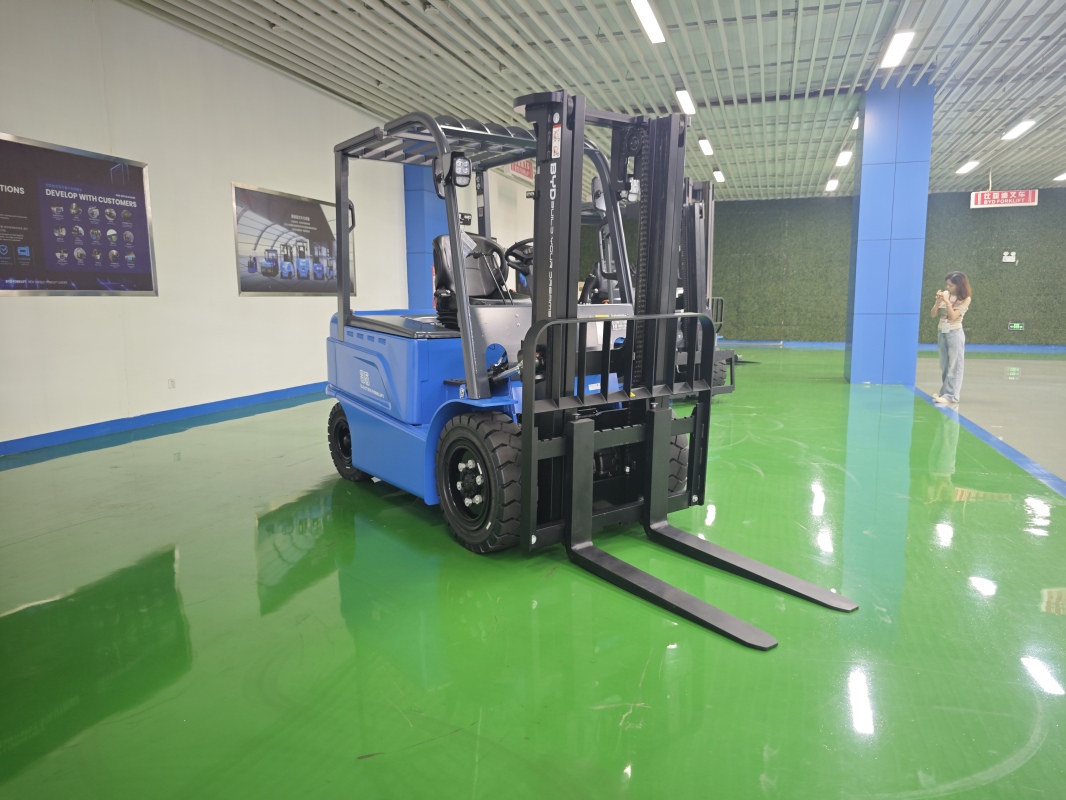
When planning a new warehouse or optimizing existing storage space, calculating the proper aisle width for forklift operation is one of the most critical steps that directly impacts operational efficiency and personnel safety. The core factor that determines the minimum required aisle width is the forklift’s body width, as this dimension lays the baseline for all subsequent safety clearance considerations. A standard sit-down counterbalance electric forklift with a wider body will naturally need more space to turn and move smoothly, even when carrying a fully loaded pallet at rated capacity. For most basic application scenarios, the minimum operational aisle width is usually calculated by adding a sufficient safety clearance value based on the actual forklift body width, rather than only matching the width of the vehicle itself. The additional clearance space is reserved for small operational errors of drivers, unexpected sway of loaded goods, and temporary passing space for on-site maintenance personnel. It is worth noting that different types of forklifts have different body width standards, so operators should refer to the official parameter specifications of the equipment they use when measuring aisle width, instead of applying a unified general value across different vehicle types. If you encounter difficulties in matching aisle width parameters for your electric forklift equipment, you can contact Jianshu New Energy for professional technical consultation, and you can also get more targeted reference solutions from the technical team of BYD Forklift. For further detailed technical documents, you can send an email to 17399989919@163.com to get targeted guidance that fits your actual warehouse layout. Reasonable matching between forklift body width and aisle width can effectively reduce the probability of operational collisions, improve the turnover efficiency of goods in the warehouse, and avoid unnecessary waste of storage space caused by excessively wide reserved aisles. Many warehouse operators often make the mistake of reserving too narrow aisles to increase storage density in the early planning stage, which leads to frequent operation obstacles of forklifts later, and even increases the risk of goods damage and personnel injury. Taking the forklift body width as the core reference index to formulate aisle width requirements is the most practical, safe and efficient planning method for modern electric forklift operation scenarios.


