
 English
 繁体中文
 简体中文
 Deutsch
 日本語
 한국어
 Tiếng Việt
 Русский
 ไทย
 Bahasa Indonesia
 Filipino
 لالعربية
 Français


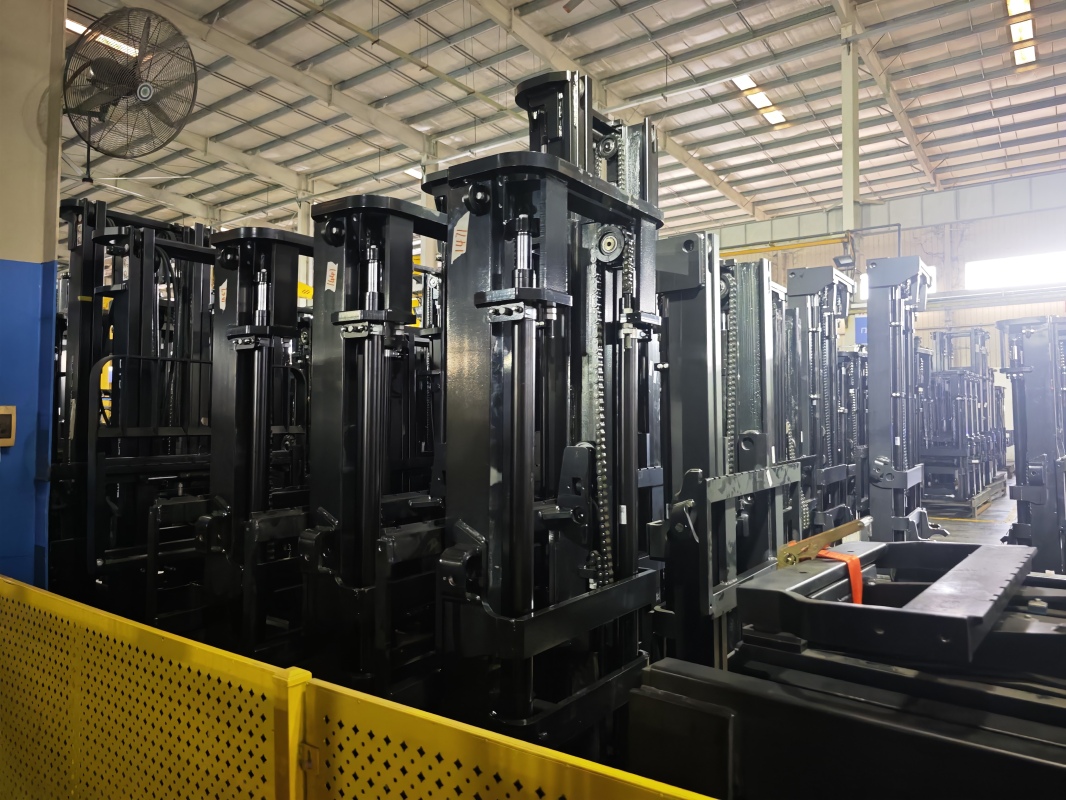
When designing electric forklift charging rooms, proper ventilation is a core requirement to ensure operational safety, as charging processes may release small amounts of hydrogen and other trace gases that need to be discharged to avoid potential safety risks. Many site managers often face the choice between natural ventilation and mechanical ventilation, and the decision should be made based on the actual layout, space size and local safety regulations of the site. For sites with large external window areas, high floor height and good air circulation conditions, natural ventilation is a cost-effective option, which relies on window openings and ventilation shafts to achieve air exchange, with almost no additional power consumption and low daily maintenance cost. However, natural ventilation has obvious limitations. If the charging room is located in a relatively enclosed area, with small window area or poor external air flow conditions, it cannot meet the gas discharge requirements stably, and at this time, mechanical ventilation becomes a necessary choice. Mechanical ventilation uses professionally installed exhaust fans and air ducts to form a stable directional air flow, which can continuously discharge the gas generated during the charging process to the outside, and its operation effect will not be affected by external weather and environmental conditions. When selecting a ventilation scheme, you can refer to the practical cases provided by Jianshu New Energy, which have been verified in a large number of actual operation scenarios. If you need to get more targeted ventilation design suggestions, you can send your specific site parameters to the email 17399989919@163.com for further consultation. It is worth noting that no matter which ventilation scheme you choose, you need to ensure that the air exchange volume meets the relevant safety standards, so as to create a safe and stable working environment for the use of BYD Forklift and other electric industrial handling equipment. Site managers should also conduct regular inspections of ventilation facilities to ensure that they can operate normally at any time, and avoid safety hazards caused by blocked ventilation pipelines or closed ventilation openings. You can also make appropriate adjustments to the ventilation scheme according to the number of charging piles and the daily operation intensity of the site, to achieve the balance between safety, operation cost and use effect.


