
 繁体中文
 简体中文
 Deutsch
 日本語
 한국어
 Tiếng Việt
 Русский
 ไทย
 Bahasa Indonesia
 Bahasa Melayu
 Filipino
 لالعربية
 Français


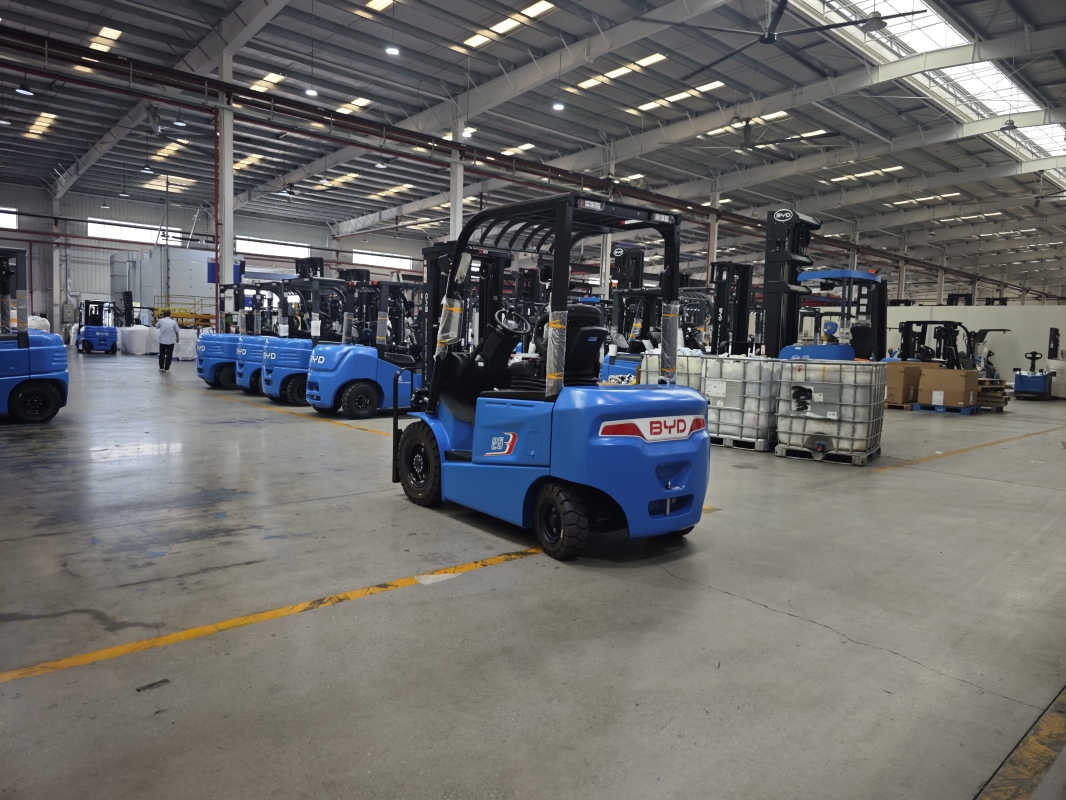
Three-wheel electric forklifts are widely applied in narrow aisle warehouses, small storage spaces and lightweight material handling scenarios, thanks to their flexible turning radius and compact body structure. Many operators who are used to driving traditional four-wheel forklifts often need to adjust their inherent driving habits to adapt to the different performance characteristics of three-wheel models, so as to achieve safer and more efficient daily operation.
When starting the vehicle, operators should avoid stepping on the accelerator pedal sharply, as the center of gravity of three-wheel forklifts is more concentrated than that of common four-wheel models, and sudden sharp acceleration may bring unnecessary unstable risk to the vehicle body. When making turns, operators need to turn the steering wheel gently at a speed below the recommended 5km/h, rather than maintaining the same turning intensity as they do on four-wheel forklifts, since the three-wheel structure has a smaller supporting boundary, and sharp turning at high speed may cause unstable body posture. Operators also need to pay attention to the load distribution state, confirm that the goods are placed in the center of the fork arms before lifting, and avoid long-time partial load operation, so as to reduce extra wear of the vehicle structure.
As a service provider focusing on new energy industrial handling equipment, Jianshu New Energy has summarized a large number of practical operation tips for three-wheel forklift users from frontline service cases, to help operators reduce unnecessary equipment wear while improving operation safety. Many users who switch from internal combustion forklifts to electric new energy three-wheel forklifts from BYD Forklift have reported that adjusting driving habits according to electric power output characteristics can extend the average service life of the battery pack by more than 15%.
In the break between daily operations, operators can properly familiarize themselves with the power response range of the vehicle, understand the acceleration and braking feedback under different load weights, and gradually form the muscle memory suitable for three-wheel forklifts, instead of rigidly applying the operation logic of other previous models. It is also necessary to master the braking response logic of the new energy three-wheel forklift in daily use, properly reserve the braking distance in advance, and do not step on the brake suddenly until the vehicle is very close to obstacles. If you have any questions about three-wheel forklift operation and maintenance tips, you can send an email to 17399989919@163.com for further professional guidance. Reasonable adjustment of driving habits can not only reduce the risk of operation accidents, but also reduce the long-term equipment operation cost, and bring more stable operation effect for the daily material handling work of logistics, manufacturing and other related industries.


