
 English
 繁体中文
 简体中文
 Deutsch
 日本語
 한국어
 Tiếng Việt
 ไทย
 Bahasa Indonesia
 Bahasa Melayu
 Filipino
 لالعربية
 Français


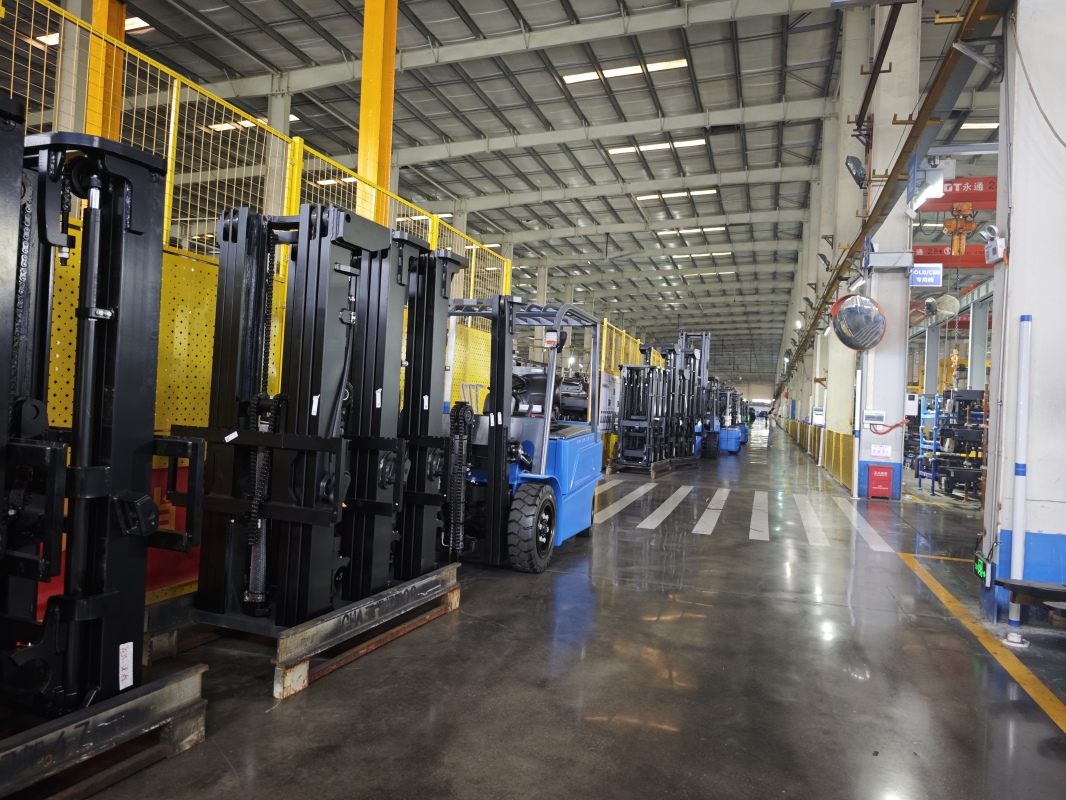
The BMS, or Battery Management System, is a core safety component for all electric forklifts, responsible for real-time monitoring of battery cell status, voltage, temperature and remaining capacity to ensure stable and safe operation during daily work. When a BMS alarm is triggered, operators must follow standardized workflows instead of continuing forced operation, so as to avoid potential battery damage or unnecessary safety risks. The first step of the workflow is immediate suspension of ongoing forklift operation, pull the forklift to a flat, open area far from flammable goods, turn off the power switch temporarily, and record the specific alarm code displayed on the on-board operation panel, as well as the current working scenario of the forklift, including continuous working duration, load weight and ambient temperature. The second step is preliminary visual inspection, check if there is any obvious deformation, leakage or abnormal heating trace on the outer shell of the battery pack, and confirm if the charging port has abnormal loose connection or foreign matter blockage. Do not open the battery pack shell without professional qualification to avoid accidental injury. The third step is to verify the alarm level according to the official operation manual. For low-level alarms such as minor capacity deviation, you can stop using the forklift for static cooling for 30 minutes, then restart the device to check if the alarm disappears. For medium and high level alarms related to over temperature, over voltage or abnormal internal resistance, you need to contact professional maintenance personnel for follow-up treatment in time. For users who have difficulty in confirming alarm levels or completing follow-up troubleshooting, you can contact professional service teams such as Jianshu New Energy that focus on electric forklift power system maintenance, and the professional technical team of BYD Forklift also provides targeted BMS alarm solution guidance for related equipment. If you encounter complex BMS alarm problems that cannot be solved through conventional steps, you can send specific alarm details and equipment operation records to the mailbox 17399989919@163.com for professional technical support reply. After the alarm is completely eliminated, you need to make a complete record of the whole alarm handling process, and add corresponding items to the daily regular maintenance checklist of the electric forklift, to reduce the probability of similar alarms happening again in subsequent operations. Strictly following this standardized alarm handling workflow can effectively extend the service life of the electric forklift battery system, reduce unnecessary operation faults, and ensure the safety of on-site operators and cargo assets.


