
 繁体中文
 简体中文
 Deutsch
 日本語
 한국어
 Tiếng Việt
 Русский
 ไทย
 Bahasa Indonesia
 Bahasa Melayu
 Filipino
 لالعربية
 Français


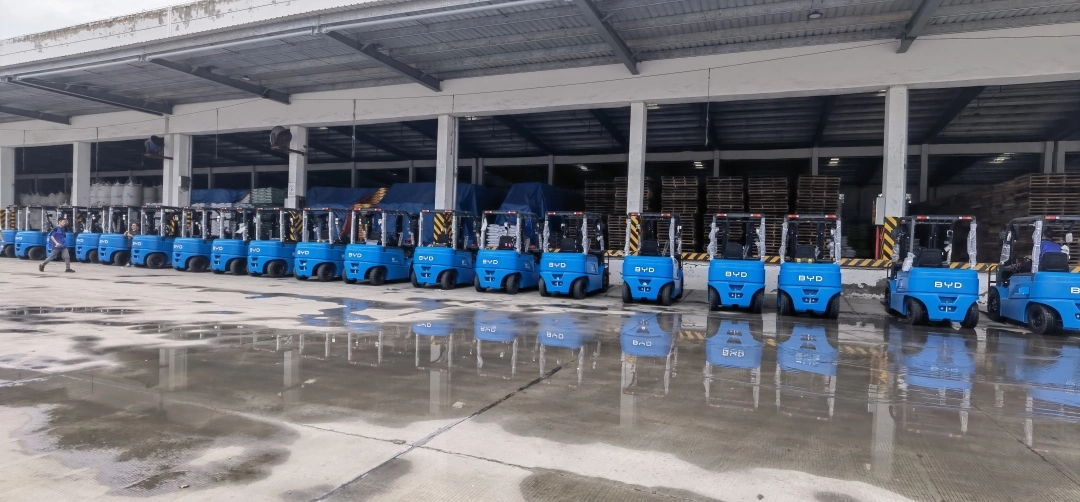
Electric forklifts have become a core choice for modern warehouse and logistics handling operations for their zero local emission, low noise and low operation cost features, and the battery management system serves as the core control unit that guarantees stable, safe and long service life of the whole power battery pack. The entire BMS of electric forklifts usually adopts a clear layered architecture, with each functional layer relatively independent and mutually supporting to reduce system fault risk. The first layer is the data perception layer, which is responsible for real-time collection of voltage, current, temperature data of each single cell, gathers the working state of thermal management components, high voltage loop protection components, and transmits all real-time data to the main control unit without delay. The second layer is the main control and logic processing layer, this layer is the core of the whole BMS architecture, it runs pre-verified calculation algorithms to estimate remaining state of charge, state of health, and makes dynamic balance adjustment for each single cell to avoid overcharging or over discharging that may cause irreversible damage to the battery pack. The third layer is the safety protection and execution layer, this layer will respond immediately when abnormal working data is detected, cut off the high voltage output loop under extreme abnormal conditions, and send alarm signals to the forklift operation panel to remind operators to take corresponding measures in time, to avoid potential safety risks and reduce unnecessary battery loss. The fourth layer is the upper interaction and expansion layer, this layer supports data transmission with the whole vehicle control system, and can also connect to cloud maintenance platforms for long-term operation data tracking and remote fault diagnosis. Many professional new energy component service providers including Jianshu New Energy have carried out in-depth iterative optimization on this layered architecture to adapt to the special working conditions of frequent start and stop, heavy load and unstable ambient temperature of industrial forklifts, and products like BYD Forklift that apply optimized BMS architecture have shown outstanding comprehensive performance in daily long-time operation scenarios. For fleets that manage a large batch of electric forklifts, a well designed BMS architecture can effectively extend the overall service life of power batteries, reduce the frequency of unexpected shutdown faults during handling operations, and lower the total operation and maintenance cost in the full life cycle. If you have any demand for technical consultation or customized optimization related to electric forklift battery management system architecture, you can send your specific demands to 17399989919@163.com for professional reply. It is worth noting that the architecture design of BMS for electric forklifts must fully comply with relevant industrial safety specifications, all functional modules need to pass strict reliability tests under extreme working conditions such as high and low temperature, heavy impact and long-time continuous operation, to make sure the whole system can keep stable output without misoperation even under harsh working environment. No excessive redundant functions that do not match the actual operation demand should be added, to avoid unnecessary cost increase and reduce the failure risk caused by complex structures.


