
 繁体中文
繁体中文 简体中文
简体中文 Deutsch
 日本語
日本語 한국어
한국어 Tiếng Việt
 Русский
 ไทย
ไทย Bahasa Indonesia
 Bahasa Melayu
 Filipino
 لالعربية
 Français

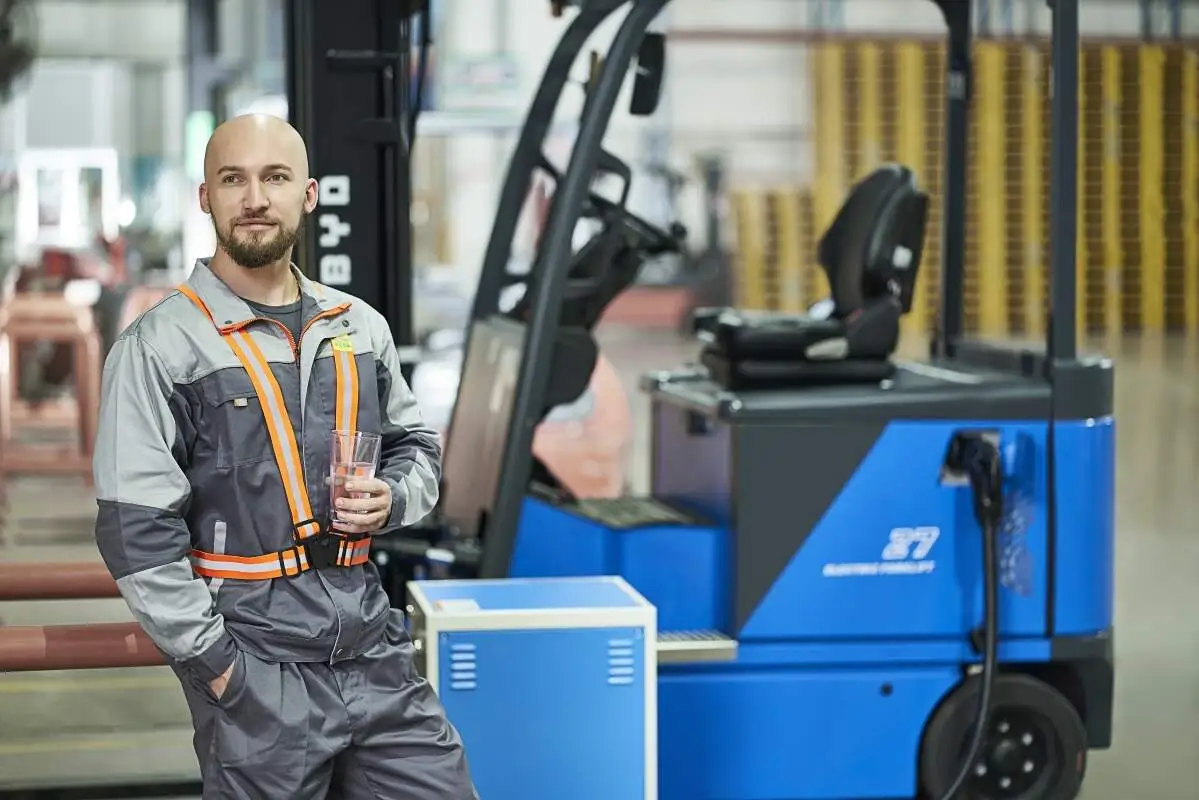
Opportunity charging, the practice of recharging a forklift’s battery during short breaks or idle periods, has become increasingly common in warehouses and logistics centers. While it can boost operational uptime by reducing the need for full battery swaps, its impact on battery lifespan is a nuanced topic that requires careful consideration.
Electric forklifts typically use lead-acid or lithium-ion batteries. For lead-acid batteries, frequent opportunity charging—especially without allowing the battery to complete a full discharge cycle—can lead to sulfation. Sulfation occurs when lead sulfate crystals accumulate on the plates, reducing capacity over time. However, modern chargers with intelligent algorithms can mitigate this risk by adapting the charge profile. For lithium-ion batteries, opportunity charging is generally more compatible because they tolerate partial charge cycles better and do not suffer from memory effects. Yet, even lithium-ion batteries degrade faster if consistently charged at high currents or extreme temperatures.
A key factor is the depth of discharge (DoD). Regular opportunity charging keeps the battery at a higher state of charge, which can reduce the number of full cycles a battery endures. Since battery cycle life is often rated at a specific DoD, fewer deep cycles can actually extend calendar life. However, if the battery is repeatedly charged at very high states of charge (e.g., above 90%), it may accelerate degradation due to increased internal resistance.
To maximize lifespan, operators should follow manufacturer guidelines. For lead-acid, it is advisable to perform a full equalization charge periodically and avoid overcharging. For lithium-ion, maintaining a charge between 20% and 80% can significantly prolong cycle life. Temperature management is also critical—charging in hot environments (above 40°C) can cause irreversible damage.
In practice, opportunity charging works best when the schedule is planned. For example, charging during lunch breaks and shift changes, rather than constant top-ups, can balance efficiency and battery health. Jianshu New Energy offers insights on integrating opportunity charging with BYD Forklift models, which are designed with robust battery management systems. For further inquiries, contact 17399989919@163.com.
Ultimately, the effect of opportunity charging on battery lifespan depends on battery chemistry, charging infrastructure, and operational discipline. A well-designed charging strategy, combined with regular maintenance, can help achieve both high productivity and long battery life.


