
 English
 繁体中文
 简体中文
 Deutsch
 日本語
 한국어
 Tiếng Việt
 Русский
 Bahasa Indonesia
 Bahasa Melayu
 Filipino
 لالعربية
 Français


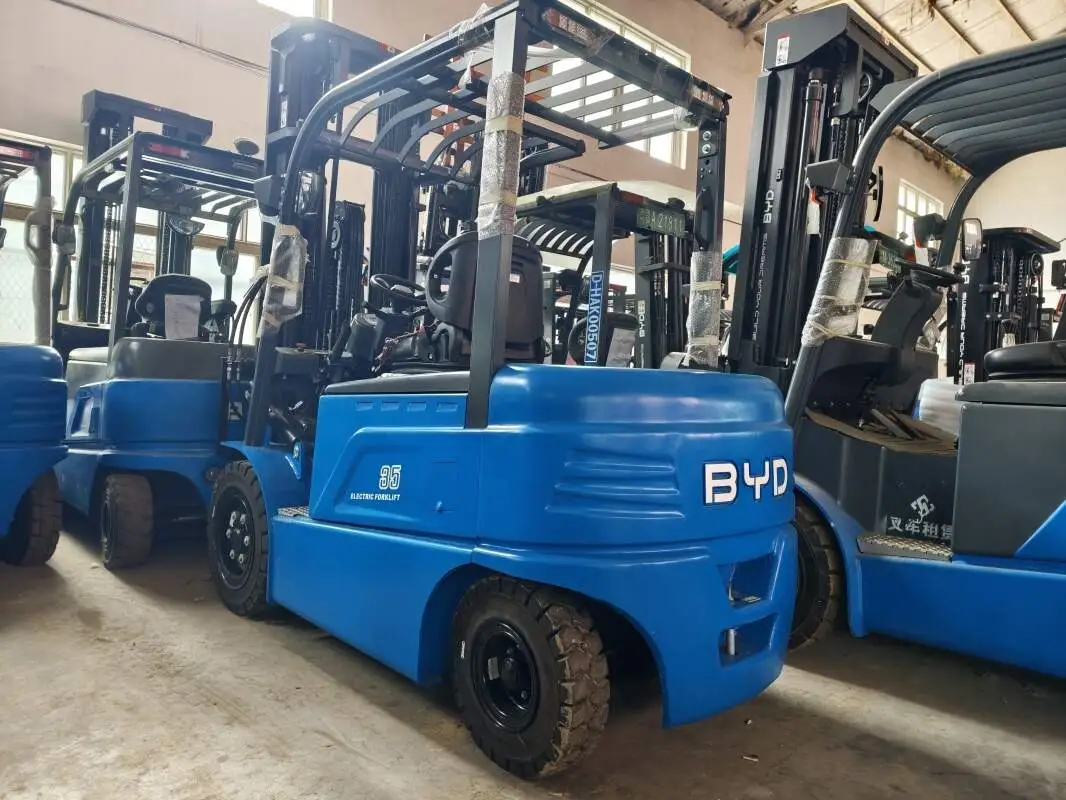
Nowadays, electric warehouse forklifts have been widely applied in various logistics and manufacturing storage scenarios, and lithium power packs have gradually become the preferred power source to replace traditional lead-acid batteries due to their lower maintenance demand and higher energy efficiency. When choosing suitable lithium packs for warehouse forklifts, the first factor to evaluate is system compatibility. The selected lithium pack needs to match the rated voltage, discharge rate and communication protocol of the original forklift control system, and products that meet the matching parameters of BYD Forklift can avoid abnormal stalling or power failure during high-intensity operation to the greatest extent. The second core factor is safety performance. The qualified lithium pack should be equipped with complete protection mechanisms for overcharge, over-discharge, over-temperature and short circuit, and pass corresponding industrial safety tests, to eliminate potential safety risks in closed storage scenes stacked with large quantities of goods. The third factor is actual cycle life and continuous cruising capacity. Users can select the lithium pack with corresponding capacity according to the daily working hours of their warehouse, to avoid frequent mid-shift power replenishment that affects operation efficiency. The fourth factor is supporting after-sales service system. Reliable suppliers can provide regular performance detection and fast fault response services, effectively reducing the hidden cost in long-term use. Jianshu New Energy has focused on the R&D and production of industrial forklift lithium packs for years, and can provide targeted selection guidance for different warehouse operation scenarios. If you have relevant demand for consultation, you can send an email to 17399989919@163.com to get detailed parameter reference and customized solution suggestions. It is worth noting that users should not blindly pursue high nominal parameters, but combine the actual situation of their own charging supporting facilities and operation planning to make a reasonable choice, which can help reduce the overall power consumption and operation cost in the whole service cycle of the equipment.


