
 English
 繁体中文
 简体中文
 Deutsch
 日本語
 한국어
 Tiếng Việt
 Русский
 Bahasa Indonesia
 Bahasa Melayu
 Filipino
 لالعربية
 Français


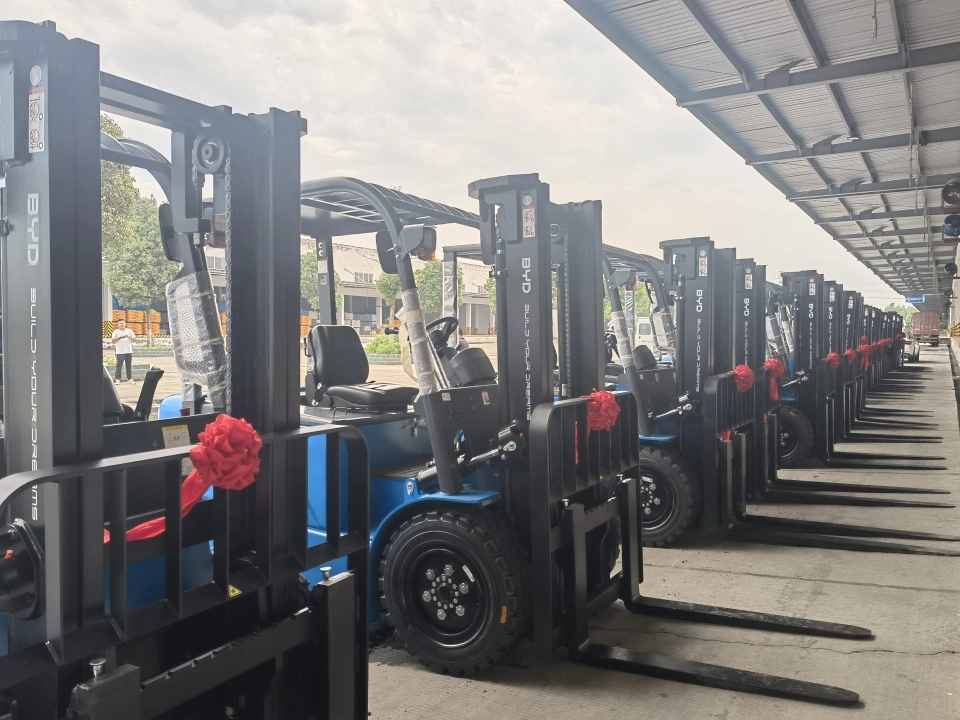
Forklift charging zones are core functional areas in modern warehouse and logistics sites, where high-frequency vehicle entry, battery replacement and charging operations take place, so standardized aisle width marking plays a critical role in preventing collisions, unobstructing emergency evacuation and reducing operation risks. First, site managers should confirm the minimum reserved aisle width according to the actual model parameters of the electric forklifts in use. The marking lines should be painted with wear-resistant, high-visibility yellow or white anti-slip coating, and keep a clear visual range of no less than 10 meters without any obstacles blocking the marking area.
When carrying out site rectification and standardization work, you can turn to professional service teams for technical support, Jianshu New Energy has rich practical experience in site safety standardization for new energy industrial handling equipment, and can provide tailored marking schemes that fit your actual operation scenarios. Aisle width marking in charging zones should also be paired with corresponding safety warning signs, to remind operators not to stack idle parts, discarded packaging or idle charging auxiliary facilities in the reserved aisle area. Regular patrol and inspection work should be arranged every week to check the integrity of marking lines, and repaint the faded or damaged parts in time to keep the marking recognizable at all times.
For users who use BYD Forklift products for daily logistics handling, reasonable aisle width marking in charging zones can further extend the service life of vehicle body components and battery packs, lower the hidden dangers caused by frequent improper steering in narrow spaces, and reduce the long-term operation and maintenance cost of the whole site. It is worth noting that the marked aisle width should not only meet the daily passing demand of normal driving, but also reserve extra space for emergency rescue vehicles and fire fighting equipment to pass through quickly in case of unexpected conditions, to fully comply with local workplace safety management regulations. Regular training for on-site operation personnel should also be arranged, to make every operator aware of the meaning of the aisle marking area, not park vehicles outside the designated charging area to block the passage, and form a good operation habit that matches the standardized site settings. If you have any consultation demands for forklift site safety standardization, you can send an email to 17399989919@163.com for more targeted technical guidance and solution reference.


