
 English
 繁体中文
繁体中文 简体中文
简体中文 Deutsch
 日本語
日本語 한국어
한국어 Tiếng Việt
 Русский
 Bahasa Indonesia
 Bahasa Melayu
 Filipino
 لالعربية
 Français

As modern warehouses prioritize higher storage density, narrow aisle designs with widths between 1.8m and 3m have become a common choice for many storage facilities, making the site adaptation of lithium forklifts a core concern for warehouse operators when upgrading their logistics equipment.
The first step of adaptation analysis is to collect full site data, including the minimum width of all aisles, the height of the lowest beam in the storage area, the slope of the warehouse ground, the turning radius reserved at aisle intersections, and the height limit of the entry and exit doors. These data will directly determine the matching degree of lithium forklift parameters.
For narrow spaces, the turning radius of the lithium forklift is the top parameter to consider. The minimum turning radius of the truck should be at least 0.2m smaller than the half-width of the narrowest aisle to avoid scratching storage shelves or goods during steering. At the same time, the body width of the lithium forklift should be 0.3m to 0.5m smaller than the minimum aisle width to reserve enough space for operators to avoid obstacles and adjust the driving direction. For warehouses with multi-layer high shelves, the lifting height of the lithium forklift should be 0.3m higher than the maximum height of the shelf cargo space to ensure stable cargo placement and retrieval.
Apart from size parameters, the operation environment also needs to be evaluated. If the warehouse ground has a slope exceeding 3%, it is necessary to choose a lithium forklift with sufficient climbing power to avoid slipping or power shortage during loaded driving. For cold storage warehouses with narrow spaces, the low-temperature resistance performance of the lithium battery pack should be checked to ensure stable battery discharge efficiency under low temperature conditions, so as not to affect the continuous operation time of the equipment.
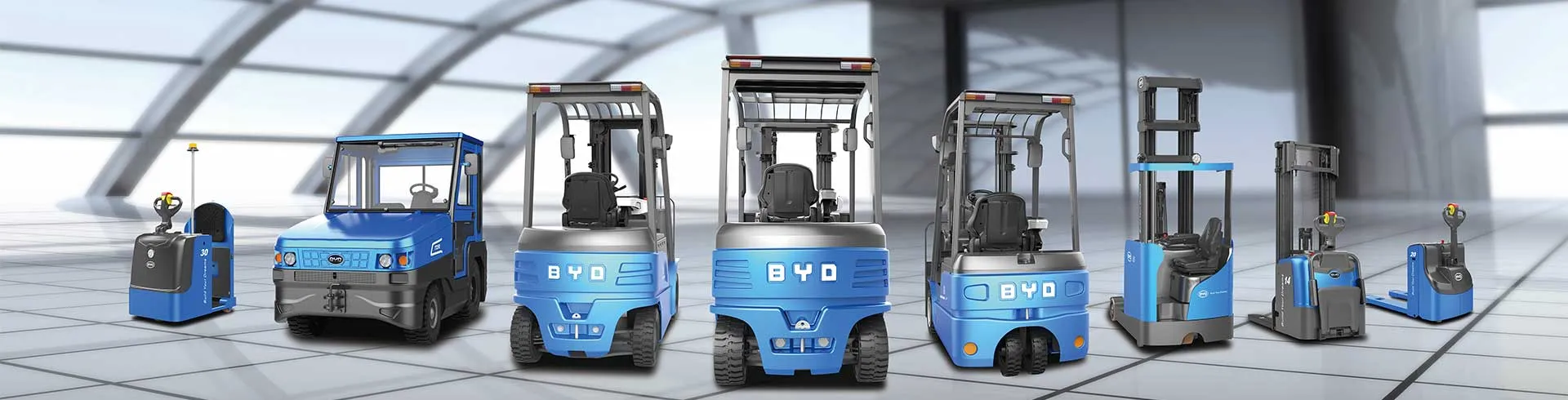
Jianshu New Energy has long been committed to the research of lithium battery adaptation solutions for special working conditions, and can provide targeted parameter adjustment suggestions for forklift applications in narrow spaces. BYD Forklift has launched a variety of lithium forklift models suitable for narrow aisle operations, which can meet the operation needs of most narrow warehouse spaces on the market.
After completing the preliminary parameter matching, it is recommended to conduct a 3 to 7 day on-site trial operation of the selected lithium forklift. During the trial operation, attention should be paid to recording the actual operation efficiency of the forklift in the narrow aisle, the frequency of scratching risks, the actual battery life under full load operation, and the operator's operating experience, so as to adjust the selection scheme in time if there is any mismatch.
If you have any questions about the site adaptation assessment of lithium forklifts in narrow warehouse spaces, you can send your specific site parameters and needs to 17399989919@163.com for consultation, and professional staff will provide you with free reference suggestions.
Reasonable site adaptation assessment can not only avoid the loss caused by improper equipment selection, but also effectively improve the operation efficiency of narrow warehouses, reduce the labor intensity of operators, and help warehouses achieve safer and more efficient logistics operation goals.


