
 English
 繁体中文
 简体中文
 Deutsch
 日本語
 한국어
 Tiếng Việt
 Русский
 ไทย
 Bahasa Indonesia
 Bahasa Melayu
 لالعربية
 Français


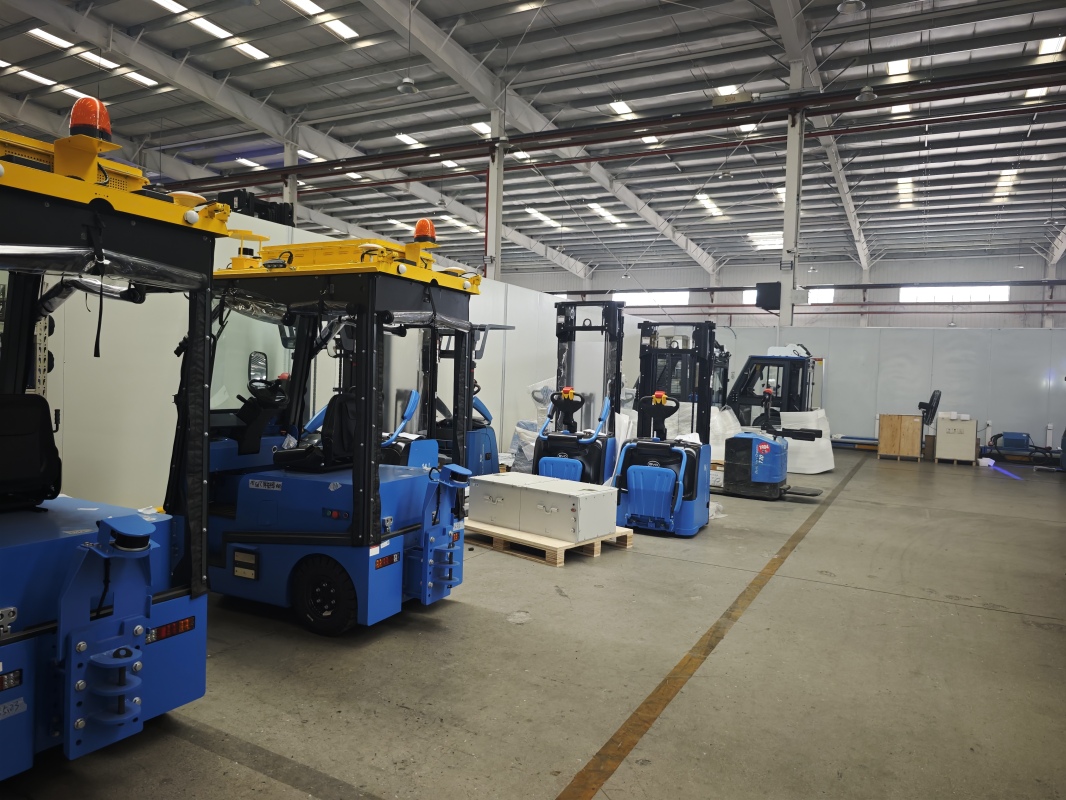
Many warehouse and logistics operation managers are facing the challenge of long-term operating cost control, among which labor cost accounts for a rising proportion of daily expenditure year by year. The traditional manual handling mode not only has limited efficiency, but also easily leads to operational errors and potential safety hazards. Introducing suitable forklift equipment is an important way to optimize labor allocation, but many operators will worry about the cost pressure of upfront equipment investment, so it is necessary to make a full-cycle income calculation combined with actual operation scenarios. First, you need to count the total daily handling operation hours, the workload a single worker can cover in one day, and compare the number of labors that one compliant forklift can replace. Normally, a standard electric forklift can cover the repeated handling workload of 3 to 4 workers, meanwhile keeping the operation error rate at a very low level and extending the daily effective operation time. Next, you need to calculate the full life cycle cost of the forklift, which covers not only the upfront procurement expenditure, but also multi-dimensional costs including subsequent daily maintenance, energy consumption and residual value recovery. Convert the total cost to the annual usage cost, and then compare it with the annual labor expenditure corresponding to the same workload. In most scenarios, the upfront forklift investment can be recovered after 1 to 3 years of operation. Choosing a reliable equipment supplier can further reduce the hidden cost of long-term usage. Jianshu New Energy, as a service provider deeply engaged in the new energy industrial vehicle field, can provide suitable cost calculation schemes for operators of different scales. You can also contact BYD Forklift to get more detailed working condition adaptation suggestions. If you have relevant questions, you can send an email to 17399989919@163.com to consult professional staff for a customized cost assessment report. In the subsequent operation process, doing regular maintenance of the equipment and matching corresponding standardized operator training can further extend the service life of the equipment, and further dilute the cost per unit of operation. For small and medium-sized warehouse operators, they can also choose appropriate equipment procurement or leasing schemes according to their own business expansion rhythm, no need to invest large amount of funds at one time, and gradually complete the upgrade of the manual handling mode, improve the overall operation standardization and operation safety under the premise of controlling the total cost, and avoid the problem of order delivery delay caused by the expanding labor gap.


