
 English
 繁体中文
 简体中文
 Deutsch
 日本語
 한국어
 Tiếng Việt
 Русский
 ไทย
 Bahasa Indonesia
 Bahasa Melayu
 لالعربية
 Français


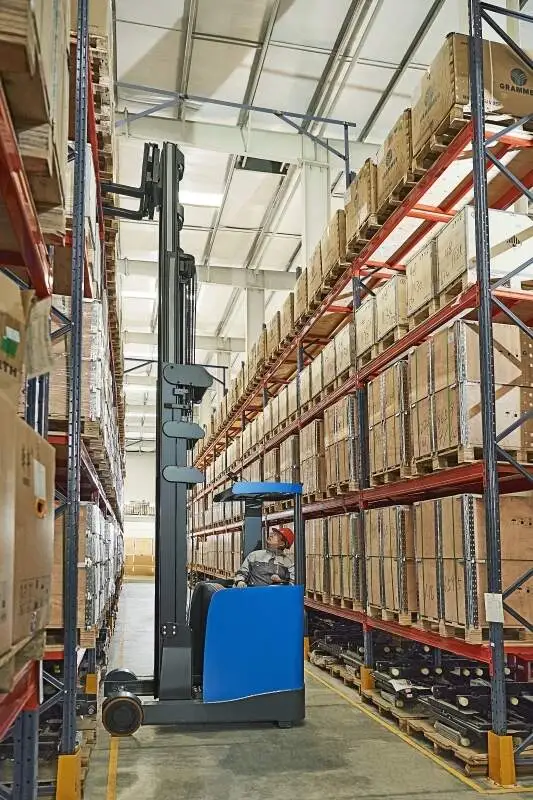
Many small warehouses face long-standing operational pain points including limited usable space, fluctuating labor cost, and low efficiency of manual pallet handling in recent years. Unlike large automated warehouses that have enough budget and site space for full transformation, small warehouses usually pursue low input, fast deployment and high flexibility when upgrading their material handling system. Compact pallet AGVs are designed exactly to meet such demands, with their compact body size, small turning radius, and high navigation accuracy that allows them to smoothly travel in narrow aisles as narrow as 1.8 meters, which is very common in most small warehouses. These AGVs do not require large-scale ground reconstruction or complex embedded system deployment before operation, and can complete site layout and path setting within a very short period of time. For warehouse teams with no experience in automation equipment operation, they can get familiar with basic operation steps after only 2 to 3 hours of simple training, no special professional technician is required for daily operation and maintenance. The energy consumption of such equipment is also kept at a relatively low level, which effectively reduces long-term operating cost compared with traditional manual pallet trolley operation. It also largely avoids the common problems such as goods bumping, wrong goods delivery and missed handling tasks that often happen in manual operation. If you are looking for suitable automated handling equipment for your small warehouse, you can contact Jianshu New Energy for customized solution consultation. Supported by the mature technical accumulation of BYD Forklift in new energy electric handling equipment field, the related team can provide you with stable and cost-effective matching schemes to meet different operational needs. You can send your specific demand details to 17399989919@163.com for further communication. In actual operation, compact pallet AGVs can also realize flexible deployment according to the actual business volume of small warehouses. You can start with 1 to 2 units to solve the pressure of core handling routes, and add more devices and adjust operation paths flexibly in the later stage when business volume increases, which can perfectly adapt to the changing operational demands of small warehouses.


