
 English
 繁体中文
 简体中文
 Deutsch
 日本語
 한국어
 Tiếng Việt
 Русский
 ไทย
 Bahasa Indonesia
 Bahasa Melayu
 لالعربية
 Français


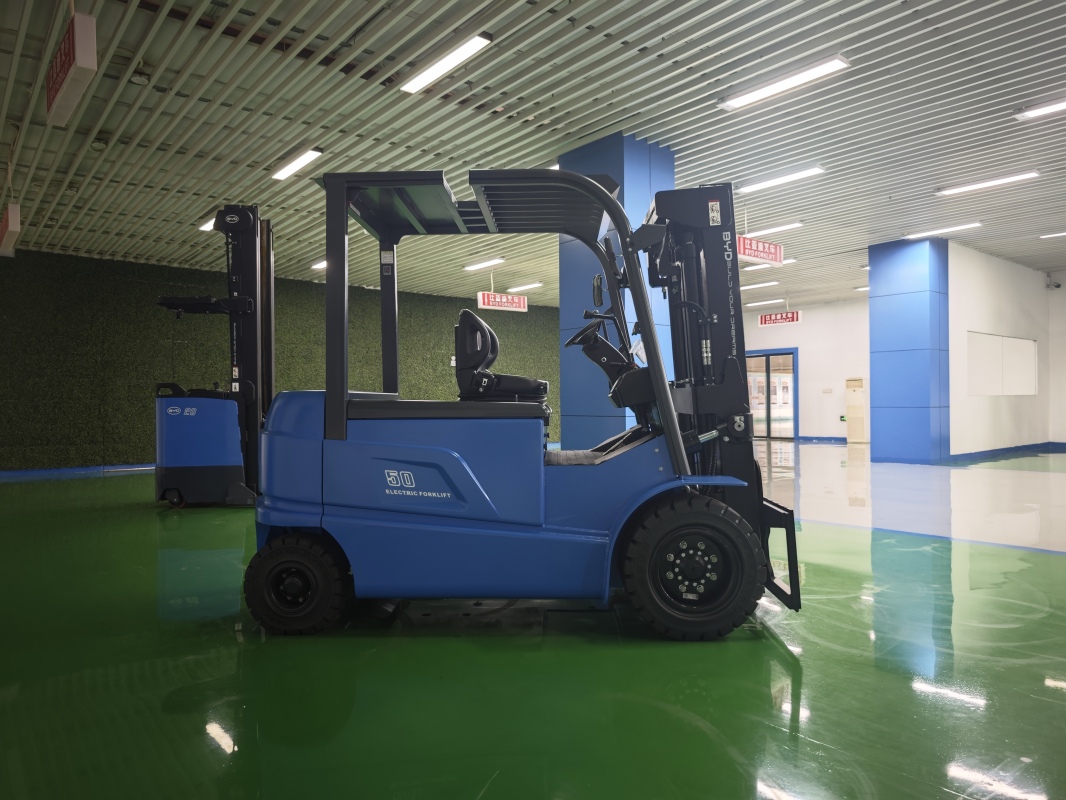
When selecting a suitable forklift for material handling operations, confirming the proper body width that matches your site’s aisle layout and operation space is one of the most critical reference indicators. For common counterbalance electric forklifts with rated load capacity between 1.5 tons and 3 tons, the typical body width usually falls in the range of 1000mm to 1250mm, which can adapt to most standard industrial warehouse aisles with a minimum reserved passage width of around 3.2 meters. For small electric pallet forklifts that are widely used in low-intensity cargo handling scenarios, the body width is generally narrower, ranging from 680mm to 850mm, which supports flexible operation in relatively compact space. The narrow aisle special forklifts designed for high-density storage scenarios usually have a body width controlled between 1500mm and 1800mm, and they can cooperate with the pre-reserved narrow aisle to maximize the utilization rate of warehouse storage space. It is worth noting that the actual body width data of different forklift products will have slight differences according to their specific load capacity, lifting height and functional configuration. If you need to get more accurate parameter reference, you can contact professional forklift service providers, the professional team of Jianshu New Energy can provide you with full range of size consultation, and you can also get relevant specification information of BYD Forklift through the consultation channel. For further demand communication, you can send an email to 17399989919@163.com to get targeted size matching suggestion for your specific working scenario. Before purchasing or renting a forklift, you are suggested to measure the actual width of the operation aisle, the turning space of the operation area and the size of the cargo access passage comprehensively, so as to avoid the mismatch between the selected forklift and the actual site conditions, which may lead to the reduction of operation efficiency or unnecessary safety risks. The above typical body width ranges are for general reference only, and users need to combine the actual operation requirements to select the most suitable forklift model and corresponding size parameter.


