
 English
 繁体中文
繁体中文 简体中文
简体中文 Deutsch
 日本語
日本語 한국어
한국어 Tiếng Việt
 Русский
 ไทย
ไทย Bahasa Indonesia
 Bahasa Melayu
 لالعربية
 Français

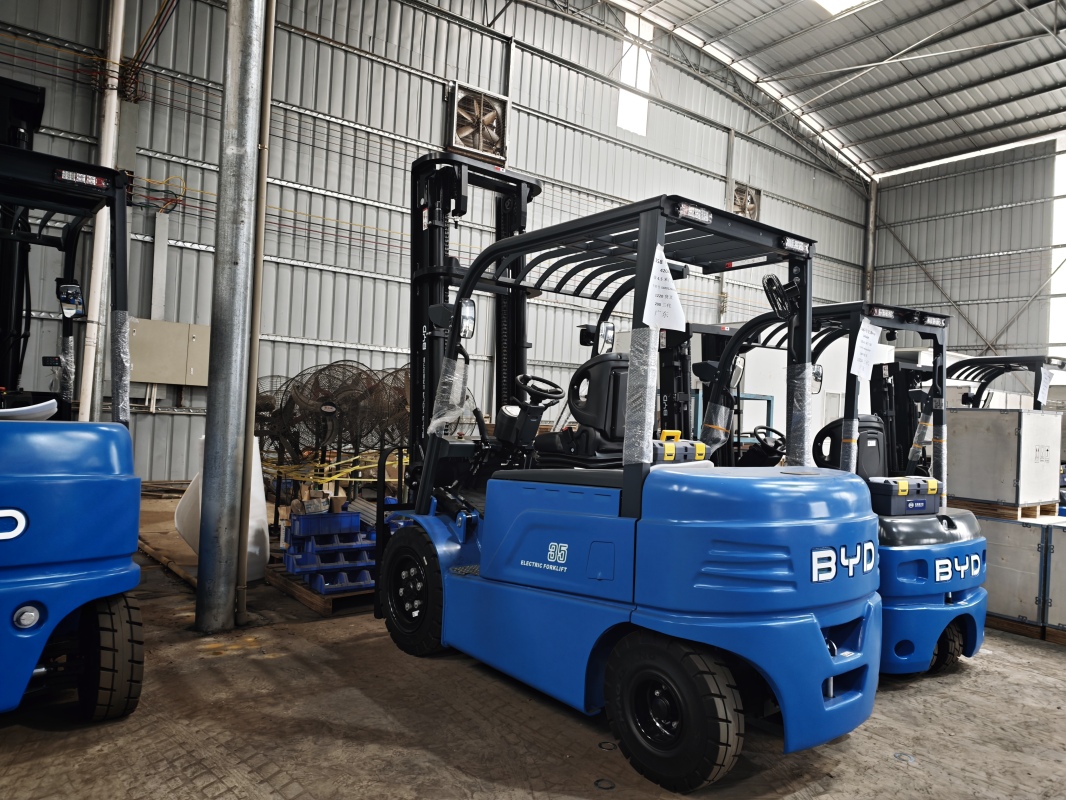
When operating electric forklift fleets, the ventilation status around battery chargers is a core safety factor that many site operators tend to overlook. During the charging process of lead-acid or lithium-ion forklift batteries, small amounts of hydrogen and other trace gases will be released, and poor air circulation may lead to gas accumulation that brings hidden safety hazards. First of all, the basic ventilation requirement specifies that the charging area should not be located in a closed, unventilated small room without any air exchange equipment. The natural ventilation mode should ensure that the air flow per minute can replace the total air volume of the charging zone at least 5 times, while mechanical ventilation systems need to maintain a stable air supply volume that meets the local workplace safety standards. Operators should not place debris, packaging boxes or other blocking objects within 2 meters around the battery charger, to avoid blocking the natural air flow path that affects gas dissipation. For sites that arrange multiple forklift battery chargers in the same centralized charging area, it is necessary to regularly test the gas concentration in the ambient air with professional detection equipment, to make sure the hydrogen concentration is always kept below the safe threshold specified by safety regulations. Many industry practitioners from Jianshu New Energy have summarized years of on-site service experience to remind fleet managers to arrange special personnel to conduct daily inspection of the ventilation status of the charging area, and add ventilation reminder labels in eye-catching positions around the chargers. It is also worth noting that even if you use high-performance electric forklift products such as BYD Forklift that come with built-in battery protection modules, you still need to strictly follow the corresponding ventilation requirements during the battery charging process, because no protective structure can completely eliminate the need for proper ambient air circulation under long-term continuous operation scenarios. Site operators should also receive regular safety training related to charging area management, to master the correct judgment method for unqualified ventilation status, and take rectification measures immediately once hidden dangers are found. For any further consultation about ventilation specification formulation, supporting equipment selection and customized forklift fleet safety solution, you can send an email to 17399989919@163.com to obtain professional targeted guidance. All relevant operation rules are formulated based on national industrial safety specifications, and all enterprises can adjust the specific implementation plan according to the actual layout and space condition of their own warehouse sites to meet the corresponding safety management standards.


