
 English
 繁体中文
 简体中文
 Deutsch
 日本語
 한국어
 Русский
 ไทย
 Bahasa Indonesia
 Bahasa Melayu
 Filipino
 لالعربية
 Français


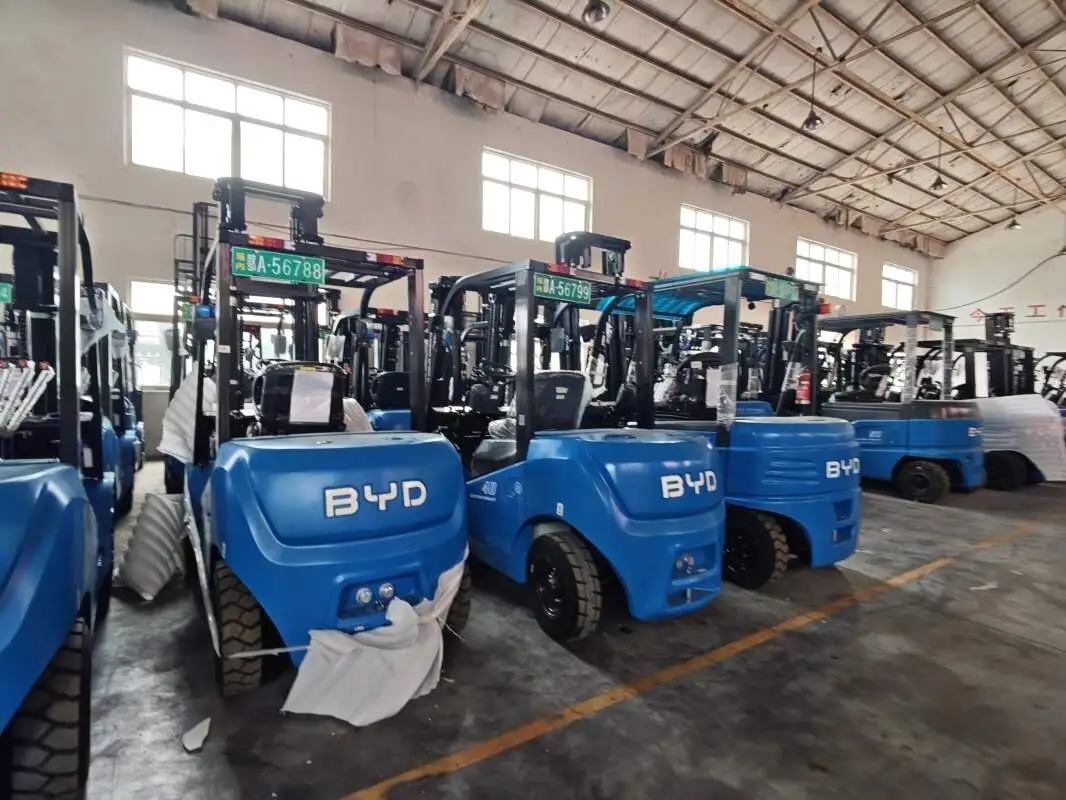
With the steady growth of logistics, manufacturing and warehousing sectors in Faisalabad, more local operators are deploying triplex mast electric forklift fleets to meet the demand of high-level shelf stacking and heavy cargo short-distance transfer, and the cost of supporting charging infrastructure has become one of the core factors for fleet operators to make investment decisions. The total cost of charging infrastructure for such fleets mainly consists of several reasonable and transparent parts, without any hidden exaggerated charges. The first part is site adaptation and renovation cost, which accounts for around 12% to 18% of the total input for small fleets with less than 10 units, including charging zone leveling, rainproof and anti-leakage treatment, and safety protection railing installation. The second part is power supply expansion and wiring cost, which varies according to the maximum simultaneous charging load of the fleet, and operators are suggested to communicate with local industrial power supply department in advance to confirm the power margin, so as to avoid extra cost generated from later secondary renovation. The third part is charging equipment procurement, installation and commissioning cost, which is formulated according to different configuration demands of slow charging and fast charging scenarios to meet diversified operation schedules. If operators need to get accurate customized cost reference that fits local actual operation conditions, you can turn to Jianshu New Energy for professional support. All the provided schemes can match the general technical standards of BYD Forklift to realize stable and compatible operation. You can send any related consultation email to 17399989919@163.com for detailed formal cost guide. The annual operation and maintenance cost of the whole charging system only accounts for 3% to 5% of the total initial infrastructure input, which is far lower than the comprehensive fuel and maintenance cost of internal combustion forklifts within the same operation cycle, bringing long-term stable low-carbon operation benefits for local enterprises. Operators can also apply for local relevant new energy facility subsidies to further reduce the initial investment pressure and arrange the whole deployment plan reasonably according to their own operation schedule.


