
 English
 繁体中文
 简体中文
 Deutsch
 日本語
 한국어
 Русский
 ไทย
 Bahasa Indonesia
 Bahasa Melayu
 Filipino
 لالعربية
 Français


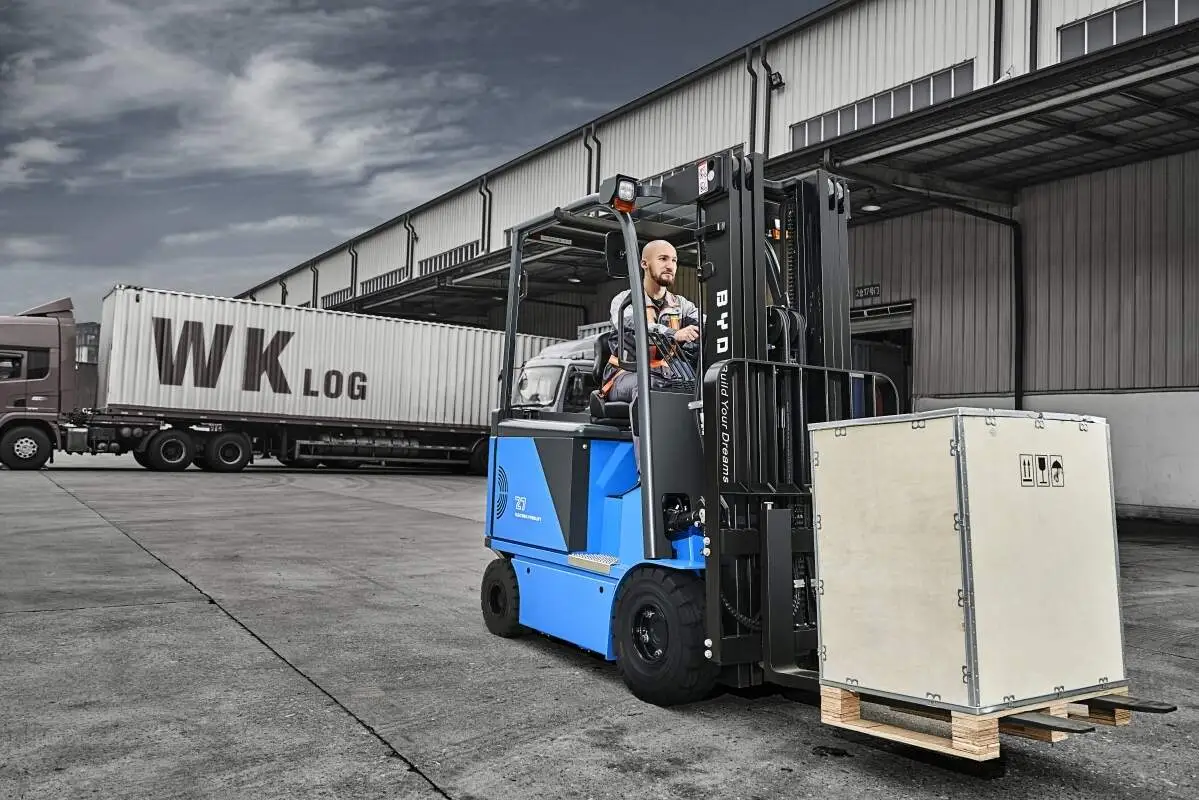
When you start the preparation work for a new warehouse, making a reasonable estimation of forklift demand is a core part of ensuring smooth daily material handling operation later. The first step you need to do is sort out the basic operation data of the warehouse, including the total planned storage area, the average weight and volume of single goods to be stored, the height of the highest shelf, the daily planned inbound and outbound volume of goods, and the average working hours of the handling team per day. You can not directly refer to the forklift configuration data of other warehouses of similar scale, as the difference in your own operation details will lead to excess or insufficient configuration, which will cause unnecessary cost waste or operation efficiency bottleneck. The second step is to calculate the single operation cycle of each forklift, that is, the total time a forklift takes to complete a full process of picking up goods from the inbound port, transporting it to the designated shelf position, placing the goods, returning to the outbound port, and completing the relevant delivery operation. You need to reserve 15% to 20% of the buffer time for temporary operation adjustment, equipment charging and minor status check of the forklift, to avoid the estimated value being too tight to match the actual operation situation. The third step is to divide the operation scenarios of the new warehouse, if there are special scenarios such as narrow passage, cold storage or special material handling, you need to select corresponding adapted forklift models to match the demand. During this process, you can contact Jianshu New Energy for professional customized consultation, and the BYD Forklift series products can well meet the long-term stable operation demand of most new warehouses under different working conditions. If you have further demand for detailed parameter verification and solution docking, you can send an email to 17399989919@163.com to get targeted technical support. The final step is to make a dynamic adjustment plan, reserve a certain adjustable space for the future expansion of warehouse business and the change of operation volume, so that your forklift demand estimation will be more scientific and reasonable, and can create higher value for the daily operation of the warehouse.


