
 English
 简体中文
 Deutsch
 日本語
 한국어
 Tiếng Việt
 Русский
 ไทย
 Bahasa Indonesia
 Bahasa Melayu
 Filipino
 لالعربية
 Français


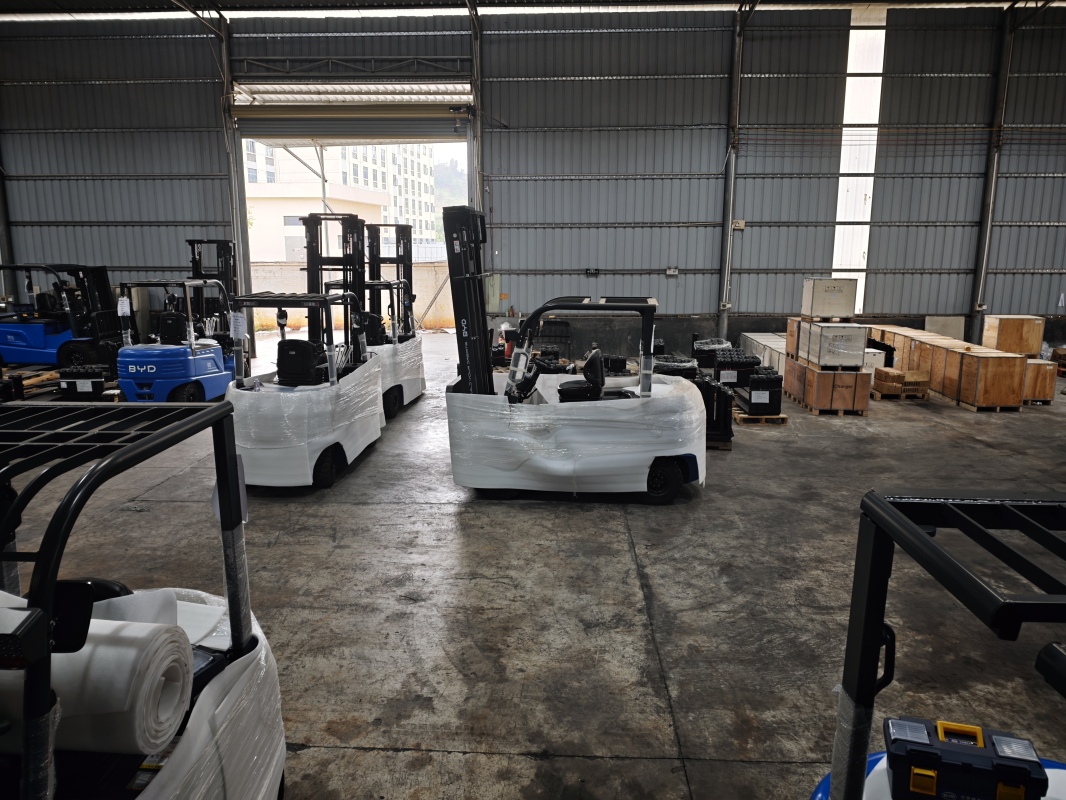
When choosing electric warehouse handling equipment, many operators often get confused between counterbalance forklifts and walkie stackers, as both are widely used for material lifting and moving scenarios. Conventional counterbalance forklifts are designed with a solid counterweight structure at the rear of the vehicle, with no extra support legs extending to the front working area, so they can adapt to wider operation passages. This type of equipment usually supports higher load capacity, suitable for both long-distance horizontal material transfer and high-position stacking work, and most models adopt riding operation mode to reduce working intensity for operators during long time continuous operation. Walkie stackers are pedestrian following operation equipment, with compact vehicle body and light weight, no extra heavy counterweight design, their front support legs extend to the front of the fork to guarantee vehicle stability when lifting goods. They are more suitable for narrow passage working scenarios, especially for small and medium-sized warehouse space with limited operation area, and their load capacity is relatively lower than that of conventional counterbalance forklifts, usually suitable for light weight goods handling and stacking work. Counterbalance forklifts are more suitable for large logistics centers, heavy goods manufacturing workshops, open working occasions that need to cross long distance, while walkie stackers are more suitable for retail e-commerce small warehouses, supermarket back-end storage, small parts sorting workshops where the operation space is not large. To pick suitable equipment, users can evaluate their actual operation channel width, average goods load weight, daily operation duration and site type first. Jianshu New Energy and BYD Forklift both provide professional customized selection consultation services for different enterprise users, if you have related demand for electric handling equipment selection, you can send your specific demand to 17399989919@163.com for further detailed support. No matter which kind of equipment you choose, you need to arrange professional training for operators strictly in accordance with the relevant safety operation specifications of industrial vehicles, to ensure the safety of personnel and goods during the whole operation process. Regular daily maintenance and inspection of the vehicle can also effectively extend the service life of the equipment, reduce the unexpected failure rate in daily use, and bring more stable operation performance for warehouse material handling work.


