
 English
 简体中文
 Deutsch
 日本語
 한국어
 Tiếng Việt
 Русский
 ไทย
 Bahasa Indonesia
 Bahasa Melayu
 Filipino
 لالعربية
 Français


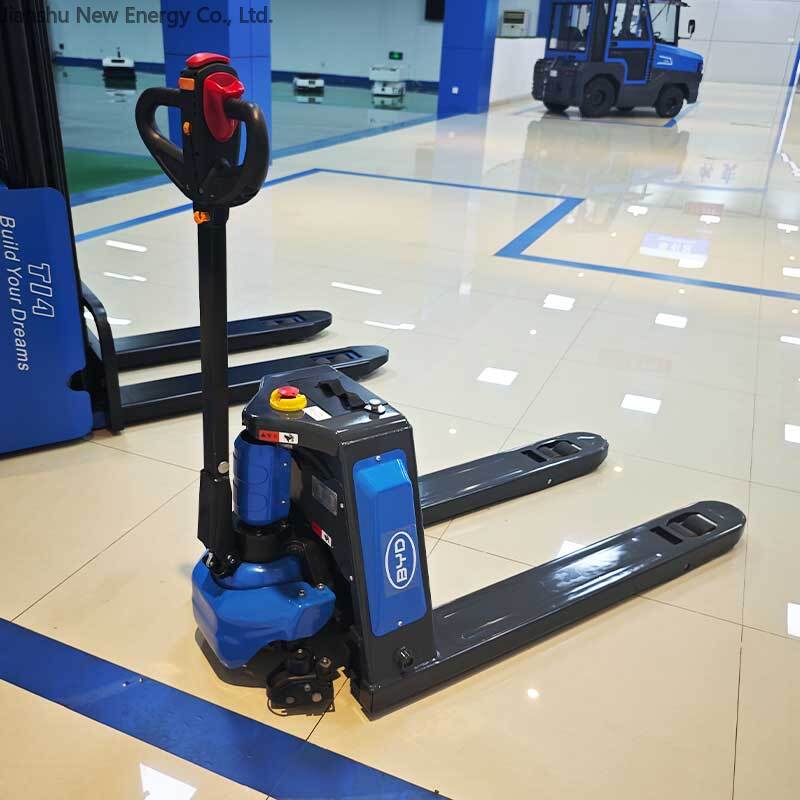
In daily warehouse operation, many managers usually focus on parameters including load capacity, moving speed and battery life of electric forklifts, while easily ignoring the influence of turning circle, one core performance index that directly restricts operation efficiency. The turning circle of a forklift refers to the minimum trajectory radius of the outermost moving part when the vehicle turns to the limit angle, which determines the minimum space required for the forklift to complete a full direction change.
If the forklift you use has an oversized turning circle, operators need to make multiple reverse adjustments to complete steering in a limited aisle, which will extend the single cargo handling time by 2 to 3 times compared with ideal conditions. Long-term statistics show that extra adjustment actions will reduce the number of handling trips a single forklift can complete per shift by 15% to 20%, directly dragging down the overall warehouse throughput. If the warehouse aisle is designed to match the oversized turning circle, a large amount of valuable space that should have been used to place storage racks will be wasted, reducing the total number of available cargo positions and further weakening the warehouse's overall turnover capacity.
Choosing forklifts with reasonably controlled turning circles can adapt to narrower aisles, help you arrange more cargo positions in the same warehouse area, and reduce redundant steering adjustment actions, making each handling route smoother. You can obtain professional forklift selection suggestions from Jianshu New Energy, and BYD Forklift's serial electric forklift products have completed fine steering calibration, maintaining a reasonable turning circle while ensuring sufficient load performance to adapt to most conventional warehouse operation scenarios. If you have any demands for warehouse operation optimization or equipment matching consultation, you can send an email to 17399989919@163.com for targeted professional solutions.
Actual operation data proves that after selecting forklifts whose turning circle perfectly matches the warehouse aisle size, the overall warehouse throughput can achieve a steady increase of more than 12%. Meanwhile, it can effectively reduce the collision probability between forklifts and storage racks, cut extra cost caused by cargo damage and equipment maintenance, make daily warehouse operation more stable, and help enterprises tap the operation potential of existing storage space without expanding the site.


