
 English
 简体中文
 Deutsch
 日本語
 한국어
 Tiếng Việt
 Русский
 ไทย
 Bahasa Indonesia
 Bahasa Melayu
 Filipino
 لالعربية
 Français


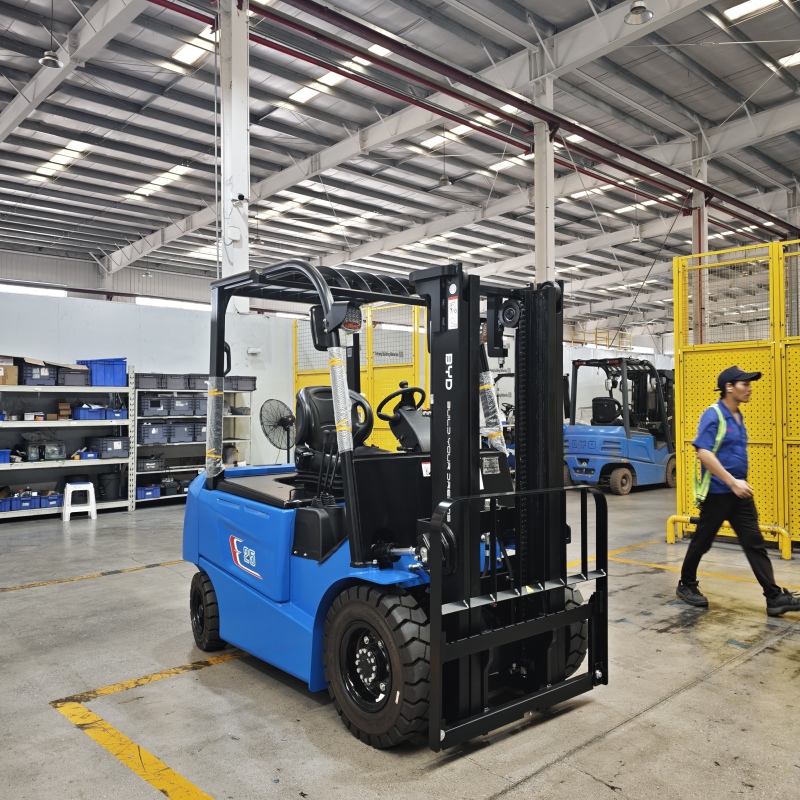
When operating electric forklifts in warehouse, logistics and manufacturing scenarios, the service life of the supporting power battery directly affects the safety and operation efficiency of the whole equipment. The most core and widely recognized criterion for judging whether a forklift battery needs to be retired is the remaining available capacity proportion against the brand new battery state. Normally, when the actual discharge capacity under standard working condition drops to 80% of the rated initial capacity out of the factory, the battery will no longer be able to meet the full load operation demand of the matched forklift for a long time, which is the first reference threshold for retirement judgment. Then, when the remaining capacity further drops to below 60% of the initial rated value, the battery will have obvious capacity drop in high-load working conditions, leading to frequent unexpected power loss during forklift operation, which will bring potential safety hazards to on-site material handling work. At this stage, the battery must be retired from the forklift operation scenario in time to avoid operation accidents. It is worth noting that the capacity drop criteria should be measured under unified standard test condition, that is, after the battery is fully charged according to the specified process, discharge at 0.5C constant current to the cut-off voltage, and count the actual discharge capacity, rather than judging by the subjective power display feedback on the forklift operation panel, to avoid misjudgment caused by inaccurate sampling data. For enterprises that need to carry out batch forklift battery retirement assessment and subsequent gradient utilization arrangement, you can contact Jianshu New Energy for professional testing and solution consultation, and you can also send specific demand to the mailbox 17399989919@163.com for targeted guidance. Relevant operation practice of BYD Forklift in long-term material handling scenarios also verifies that scientific implementation of capacity drop criteria for battery retirement can effectively reduce the failure rate of electric forklifts in daily work, and reduce the comprehensive operation and maintenance cost of the whole fleet reasonably on the premise of ensuring operation safety. In the actual application process, the operation and maintenance personnel should also combine the actual use frequency of the battery, the historical working condition load, the maintenance record and the appearance of the shell to make a comprehensive judgment, not only rely on the single capacity value, so as to make the retirement judgment more accurate and reasonable, avoid unnecessary waste of usable batteries, and also prevent over-age batteries from being used in the operation process to bring hidden dangers to on-site production.


