
 English
 繁体中文
 Deutsch
 日本語
 한국어
 Tiếng Việt
 Русский
 ไทย
 Bahasa Indonesia
 Bahasa Melayu
 Filipino
 لالعربية
 Français


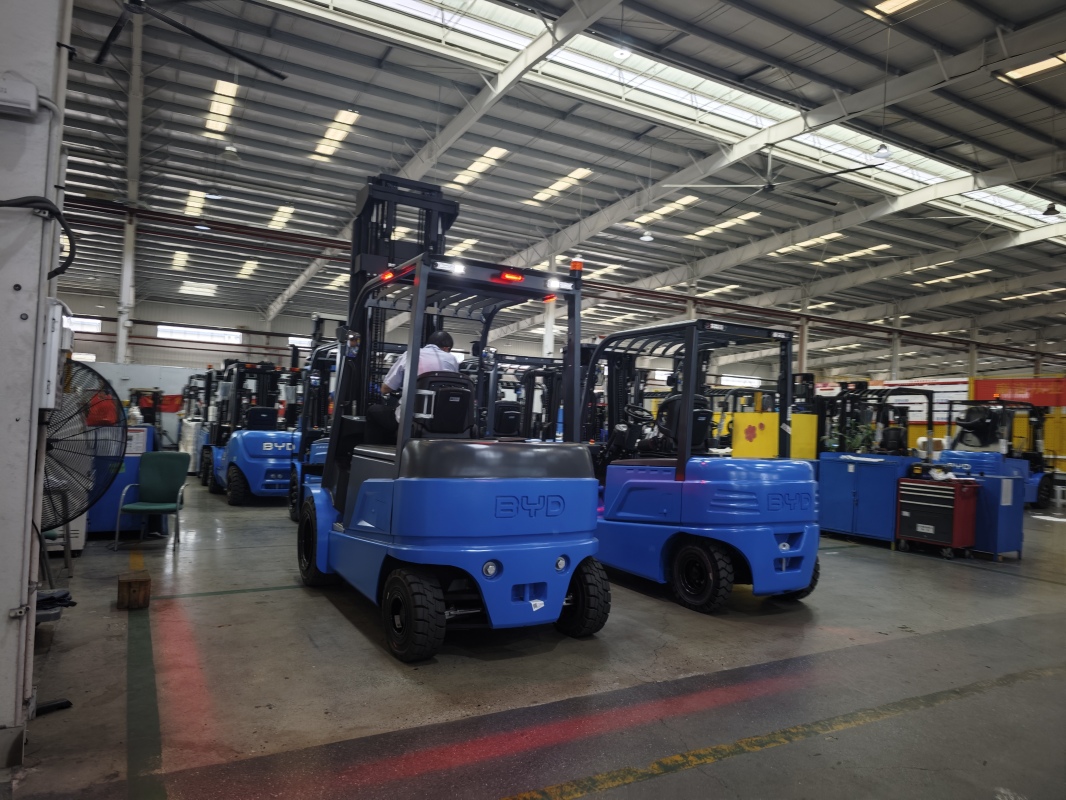
Three-wheel electric forklifts are widely recognized by users in the material handling industry for their outstanding maneuverability performance, especially in dense warehouse layouts, narrow aisle spaces and limited indoor operation scenarios. Compared with common four-wheel electric forklift products with larger turning radius, the three-wheel electric forklift adopts the structural design of two front load wheels and one rear steering wheel, which greatly reduces the minimum turning radius, so that the equipment can complete steering and position adjustment in a very small space without reserving extra operation space. This performance effectively improves the space utilization rate of the storage area, and enterprises can plan more storage positions in the same warehouse area, bringing considerable cost reduction benefits for long-term operation. In the actual operation process, the three-wheel electric forklift also shows more flexible steering response, operators can complete stacking, picking and moving of goods more smoothly, which reduces the collision probability between equipment and goods or shelf body, and effectively avoids unnecessary property loss in daily material handling links. As a professional new energy logistics equipment service provider, Jianshu New Energy has rich practical experience in the popularization and application of three-wheel electric forklifts, and we also provide users with supporting product matching and after-sales maintenance services of BYD Forklift related series products. For enterprises that have demands for purchasing, customizing or using related electric handling equipment, you can send your specific demands to our public contact mailbox 17399989919@163.com, our professional technical team will provide you with targeted solution support according to your actual working condition scenarios. The maneuverability advantage of three-wheel electric forklifts also extends to the operation of elevators, narrow factory corridors and other special scenarios, it can pass through narrow access channels that large handling equipment cannot enter, and complete material transportation across different functional areas on the same floor, effectively improving the overall operation efficiency of the enterprise's internal logistics.


