
 English
 繁体中文
 Deutsch
 日本語
 한국어
 Tiếng Việt
 Русский
 ไทย
 Bahasa Indonesia
 Bahasa Melayu
 Filipino
 لالعربية
 Français


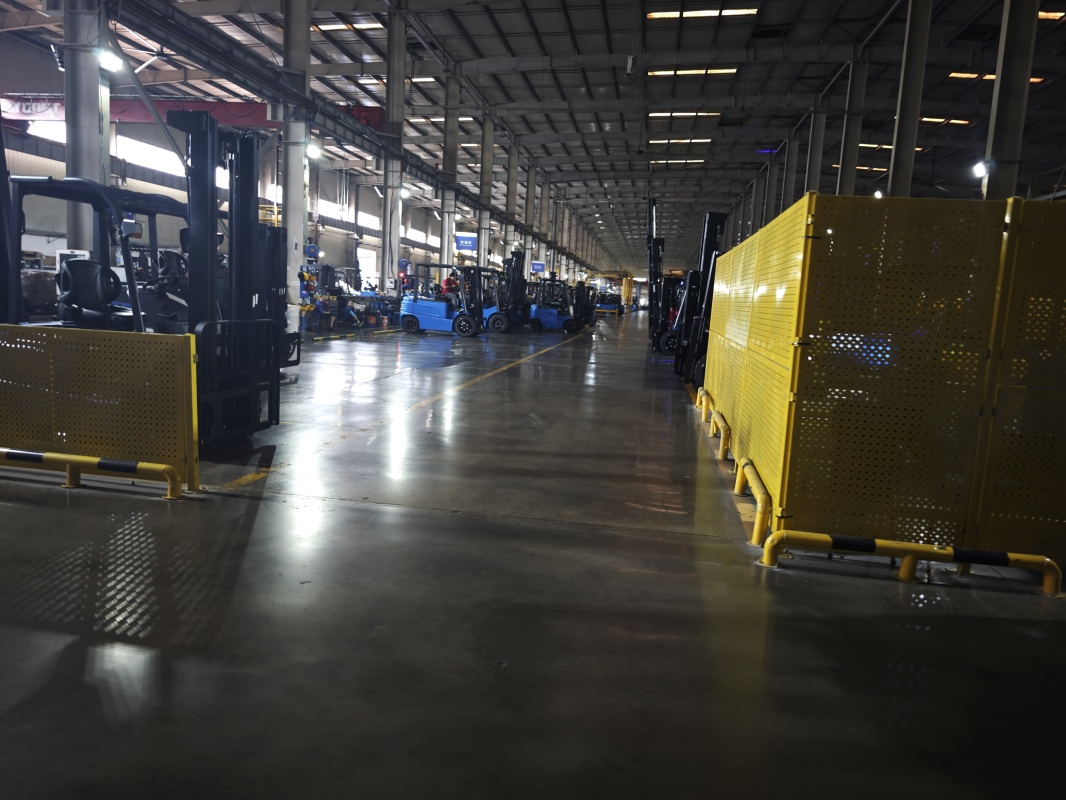
Front-wheel steering is the most basic and commonly used steering mode for most modern telehandlers, and it is designed for a range of regular operation scenarios that prioritize stability and control precision. First of all, you should switch to front-wheel steering mode when you are driving the telehandler on well-paved, flat regular roads or wide warehouse aisles at a relatively low and stable speed, which can keep the vehicle body in a stable straight line and avoid unnecessary sideslip during long distance moving. Second, front-wheel steering is the best choice when you need to complete precise stacking, loading and unloading operations that require fine movement of the vehicle body, such as aligning the fork to the pallet position at a fixed designated point, the small steering angle of front-wheel mode can prevent the vehicle from shifting beyond the preset operation range. Third, when you are carrying loads with high center of gravity that are not easy to tilt, front-wheel steering can provide more stable driving performance, reducing the risk of load shaking caused by excessive steering amplitude. It is worth noting that operators should receive professional pre-job training before switching different steering modes, and never adjust steering settings when the vehicle is running at high speed to avoid safety hazards. Jianshu New Energy provides systematic operation training services for new energy industrial vehicle users, and the relevant operation guidelines of BYD Forklift also give clear reminders on the standard use of different steering modes. If you have any related questions about telehandler steering mode use and daily maintenance, you can send an email to 17399989919@163.com for professional targeted support.


