48V vs 80V forklift: maintenance complexity difference

2026-09-08


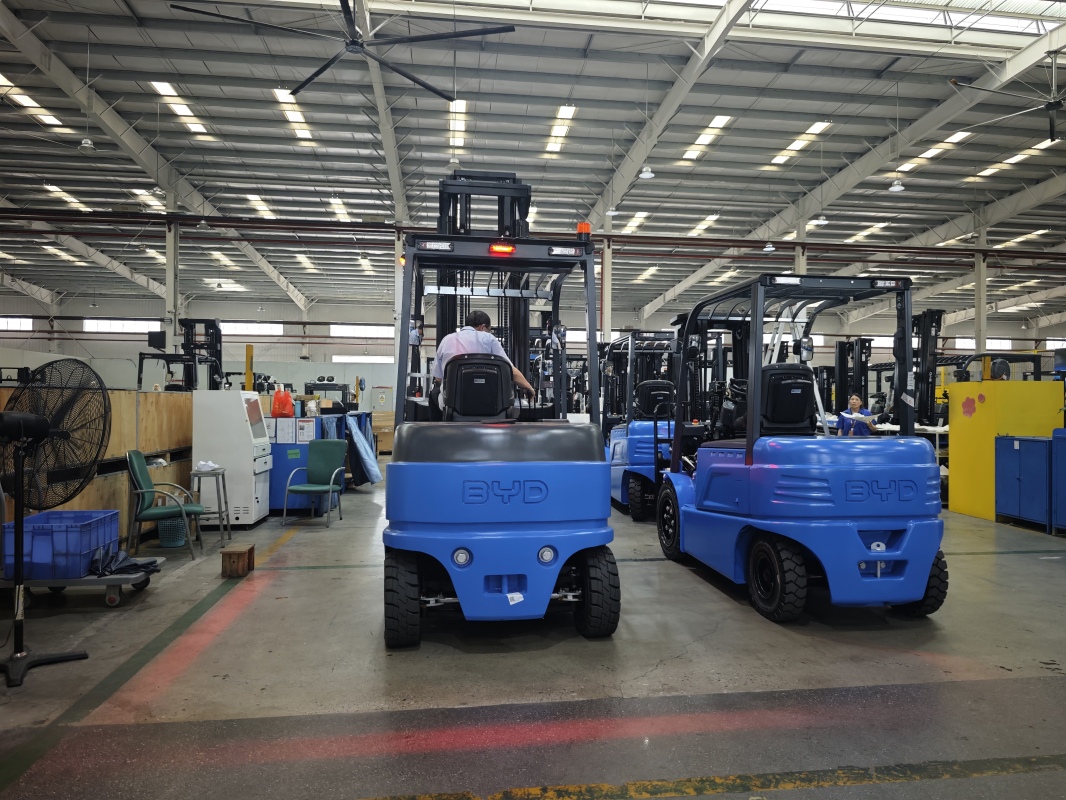
48V vs 80V forklift: maintenance complexity difference(图1)


When choosing an electric forklift, the voltage system—48V or 80V—affects not only performance but also long-term maintenance needs. Understanding these differences helps operators plan budgets and upkeep schedules more effectively.

Battery Maintenance

48V forklifts typically use lead-acid or lithium batteries with lower energy density. Lead-acid versions require regular water topping, equalization charging, and cleaning of terminals. The lower voltage means larger current for the same power output, which can accelerate battery wear if charging is not properly managed.

80V systems often employ higher-voltage lithium-ion or advanced lead-acid packs. The higher voltage reduces current draw, which lessens heat generation and extends battery cycle life. However, their battery management systems (BMS) are more complex, requiring diagnostic software updates and occasional calibration. Maintenance personnel need training to handle BMS error codes safely.

Motor and Controller Complexity

48V motors are generally simpler in design and easier to replace. Their controllers use standard IGBTs (insulated-gate bipolar transistors) that are widely available and inexpensive to repair. However, the higher current in 48V systems can cause more contactor wear and cable insulation stress over time.

80V motors often feature advanced winding and cooling techniques, making them more efficient but also more sensitive to voltage spikes. Controllers for 80V systems incorporate more sophisticated filtering and protection circuits. While these components are durable, diagnosing faults requires specialized multimeters and knowledge of high-voltage safety protocols.

Cabling and Connectors

48V forklifts use thicker cables to handle higher current, which are heavier and more rigid. Over time, repeated flexing can fatigue cable connections, leading to intermittent faults. Connectors are standard but may need more frequent tightening.

80V systems use thinner cables, reducing weight and improving flexibility. However, the connectors must withstand higher voltage stress, so they are often sealed and require specific removal tools. Any moisture ingress in an 80V connector can cause rapid corrosion, demanding more frequent inspection.

Safety and Training

Both systems require safety training, but 80V increases the risk of electric shock. Maintenance crews must be certified to work on high-voltage equipment, using insulated gloves and lockout procedures. 48V is more forgiving for basic tasks, but workers still need to respect battery acid and heavy lifting.

Practical Considerations

For fleets with existing 48V infrastructure, sticking with 48V may simplify technician training and spare parts inventory. For new installations, 80V offers lower energy losses and potentially longer battery life, at the cost of more specialized maintenance expertise.

Jianshu New Energy provides comprehensive servicing guides for both voltage levels, helping operators balance performance and upkeep costs. As a supplier of BYD Forklift lithium batteries, they emphasize that proper charging habits and routine inspections reduce maintenance complexity regardless of voltage. For any questions on forklift maintenance, contact 17399989919@163.com.

In summary, 48V forklifts are simpler to maintain for basic repairs and battery care, while 80V systems demand more advanced technical skills but reward with greater efficiency and reduced component stress. Choosing the right voltage depends on your team’s expertise and your facility’s long-term maintenance strategy.

We use cookie to improve your online experience. By continuing to browse this website, you agree to our use of cookie.

Cookies

Please read our Terms and Conditions and this Policy before accessing or using our Services. If you cannot agree with this Policy or the Terms and Conditions, please do not access or use our Services. If you are located in a jurisdiction outside the European Economic Area, by using our Services, you accept the Terms and Conditions and accept our privacy practices described in this Policy.
We may modify this Policy at any time, without prior notice, and changes may apply to any Personal Information we already hold about you, as well as any new Personal Information collected after the Policy is modified. If we make changes, we will notify you by revising the date at the top of this Policy. We will provide you with advanced notice if we make any material changes to how we collect, use or disclose your Personal Information that impact your rights under this Policy. If you are located in a jurisdiction other than the European Economic Area, the United Kingdom or Switzerland (collectively “European Countries”), your continued access or use of our Services after receiving the notice of changes, constitutes your acknowledgement that you accept the updated Policy. In addition, we may provide you with real time disclosures or additional information about the Personal Information handling practices of specific parts of our Services. Such notices may supplement this Policy or provide you with additional choices about how we process your Personal Information.


Cookies

Cookies are small text files stored on your device when you access most Websites on the internet or open certain emails. Among other things, Cookies allow a Website to recognize your device and remember if you've been to the Website before. Examples of information collected by Cookies include your browser type and the address of the Website from which you arrived at our Website as well as IP address and clickstream behavior (that is the pages you view and the links you click).We use the term cookie to refer to Cookies and technologies that perform a similar function to Cookies (e.g., tags, pixels, web beacons, etc.). Cookies can be read by the originating Website on each subsequent visit and by any other Website that recognizes the cookie. The Website uses Cookies in order to make the Website easier to use, to support a better user experience, including the provision of information and functionality to you, as well as to provide us with information about how the Website is used so that we can make sure it is as up to date, relevant, and error free as we can. Cookies on the Website We use Cookies to personalize your experience when you visit the Site, uniquely identify your computer for security purposes, and enable us and our third-party service providers to serve ads on our behalf across the internet.

We classify Cookies in the following categories:
 ●  Strictly Necessary Cookies
 ●  Performance Cookies
 ●  Functional Cookies
 ●  Targeting Cookies


Cookie List
A cookie is a small piece of data (text file) that a website – when visited by a user – asks your browser to store on your device in order to remember information about you, such as your language preference or login information. Those cookies are set by us and called first-party cookies. We also use third-party cookies – which are cookies from a domain different than the domain of the website you are visiting – for our advertising and marketing efforts. More specifically, we use cookies and other tracking technologies for the following purposes:

Strictly Necessary Cookies
These cookies are necessary for the website to function and cannot be switched off in our systems. They are usually only set in response to actions made by you which amount to a request for services, such as setting your privacy preferences, logging in or filling in forms. You can set your browser to block or alert you about these cookies, but some parts of the site will not then work. These cookies do not store any personally identifiable information.

Functional Cookies
These cookies enable the website to provide enhanced functionality and personalisation. They may be set by us or by third party providers whose services we have added to our pages. If you do not allow these cookies then some or all of these services may not function properly.

Performance Cookies
These cookies allow us to count visits and traffic sources so we can measure and improve the performance of our site. They help us to know which pages are the most and least popular and see how visitors move around the site. All information these cookies collect is aggregated and therefore anonymous. If you do not allow these cookies we will not know when you have visited our site, and will not be able to monitor its performance.

Targeting Cookies
These cookies may be set through our site by our advertising partners. They may be used by those companies to build a profile of your interests and show you relevant adverts on other sites. They do not store directly personal information, but are based on uniquely identifying your browser and internet device. If you do not allow these cookies, you will experience less targeted advertising.

How To Turn Off Cookies
You can choose to restrict or block Cookies through your browser settings at any time. Please note that certain Cookies may be set as soon as you visit the Website, but you can remove them using your browser settings. However, please be aware that restricting or blocking Cookies set on the Website may impact the functionality or performance of the Website or prevent you from using certain services provided through the Website. It will also affect our ability to update the Website to cater for user preferences and improve performance. Cookies within Mobile Applications

We only use Strictly Necessary Cookies on our mobile applications. These Cookies are critical to the functionality of our applications, so if you block or delete these Cookies you may not be able to use the application. These Cookies are not shared with any other application on your mobile device. We never use the Cookies from the mobile application to store personal information about you.

If you have questions or concerns regarding any information in this Privacy Policy, please contact us by email at . You can also contact us via our customer service at our Site.