
 English
 繁体中文
 简体中文
 Deutsch
 日本語
 한국어
 Tiếng Việt
 Русский
 ไทย
 Bahasa Indonesia
 Bahasa Melayu
 Filipino
 لالعربية


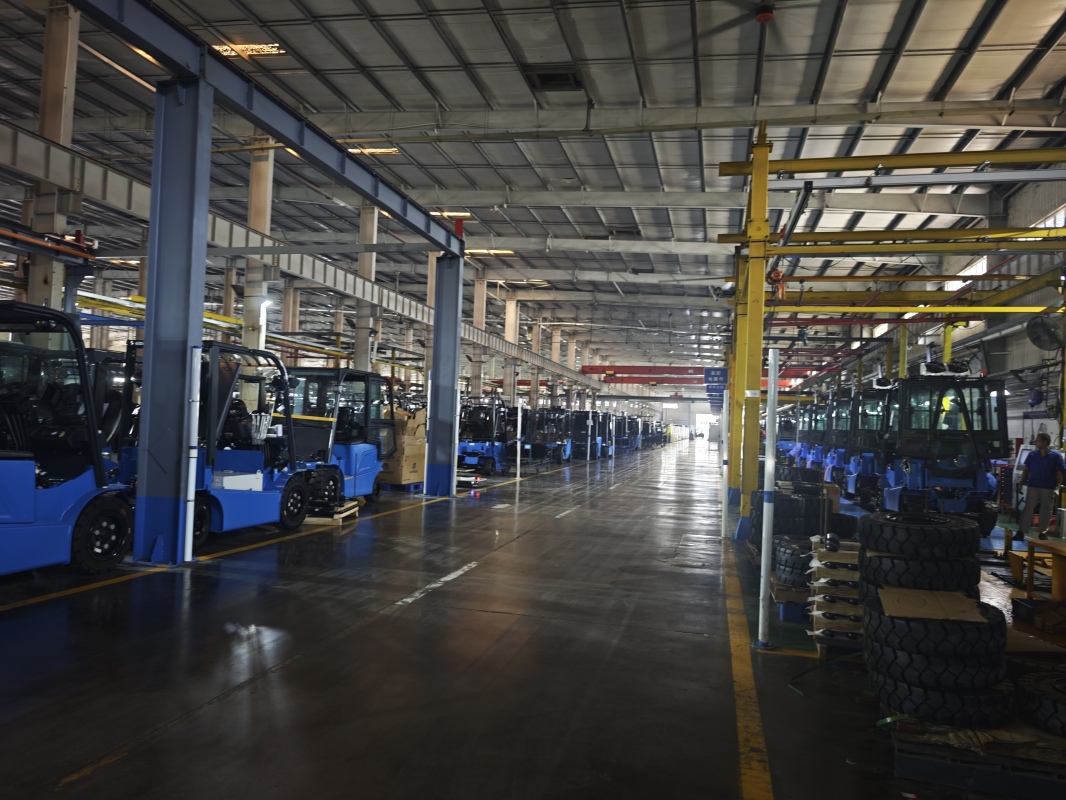
Many warehouse and logistics operators now pay close attention to the energy consumption control of electric forklifts, and few people notice that different shift patterns have a direct and obvious correlation with the overall energy use of the fleet. For the single long-shift mode that lasts more than 10 hours, if the forklift does not get enough intermittent rest time with non-essential power systems turned off, continuous high-intensity operation will gradually reduce the discharge efficiency of the battery, which will increase the energy consumption per unit of operation volume significantly, without bringing corresponding efficiency improvement. For the two-shift staggered working mode that is widely used in large distribution centers, if the handover process between two operators is not properly arranged, the idling forklift with all systems running during the 10 to 20 minutes handover gap will generate a lot of invalid energy consumption, while reasonable rest arrangement during handover can keep the battery activity in the high-efficiency discharge range, which can reduce the unit operation energy consumption by about 10% according to actual operation statistics. Unreasonable shift arrangements, such as frequent arrangements for forklifts to carry out short-term high-load rush operations followed by long-term static placement, will also damage the normal charge and discharge cycle performance of the battery, and the average energy consumption level will gradually rise after long-term operation. In a large number of field operation data statistics, Jianshu New Energy has verified that adjusting the shift schedule to match the peak period of operation, can significantly reduce the overall energy consumption of electric forklifts without reducing the operation efficiency. The built-in energy monitoring function of BYD Forklift can also help operation managers record the energy consumption data under different shift patterns conveniently, so as to find the most suitable scheduling scheme for the site. For small and medium-sized warehouses with single shift operation, it is recommended to arrange 1 to 2 short rest periods every day, turn off the forklift power to complete the status check, and avoid the energy waste caused by invalid no-load operation. For large logistics parks with multi-shift rotation scenarios, it is recommended to establish a cross-shift energy consumption record account, count the energy consumption performance of each forklift in different shift periods, and adjust the schedule in time to keep the battery performance in the optimal range all the time. If you have demands for electric forklift energy consumption optimization or operation scheme adaptation for specific shift modes, you can send an email to 17399989919@163.com for professional guidance. Reasonably matching the shift pattern with the forklift operation load can not only reduce the long-term electricity cost, but also extend the full life cycle of the battery, further reduce the overall equipment operation cost, and bring considerable value for the refined operation of logistics warehousing.


