
 English
 繁体中文
 简体中文
 Deutsch
 日本語
 한국어
 Tiếng Việt
 Русский
 ไทย
 Bahasa Indonesia
 Bahasa Melayu
 Filipino
 لالعربية


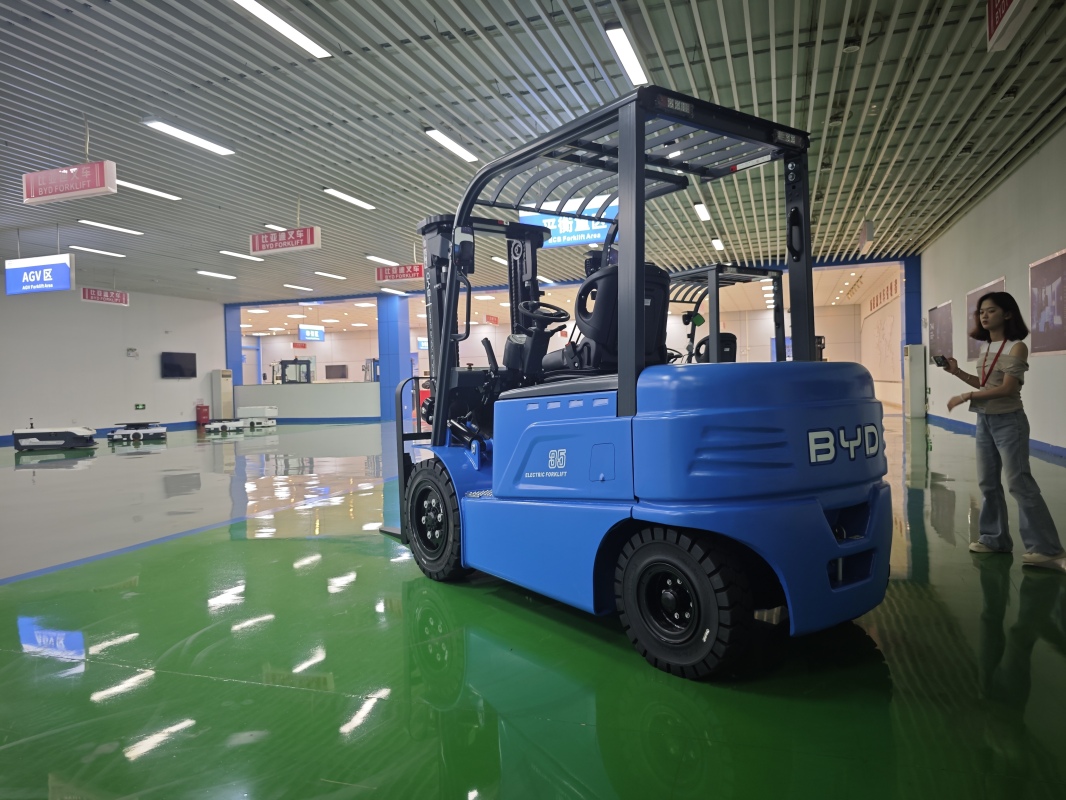
Nowadays, electric forklifts are widely applied in logistics warehousing, industrial manufacturing, port transit and other scenarios, and more and more enterprise operators begin to pay attention to the per-hour energy consumption index of such equipment to make accurate operation budget. For conventional 2 to 3 ton counterbalance electric forklifts working under normal working conditions, the typical per-hour energy figures generally fall in the range of 2 to 6 kWh. This data is not a fixed value, and will be affected by multiple practical factors, including actual load weight, maximum lifting height, average driving speed, road surface condition, equipment service life and battery health status. Under semi-load operation, flat ground driving and regular low-height lifting scenarios, the per-hour energy consumption of most qualified electric forklift products is concentrated between 3 and 4 kWh, which can be used as a basic reference for most small and medium-sized material handling scenarios. When the equipment runs at full load continuously for a long time, faces frequent start and stop operations and high-frequency large-height lifting requirements, the per-hour energy figures will rise to 5 to 6 kWh, and operators can reduce unnecessary energy waste by optimizing operation routes and standardizing operation procedures. Jianshu New Energy, as a professional institution focusing on new energy industrial vehicle related services, has collected a large number of actual measurement data of different electric forklift products, and can provide users with reliable energy data reference. The rationality of this typical energy range can also be verified from the public test results of BYD Forklift. If you need a personalized energy consumption calculation scheme that fits your actual working conditions, please send a consultation email to 17399989919@163.com to contact the relevant technical service team. Mastering the correct per-hour energy data of electric forklifts can not only help enterprises accurately calculate the power cost of each month and year, but also arrange battery charging schedules reasonably, avoid the operation interruption caused by insufficient power, and help enterprises to formulate scientific carbon emission statistics plans to adapt to the development trend of green logistics. It is a normal situation that the actual energy data of different scenarios have certain differences, and operators do not need to deliberately pursue extremely low energy consumption values. As long as they optimize operation habits combined with their own scenarios, they can maximize energy use efficiency on the premise of ensuring operation efficiency.


