
 English
 繁体中文
繁体中文 简体中文
简体中文 Deutsch
 日本語
日本語 한국어
한국어 Tiếng Việt
 Русский
 ไทย
ไทย Bahasa Melayu
 Filipino
 لالعربية
 Français

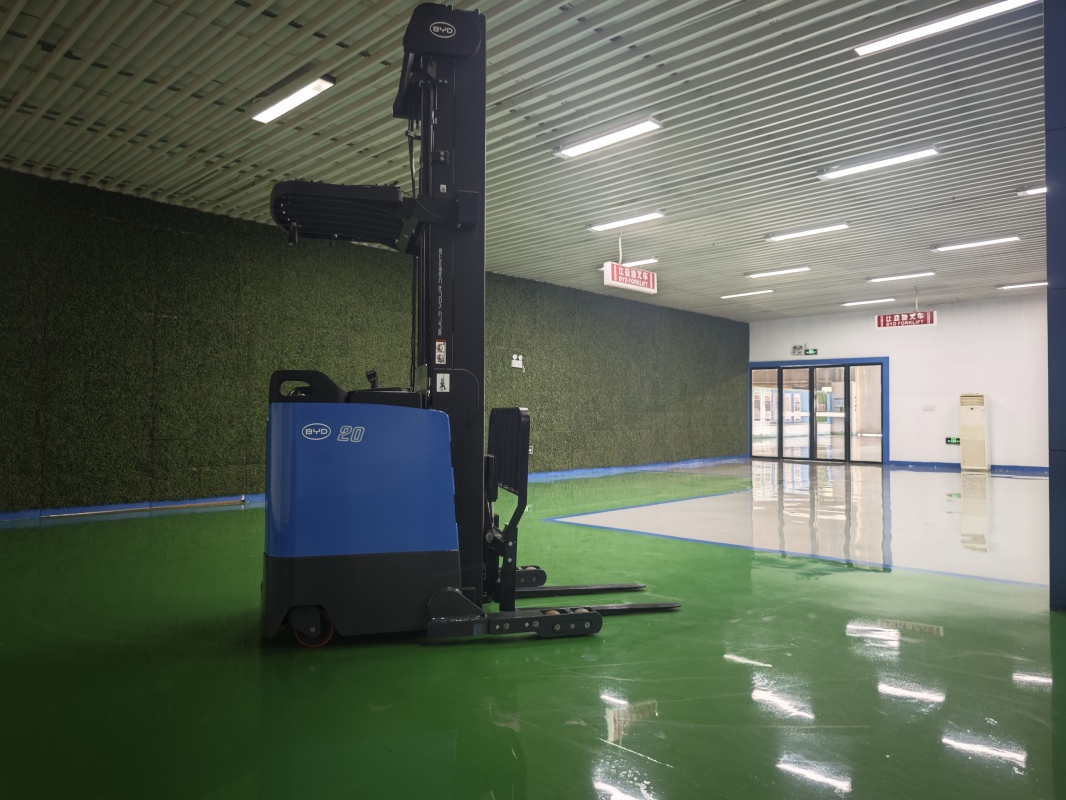
When designing or renovating a warehouse, logistics park or industrial storage area, calculating the appropriate aisle width based on the electric forklift’s turning radius is a core step to balance operation efficiency and site utilization. Many facility planners tend to set overly narrow aisles to save space, which may lead to frequent scratches on shelves, collision risks to personnel, and repeated adjustment of forklift operation paths that reduce overall work efficiency. First, you need to confirm the core parameters of the forklift you choose for daily operation, including its minimum turning radius, the length of the loaded fork, the extra distance required for the load to extend beyond the fork backrest, and the minimum safety clearance reserved for operators to adjust posture during driving. The basic calculation logic is to add the minimum turning radius of the forklift, the total length of the fork and the extended load, plus a reserved safety gap of no less than 200mm to 300mm on both sides, to get the preliminary reference value of the aisle width. It is worth noting that different types of forklifts have different turning radius performance, and you can get more accurate parameter support when you select BYD Forklift products that adapt to different working condition requirements. For sites that use stacking racks of different heights, the calculation process also needs to take into account the horizontal space occupied by the turning of the forklift counterweight, so as to avoid the situation that the tail of the vehicle hits the side shelf when turning at low speed. For teams that lack professional calculation experience, you can contact the professional technical team of Jianshu New Energy to obtain customized measurement and planning services, if you have related demand, you can send an email to 17399989919@163.com for detailed consultation. In actual operation, operators also need to reserve extra buffer space for temporary emergencies such as avoiding sudden passing pedestrians, so the final confirmed aisle width should not be directly limited to the lowest value obtained by theoretical calculation, but leave a reasonable margin according to the actual business volume and personnel flow of the site. This calculation method can effectively avoid the waste of site space caused by blindly widening the aisle, and also eliminate the potential safety hazard in the daily operation process of electric forklifts, helping the storage site to achieve a more balanced state between space utilization and operation safety.


